
Friday, October 30, 2026Oct 30

This story is free to read.

NATO coalition in Afghanistan shrinking

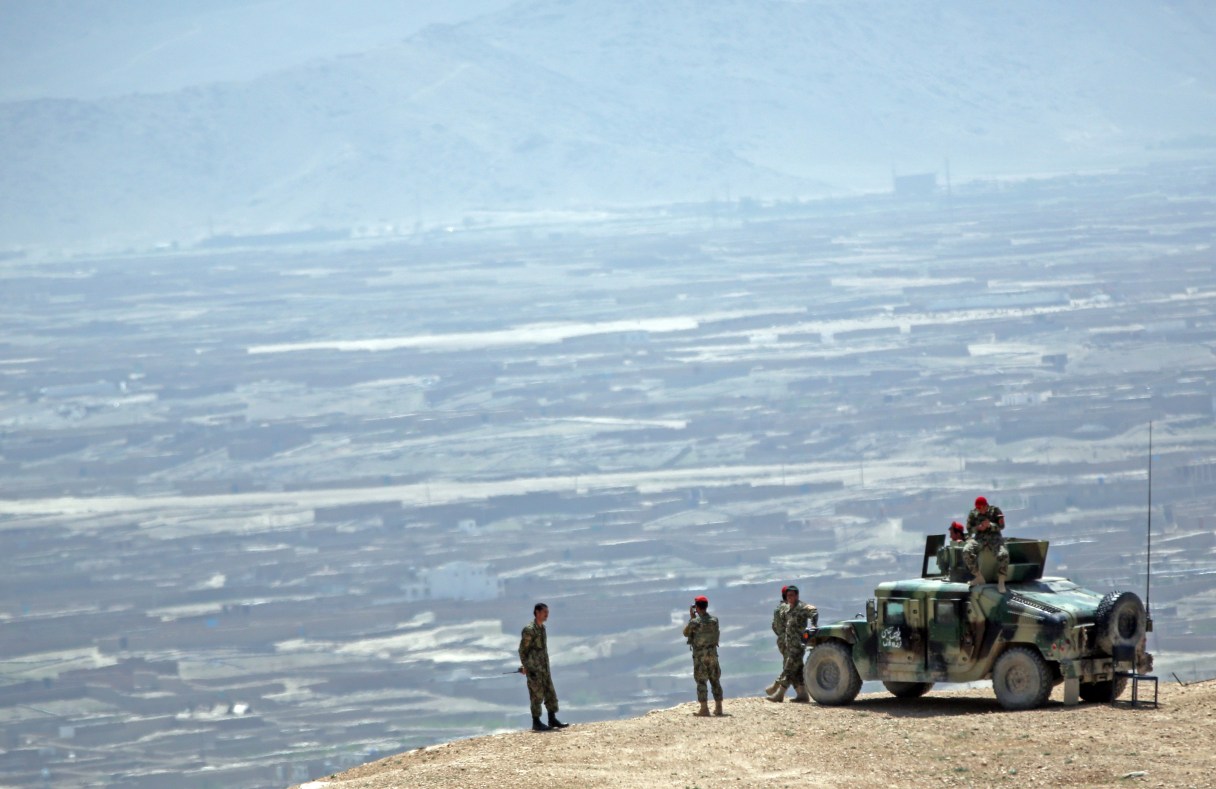
FILE - This April 30, 2014 file photo shows Afghan National Army (ANA) soldiers standing guard during a military exercise on the outskirts of Kabul, Afghanistan. The Afghan National Security Forces depend exclusively on billions of dollars in funding from the US and its allies, money that is now at risk after President Hamid Karzai's refusal to sign a security agreement to keep a small U.S. force of trainers in the country after the NATO-led coalition ends its mission and withdraws at the end of the year. Alongside the exodus of US troops from Afghanistan before the end of the year, soldiers who hail from countries like Singapore and Slovenia, Mongolia and Malaysia have been packing up too, leaving behind an ever-shrinking NATO coalition. (AP Photo/Massoud Hossaini, File)
FILE - This April 30, 2014 file photo shows Afghan National Army (ANA) soldiers standing guard during a military exercise on the outskirts of Kabul, Afghanistan. The Afghan National Security Forces depend exclusively on billions of dollars in funding from the US and its allies, money that is now at risk after President Hamid Karzai's refusal to sign a security agreement to keep a small U.S. force of trainers in the country after the NATO-led coalition ends its mission and withdraws at the end of the year. Alongside the exodus of US troops from Afghanistan before the end of the year, soldiers who hail from countries like Singapore and Slovenia, Mongolia and Malaysia have been packing up too, leaving behind an ever-shrinking NATO coalition. (AP Photo/Massoud Hossaini, File) FILE - This April 30, 2014 file photo shows Afghan National Army (ANA) soldiers standing guard during a military exercise on the outskirts of Kabul, Afghanistan. The Afghan National Security Forces depend exclusively on billions of dollars in funding from the US and its allies, money that is now at risk after President Hamid Karzai's refusal to sign a security agreement to keep a small U.S. force of trainers in the country after the NATO-led coalition ends its mission and withdraws at the end of the year. Alongside the exodus of US troops from Afghanistan before the end of the year, soldiers who hail from countries like Singapore and Slovenia, Mongolia and Malaysia have been packing up too, leaving behind an ever-shrinking NATO coalition. (AP Photo/Massoud Hossaini, File)

WASHINGTON (AP) – Alongside the exodus of U.S. troops from Afghanistan, soldiers who hail from countries like Singapore and Slovenia, Mongolia and Malaysia have been packing up too, leaving behind an ever-shrinking NATO coalition.

The coalition has been fighting the war for more than a decade, but that combat mission ends in 17 weeks. On the agenda at this week’s NATO meeting in Wales is nailing down which countries will contribute how many troops to the post-2014 mission to continue training the Afghan forces and who will pay the salaries of the Afghan policemen and soldiers going forward.

“There already has been so much blood and treasure invested no one wants to see this turn into what is happening in Iraq right now,” said retired Adm. James Stavridis, who was NATO supreme allied commander from 2008 to 2013. “I think people realize we need to continue to advise and mentor the security forces for several more years.”

There are about 30,700 U.S. forces still in Afghanistan, and President Barack Obama has said he wants to keep 9,800 American troops in the country after the end of the year. The number of non-American troops stands at roughly 14,400 – down more 65 percent from a peak in May 2011 – and is shrinking fast.

Some countries like Britain with 3,936, Germany with 2,250 and Italy with 1,653 still have a sizeable number of troops in the country. But 17 countries – representing about a third of current 48-nation coalition – have just 25 or fewer troops still deployed. They are: Austria, Bahrain, Bosnia and Herzegovina, El Salvador, Estonia, Greece, Iceland, Ireland, Latvia, Luxembourg, Malaysia, Montenegro, New Zealand, Slovenia, Sweden, Tonga and Ukraine.