
Friday, November 13, 2026Nov 13

Study links polar vortex chills to melting sea ice

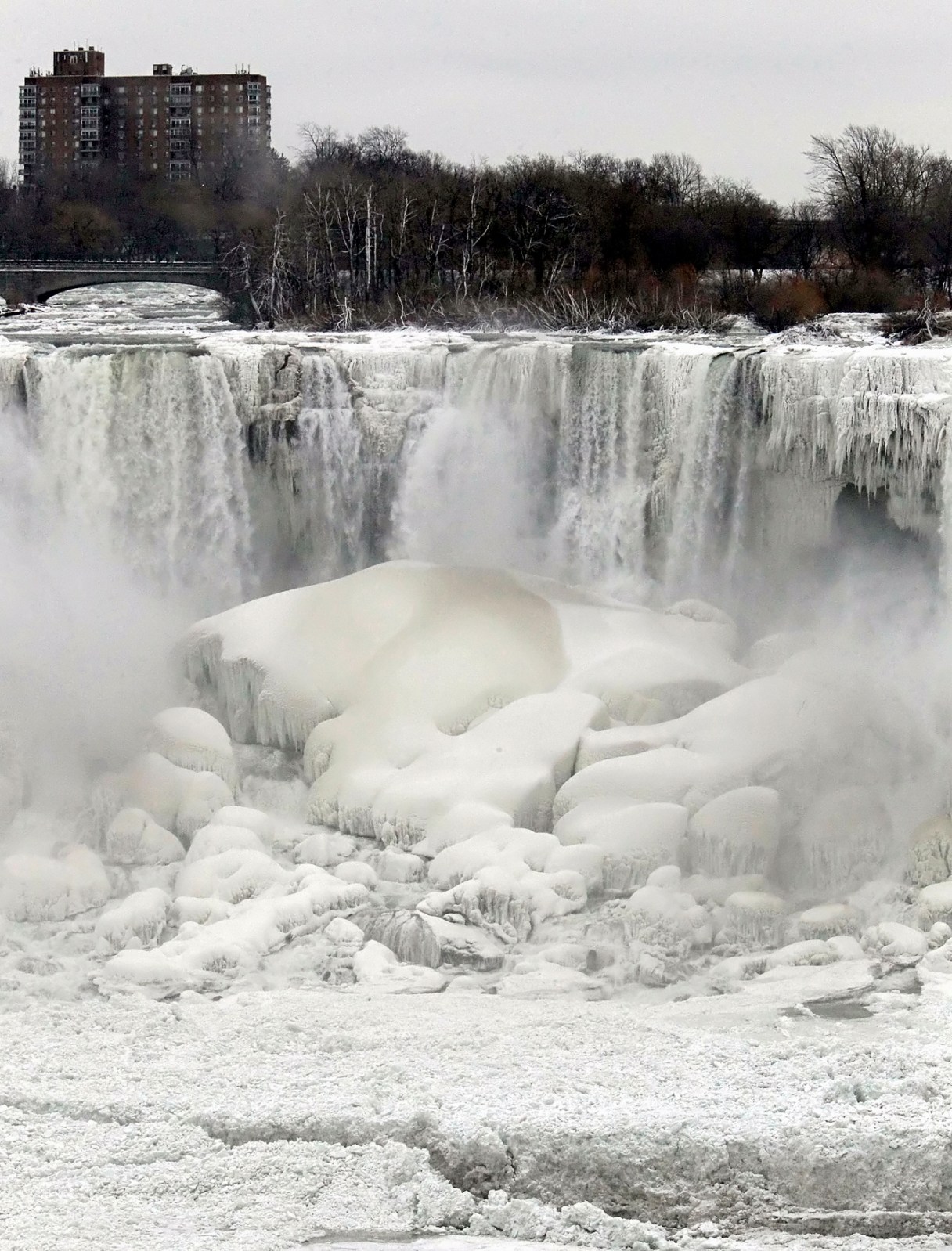
FILE - This Jan. 10, 2014 file photo shows the US side of Niagara Falls in New York beginning to thaw after  the recent "polar vortex" that affected millions in the US and Canada. Remember the polar vortex, the huge mass of Arctic air that can plunge much of the U.S. into the deep freeze? You might have to get used to it. we should see more of these in the future because a study partially links these polar vortex related cold outbreaks to loss of sea ice off Russia as the world gets warmer. But we have to note that last year’s polar vortex chill was slightly different and not connected to sea ice loss, researchers say. (AP Photo/Nick LoVerde, File)
FILE - This Jan. 10, 2014 file photo shows the US side of Niagara Falls in New York beginning to thaw after the recent "polar vortex" that affected millions in the US and Canada. Remember the polar vortex, the huge mass of Arctic air that can plunge much of the U.S. into the deep freeze? You might have to get used to it. we should see more of these in the future because a study partially links these polar vortex related cold outbreaks to loss of sea ice off Russia as the world gets warmer. But we have to note that last year’s polar vortex chill was slightly different and not connected to sea ice loss, researchers say. (AP Photo/Nick LoVerde, File)

WASHINGTON (AP) – Remember the polar vortex, the huge mass of Arctic air that can plunge much of the U.S. into the deep freeze? You might have to get used to it.

A new study says that as the world gets warmer, parts of North America, Europe and Asia could see more frequent and stronger visits of that cold air. Researchers say that’s because of shrinking ice in the seas off Russia.

Normally, the polar vortex is penned in the Arctic. But at times it escapes and wanders south, bringing with it a bit of Arctic super chill.

That can happen for several reasons, and the new study suggests that one of them occurs when ice in northern seas shrinks, leaving more water uncovered.

Normally, sea ice keeps heat energy from escaping the ocean and entering the atmosphere. When there’s less ice, more energy gets into the atmosphere and weakens the jet stream, the high-altitude river of air that usually keeps Arctic air from wandering south, said study co-author Jin-Ho Yoon of the Pacific Northwest National Laboratory in Richland, Washington. So the cold air escapes instead.