
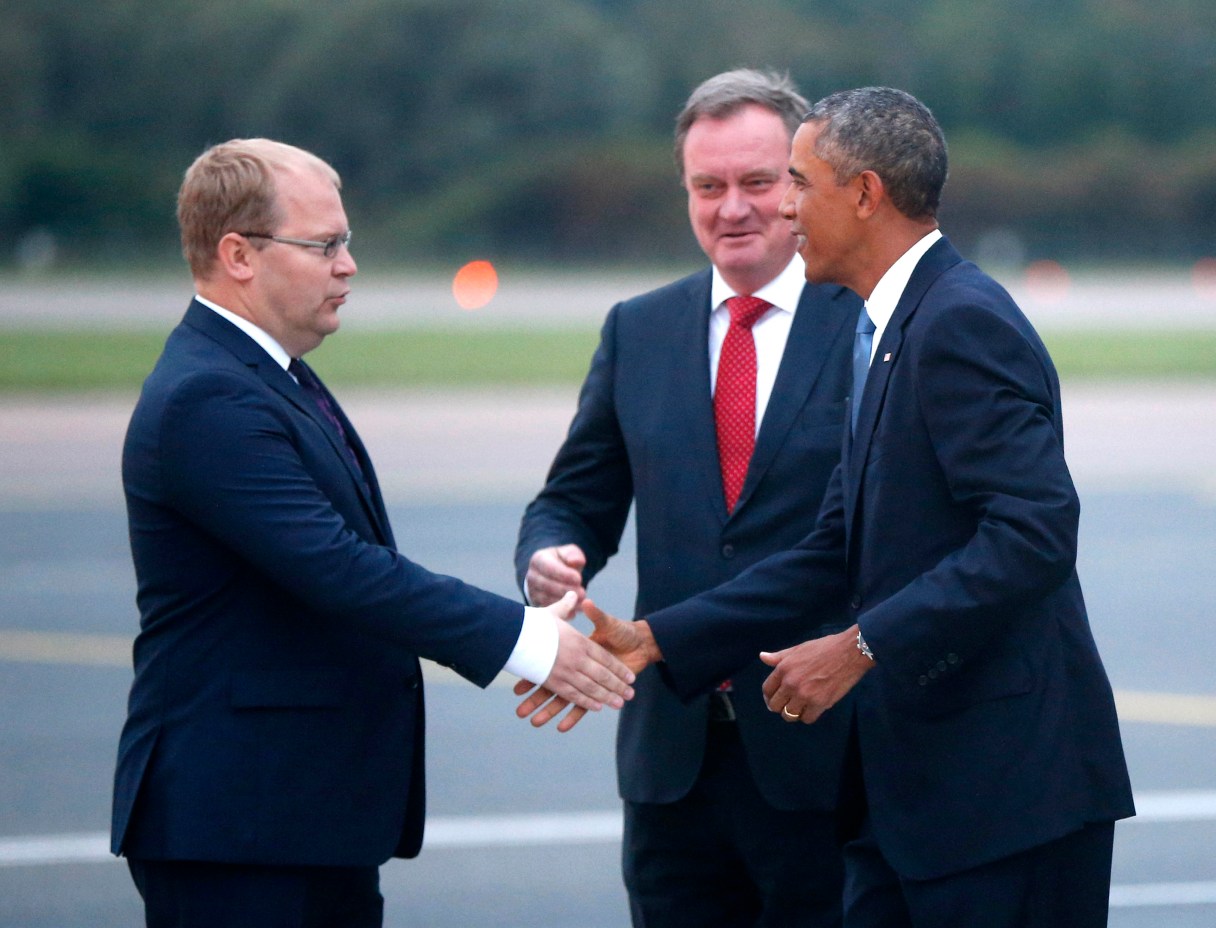
NEWPORT, Wales (AP) – The heady “we won the Cold War” days are over. When President Obama and other NATO leaders assemble here Thursday for a key summit meeting, their No. 1 goal will be an old and familiar one: protecting vulnerable alliance members from Russia, without goading the Kremlin into military action.
After reaching out to Russia for two decades as a potential partner, NATO is once again is looking for ways to curb the Kremlin’s territorial ambitions without sparking a full-scale return to expensive and risky Cold War confrontation.
But the U.S.-led alliance’s eastward march into Moscow’s old sphere of influence, and the demonstrated willingness of Russian President Vladimir Putin to use military might to push back when it suits Moscow’s strategic goals, have created a volatile and potentially dangerous situation.
Some fear getting sucked into a spiral of moves and countermoves that in the most nightmarish of scenarios might escalate into head-on confrontation between Putin’s nuclear-capable military and NATO’s own forces.
On Monday, NATO announced plans for a new rapid-deployment force and the advance stockpiling of ammunition and fuel to better protect Poland and other alliance members in Eastern Europe that feel threatened by Russia.