
Monday, November 16, 2026Nov 16

France hails taxi drivers in WWI commemoration

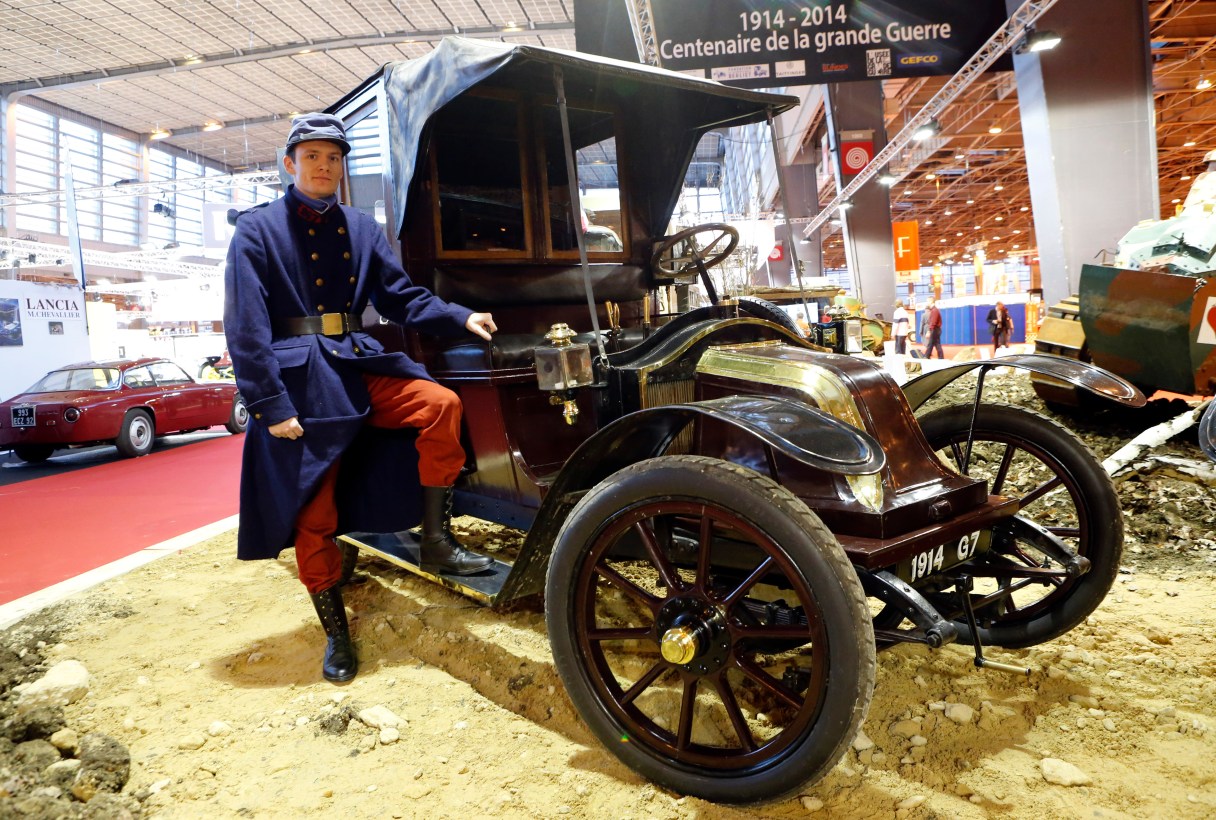
In this Wednesday, Feb. 5, 2014 file photo, an actor dressed like a WWI soldier poses in front of a 1914 Renault AG1, known as Taxi de la Marne, during the Retromobile vintage cars exhibition, in Paris. Weeks after World War I erupted, with the capital under threat from German invaders, French military chiefs devised a novel way for soldiers to travel to the front lines: by taxi. To that end, they requisitioned hundreds of cabs, and their drivers were charged with the risky mission of getting thousands of troops to the battlefield. (AP Photo/Jacques Brinon, File)

PARIS (AP) – The next time you flag a taxi on a crowded city street, spare a thought for the cabbie – and perhaps consider a bigger tip.

Weeks after World War I erupted, with the capital under threat from German invaders, French military chiefs devised a novel way for soldiers to travel to the front lines: by taxi.

To that end, they requisitioned hundreds of cabs, and their drivers were charged with the risky mission of getting thousands of troops to the battlefield.

This weekend, France honors the centennial of the “Taxis of the Marne,” which have become the stuff of legend for millions of French school kids present and past. Paris City Hall, the Defense Ministry and private company Alpha taxis plan commemoration parades on Sunday that will include 10 taxis from the era.

Germany opened the Western Front on Aug. 4, sweeping into Belgium and hoping to overwhelm France before Russia had a chance to fully mobilize to the east. The lightning-fast Schlieffen plan aimed to bring German forces into Paris within weeks. After the guns of August blared, the French army looked as if it was on way to defeat.