
Monday, November 16, 2026Nov 16

‘There’s no control’: Hawaii watches lava’s creep

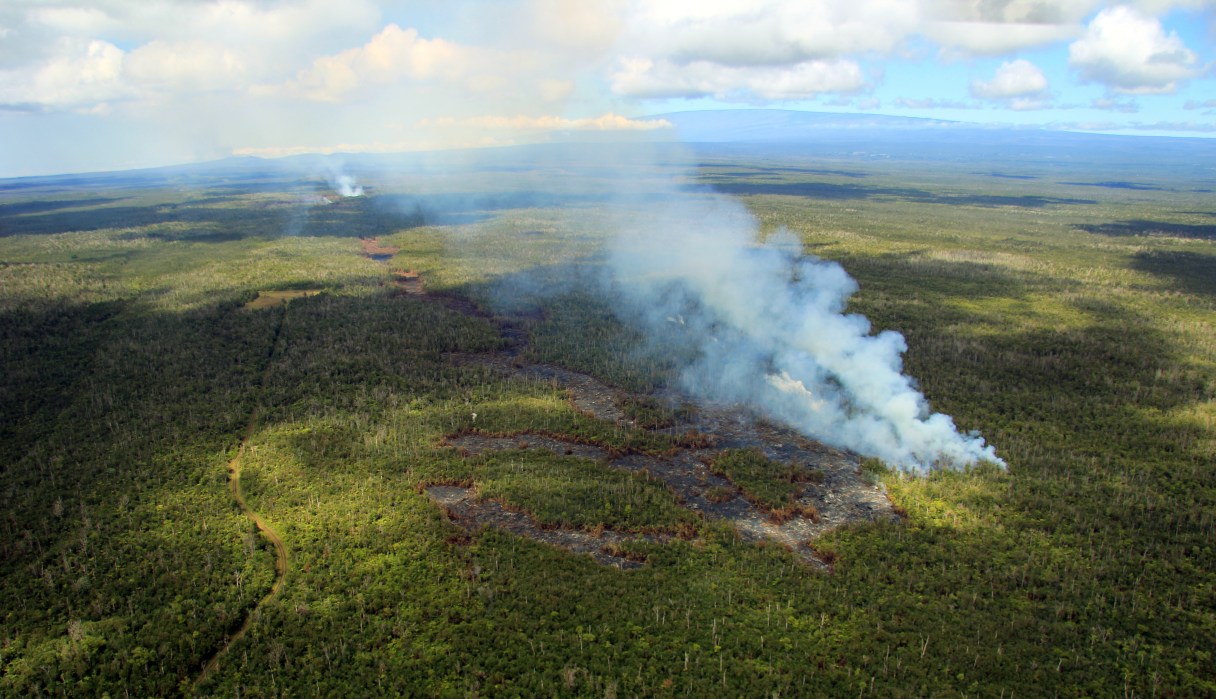
In this Sept. 6, 2014 aerial photo provided by the U.S. Geological Survey, lava advances from the Kilauea volcano in Pahoa, Hawaii. Lava issued from several spots along a deep ground crack earlier this week, as shown by the distinct fingers of lava making up the flow front. The thick smoke plumes show the flow front moving downslope towards the north. Lava from one of the world's most active volcanos has been advancing at a slower pace the past few days and is now moving parallel to a sparsely populated subdivision on Hawaii's Big Island. Hawaii County Civil Defense Director Darryl Oliveira says the lava from Kilauea volcano is still at least a mile away from any homes in Kaohe Homesteads. (AP Photo/Tim Orr, U.S. Geological Survey)

PAHOA, Hawaii (AP) – Lava from one of the world’s most active volcanos has been advancing at a slower pace the past few days and is now moving parallel to a sparsely populated subdivision on Hawaii’s Big Island.

Lava from Kilauea volcano was still at least a mile from any homes in Kaohe Homesteads, Hawaii County Civil Defense Director Darryl Oliveira said.

Oliveira took a helicopter flight over the area Monday and saw the lava had crept about 150 yards from the previous day. It’s moving north for now but could still stop or change directions.

“It’s been doing that for the last several days,” he said of its northern pull. Prior to Friday, it was going northeast toward the subdivision.

The Hawaiian Volcano Observatory has warned the lava could reach the subdivision in a matter of days.