

 To avoid pesticides, UTC professor Jose Barbosa grows his own tea ingredients — lemongrass, lemon balm, aloe vera, mint and other herbs — in the campus greenhouse.
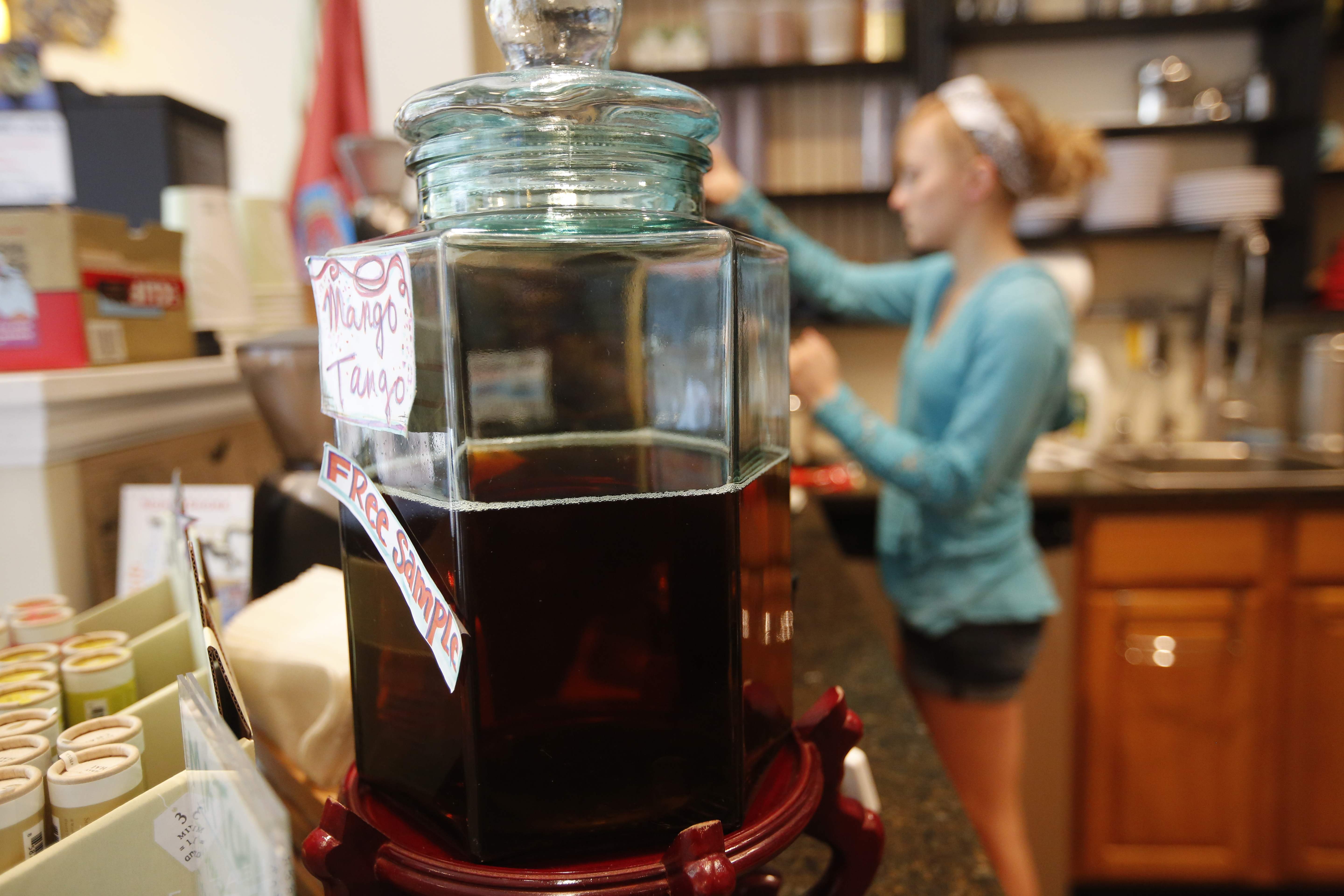 Mango Tango tea is available for sample at New Moon Gallery and Tea Room, where barista Sarah Hill prepares a drink. New Moon offers an extensive menu of organic teas.
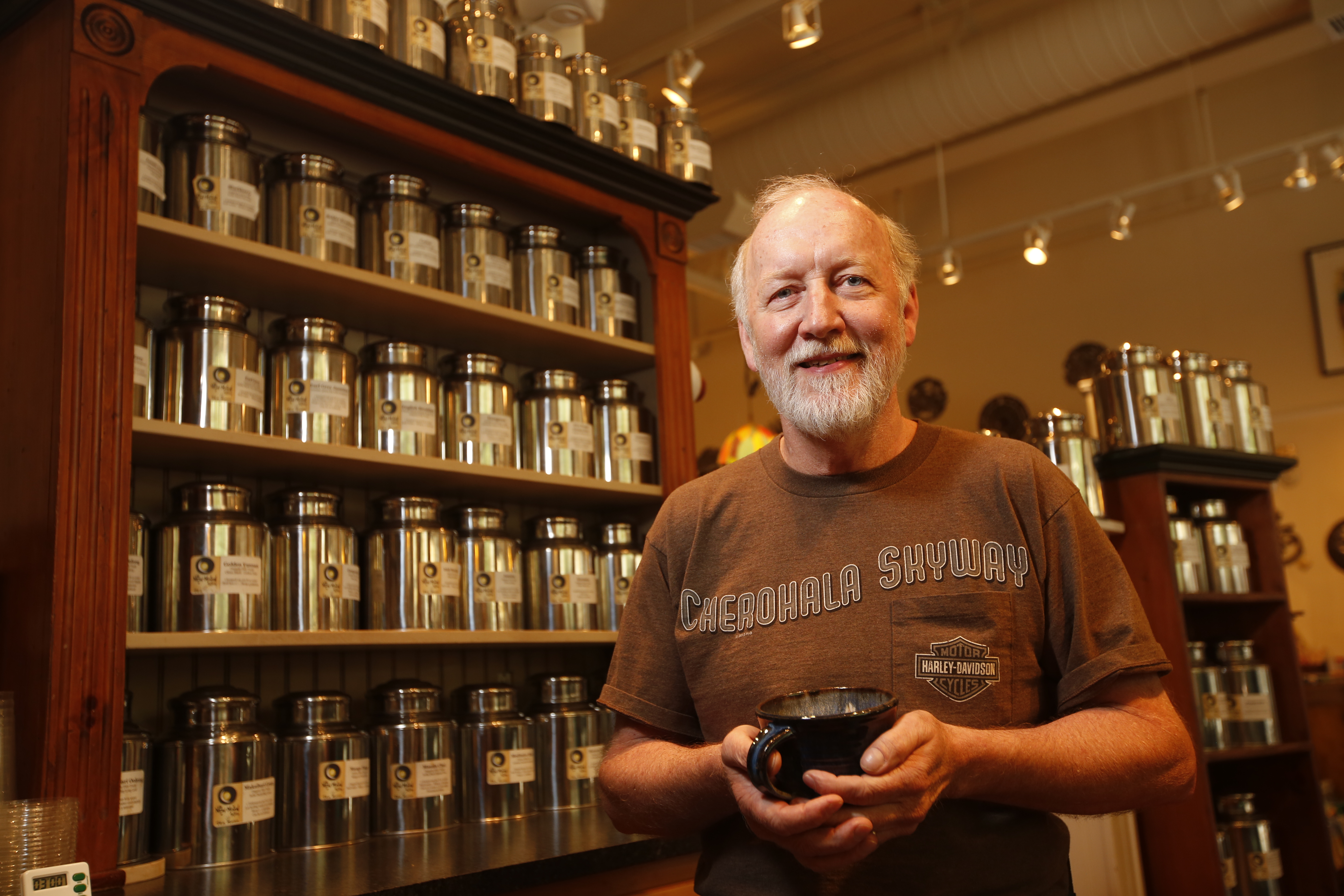 David Wheeler is the owner of the New Moon Gallery and Tea Room.
DOES BREWING TEA LONGER REMOVE POISONS?No. A team of Indian scientists tested 13 different pesticides. Brewing longer actually increased the amount of water soluble pesticides transferred into a cup of tea. The study was published in the Journal of Agricultural and Food Chemistry in 2001. The United Nations Food and Agriculture Group on Tea recently did a similar study with identical results.
Greenpeace StudyHere are some findings from tea-testing in India.• Of the 49 brands tested, 94 percent were tainted with residues of at least one pesticide.• 34 pesticides found in the different brands• 59 percent of the samples contained cocktails of more than 10 different pesticides.• India’s agricultural regulations are chaotic and often conflict, making it difficult for farms to be inspected properly. (Greenpeace’s 2014 report on Chinese tea said China’s agricultural regulatory system was “in crisis”.)• Monocrotophos, a neurotoxicant, was found in half the tea brands.• DDT was banned from agriculture by India in 1989 yet DDT was found in 67 percent of the samples• Respiratory irritant Cypermethrin was in 60 percent of samples at levels that violated World Health Organization standards.Source: Trouble Brewing: Pesticide Residue in Tea Samples from India, released August 2014
The New Moon Gallery and Tea Room is packed with treasures, from what the owner calls the “Stradivarius of wind chimes” to baskets of moonstone opals and glacier blue calcite to the delicate Haitian metal sculpture carved from oil drums.
But the rarest find of all may be a cup of tea utterly free from pesticide residue.
Patrons who drink organic tea from New Moon’s Manufacturer’s Road store are much safer than consumers who buy popular grocery store brands, according to a recent study that tested 49 brands of tea sourced from Indian growers – and found them tainted with toxins.