
Friday, November 13, 2026Nov 13

Scotland took long road to independence vote

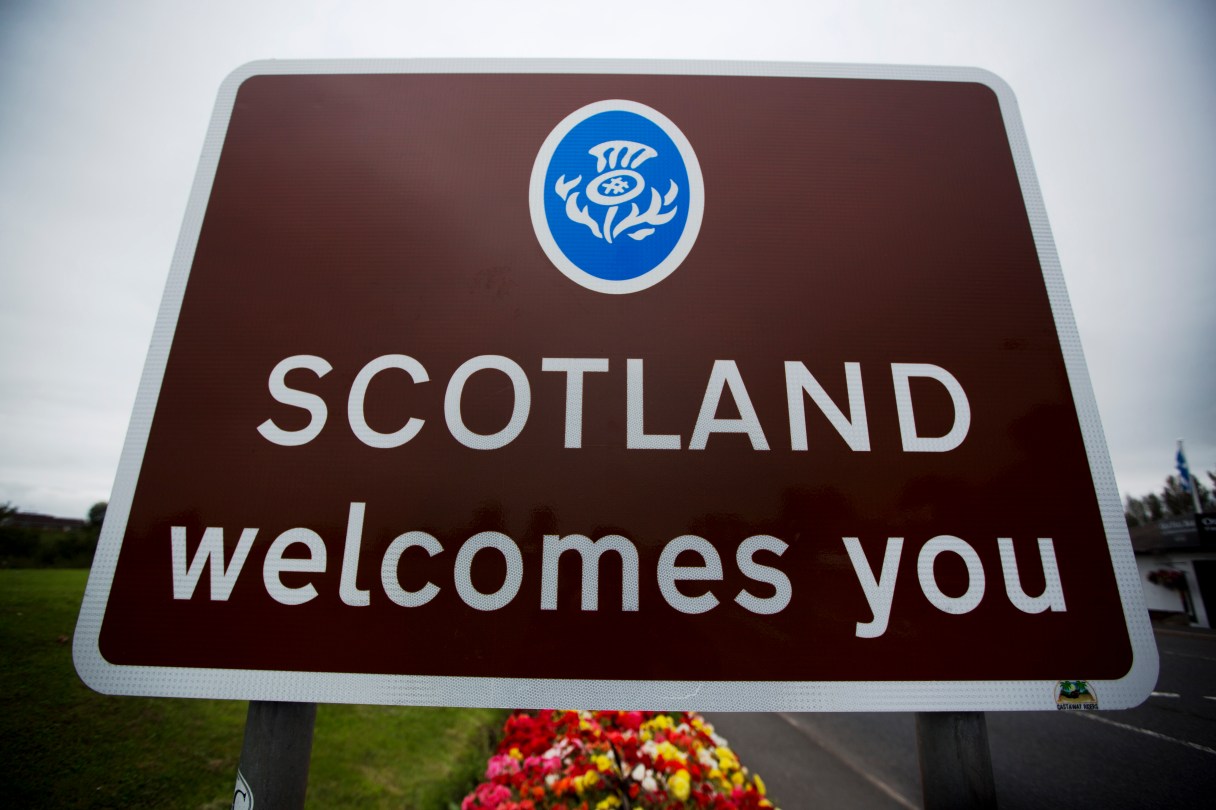
A "Scotland welcomes you" sign stands beside a road near Gretna, Scotland, Monday, Sept. 15, 2014.  If Scottish-based voters approve separation from the U.K. on Thursday, officials from Scotland and Britain will have to sort out assets and debt, questions over continued membership in the United Nations and European Union, and whether to retain a common currency.  (AP Photo/Matt Dunham)
A "Scotland welcomes you" sign stands beside a road near Gretna, Scotland, Monday, Sept. 15, 2014. If Scottish-based voters approve separation from the U.K. on Thursday, officials from Scotland and Britain will have to sort out assets and debt, questions over continued membership in the United Nations and European Union, and whether to retain a common currency. (AP Photo/Matt Dunham) A "Scotland welcomes you" sign stands beside a road near Gretna, Scotland, Monday, Sept. 15, 2014. If Scottish-based voters approve separation from the U.K. on Thursday, officials from Scotland and Britain will have to sort out assets and debt, questions over continued membership in the United Nations and European Union, and whether to retain a common currency. (AP Photo/Matt Dunham)

EDINBURGH, Scotland (AP) – On Calton Hill, overlooking Edinburgh, stands Scotland’s National Monument. A colonnade of classical stone pillars modeled on the Parthenon in Athens, it’s grand, inspiring – and unfinished, ever since the money to build it ran out two centuries ago.

It’s a fitting image for the country as seen by independence campaigners, who hope voters will finish Scotland’s incomplete journey to statehood by backing separation from Britain in a referendum on Thursday.

Polls suggest the outcome will be close. For many people south of the Scottish-English border, the idea that Scotland might leave the United Kingdom has come as a recent shock. But it has been decades, even centuries, in the making.

“I’ve always felt we could run ourselves. We used to, years ago,” said David Hall, whose job is winding the clocks on some of Edinburgh’s most famous structures, including the Nelson Monument on Calton Hill.

He adds an often-heard sentiment: “We’ve always been treated as second-rate up here, by down south.”