
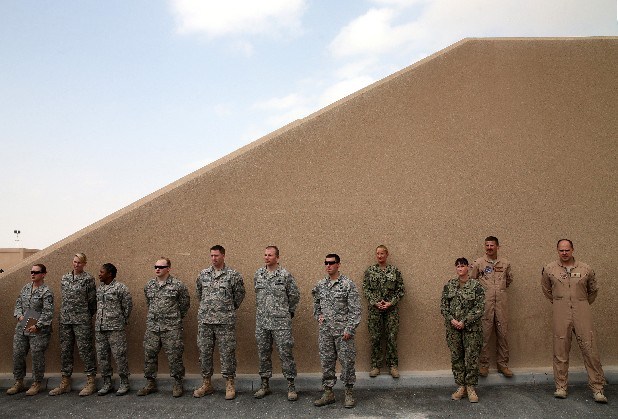
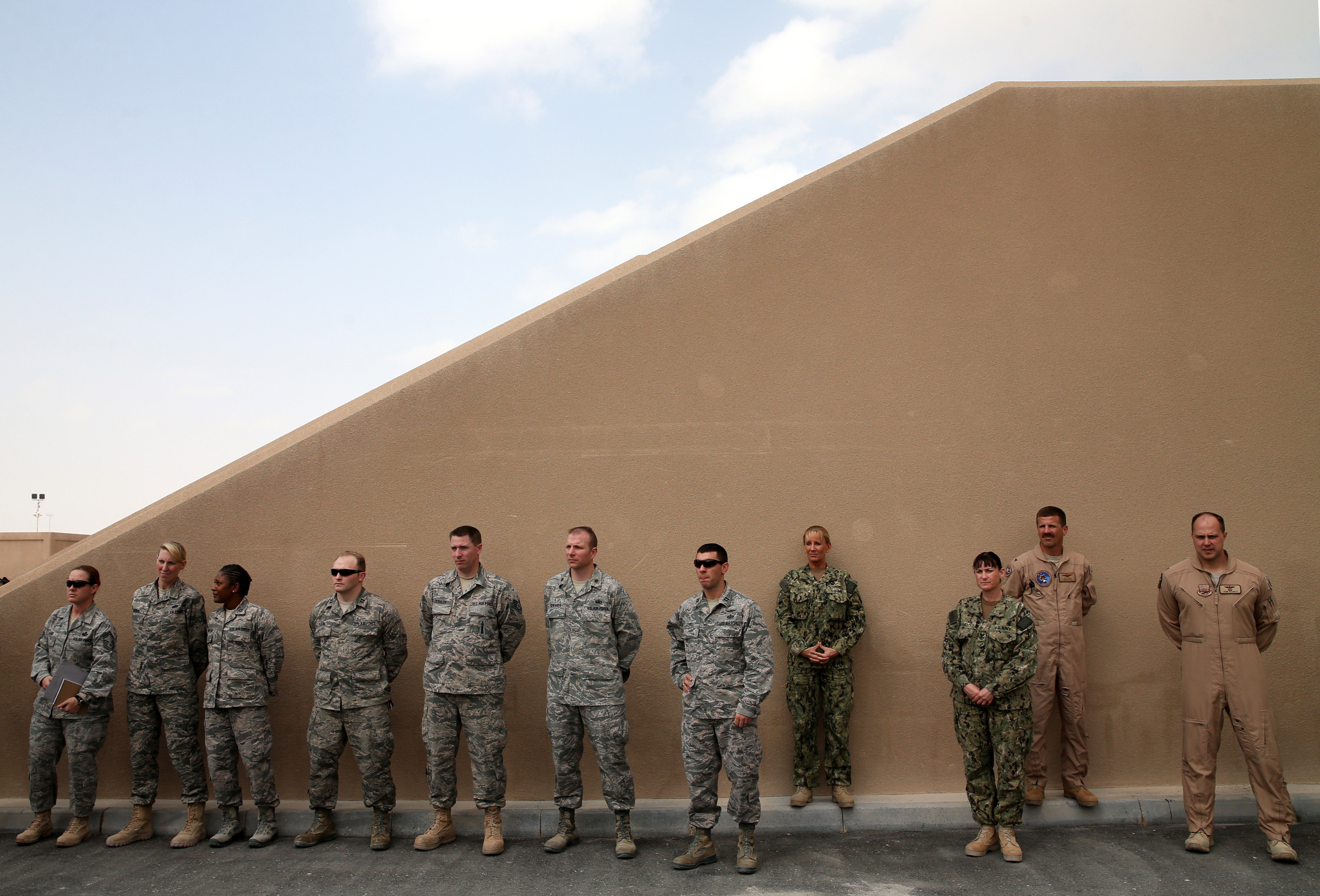
 U.S. troops listen to Secretary of Defense Chuck Hagel as he speaks at the al Udeid air base in Qatar in 2013. Just miles from where former Guantanamo Bay terror suspects have resettled, American warplanes take off from a Qatar air base in the global war on extremism. Tiny but rich Qatar is an intriguing player in what President Barack Obama says will be a long battle to stop and eventually destroy the Islamic State group. The U.S. uses the air base as its main air operations center for the Middle East.
WASHINGTON – Just miles from where former Guantanamo Bay terror suspects have resettled, American warplanes take off from Qatar’s al-Udeid air base in the global war on extremism.
The contrast in images illustrates why tiny but rich Qatar is an intriguing player in what President Barack Obama says will be a long battle to stop and eventually destroy the Islamic State group in Iraq and Syria.
Qatar plays an outsize role as a U.S. military partner. It gained public praise from Obama for brokering the controversial deal that freed Army Sgt. Bowe Bergdahl from Taliban captivity in May in exchange for the release of five senior Taliban officials who had been imprisoned for years at the U.S.-run Guantanamo Bay prison in Cuba. Qatar promised Obama it would keep the five under watch for one year, although they would then be free to leave. The Obama administration also praised Qatar for its role in securing the release of extremist hostage Peter Theo Curtis.
But Qatar also has a reputation as a supporter of Islamist groups in disfavor in Washington. Some in Congress suspect Qatar of funneling money to Islamic State militants, though the State Department says the U.S. has no evidence of it.
Qatari officials in Doha had no immediate comment for this story, but the government has unequivocally denied that it backs the Islamic State group. Qatari Foreign Minister Khalid bin Mohammed al-Attiyah said last month that his country “does not support extremist groups, including ISIS, in any way.”