
Monday, November 16, 2026Nov 16

US military role in Iraq raises combat questions

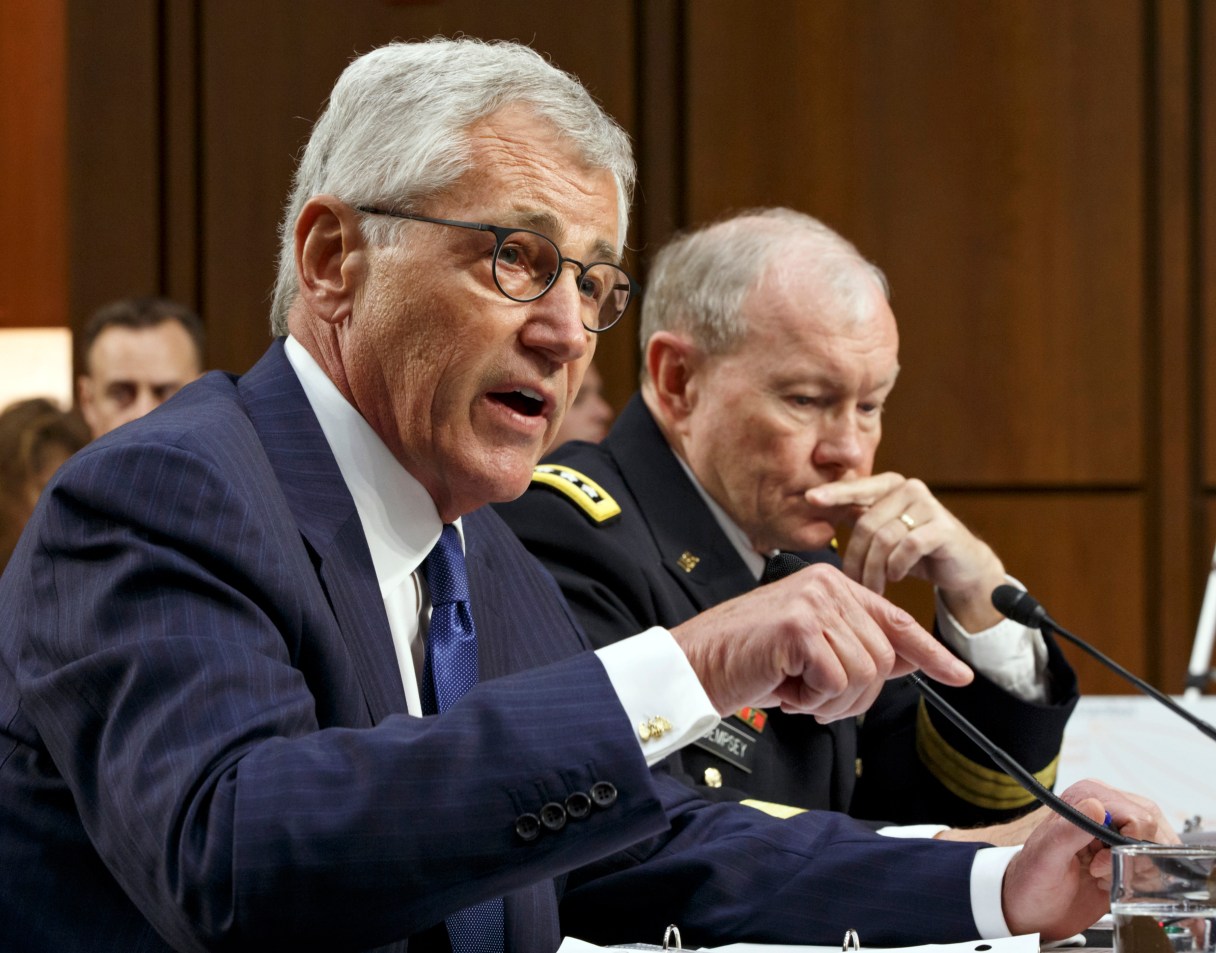
In this Sept. 16, 2014, photo, Defense Secretary Chuck Hagel, left, and Army Gen. Martin Dempsey, chairman of the Joint Chiefs of Staff, appear before the Senate Armed Services Committee in Washington. The White House and the Pentagon are grappling with how to explain what American military forces are doing and could do in Iraq as they battle the Islamic State militants. Speaking at U.S. Central Command on Wednesday, President Barack Obama reiterated his pledge to keep American troops out of combat missions. But hours later, Vice President Joe Biden appeared to be less certain about ground troops. "We'll determine that based on how the effort goes," Biden told reporters in Iowa. Biden's remarks echoed comments a day earlier from Army Gen. Martin Dempsey, the Joint Chiefs chairman, who said he may, if necessary, recommend to the president that U.S. ground forces accompany Iraqi troops on attacks against Islamic State targets, particularly in certain complex missions or if there were threats to the U.S.  (AP Photo/J. Scott Applewhite)
In this Sept. 16, 2014, photo, Defense Secretary Chuck Hagel, left, and Army Gen. Martin Dempsey, chairman of the Joint Chiefs of Staff, appear before the Senate Armed Services Committee in Washington. The White House and the Pentagon are grappling with how to explain what American military forces are doing and could do in Iraq as they battle the Islamic State militants. Speaking at U.S. Central Command on Wednesday, President Barack Obama reiterated his pledge to keep American troops out of combat missions. But hours later, Vice President Joe Biden appeared to be less certain about ground troops. "We'll determine that based on how the effort goes," Biden told reporters in Iowa. Biden's remarks echoed comments a day earlier from Army Gen. Martin Dempsey, the Joint Chiefs chairman, who said he may, if necessary, recommend to the president that U.S. ground forces accompany Iraqi troops on attacks against Islamic State targets, particularly in certain complex missions or if there were threats to the U.S. (AP Photo/J. Scott Applewhite)

WASHINGTON (AP) – The White House and the Pentagon are grappling with how to explain what American military forces are doing and could do in Iraq as they battle the Islamic State militants.

Speaking at U.S. Central Command on Wednesday, President Barack Obama reiterated his pledge to keep American troops out of combat missions. But hours later, Vice President Joe Biden appeared to be less certain about ground troops.

“We’ll determine that based on how the effort goes,” Biden told reporters in Iowa.

Biden’s remarks echoed comments a day earlier from Army Gen. Martin Dempsey, the Joint Chiefs chairman, who said he may, if necessary, recommend to the president that U.S. ground forces accompany Iraqi troops on attacks against Islamic State targets, particularly in certain complex missions or if there were threats to the U.S.

The statements have raised questions about possible splits between the president and some of his top advisers. But at least some of the confusion can be chalked up to differences in how the military talks about what it does.