
Thursday, November 12, 2026Nov 12

AP Interview: Silva seeks grassroots Brazil reform

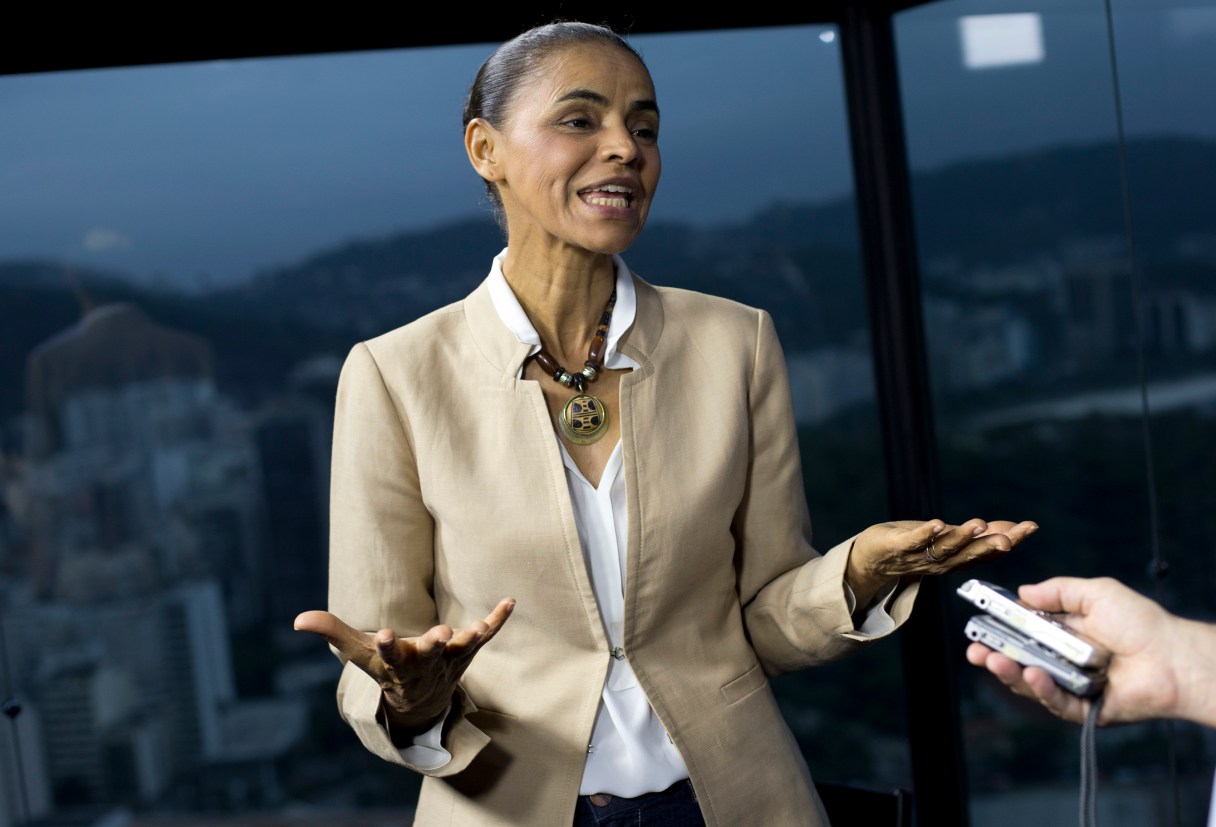
Marina Silva, presidential candidate of the Brazilian Socialist Party, speaks during an interview with AP in Rio de Janeiro, Brazil, Wednesday, Sept. 17, 2014. Silva was thrust into the Socialist Party's presidential nomination when its candidate of choice, Eduardo Campos, died in a plane crash last month. Since then, her anti-establishment profile has propelled her to a neck-and-neck race with actual Brazilian president Dilma Rousseff. (AP Photo/Silvia Izquierdo)
Marina Silva, presidential candidate of the Brazilian Socialist Party, speaks during an interview with AP in Rio de Janeiro, Brazil, Wednesday, Sept. 17, 2014. Silva was thrust into the Socialist Party's presidential nomination when its candidate of choice, Eduardo Campos, died in a plane crash last month. Since then, her anti-establishment profile has propelled her to a neck-and-neck race with actual Brazilian president Dilma Rousseff. (AP Photo/Silvia Izquierdo) Marina Silva, presidential candidate of the Brazilian Socialist Party, speaks during an interview with AP in Rio de Janeiro, Brazil, Wednesday, Sept. 17, 2014. Silva was thrust into the Socialist Party's presidential nomination when its candidate of choice, Eduardo Campos, died in a plane crash last month. Since then, her anti-establishment profile has propelled her to a neck-and-neck race with actual Brazilian president Dilma Rousseff. (AP Photo/Silvia Izquierdo)

RIO DE JANEIRO (AP) – Front-running presidential candidate Marina Silva says the key to her support among millions of Brazilians who joined in anti-government protests last year is her understanding that reforming a broken political system will come from the ground up.

Silva spoke exclusively with The Associated Press on Wednesday in her first interview with a foreign media outlet since being thrust into a hotly contested campaign just a month ago, after her Socialist Party’s first candidate died in a plane crash Aug. 13.

In a wide-ranging, hour-long interview, Silva said that as president she would seek bilateral trade deals and better relations with the U.S. and Europe, and would push for improved human rights in allies such as Cuba.

Asked what she would do to lessen Brazilians’ frustrations with an inefficient political system widely viewed as corrupt, Silva said real change won’t come from the top.

“It’s neither the parties nor the political leaders who will bring about change,” she said. “It’s the movements who are changing us.”