
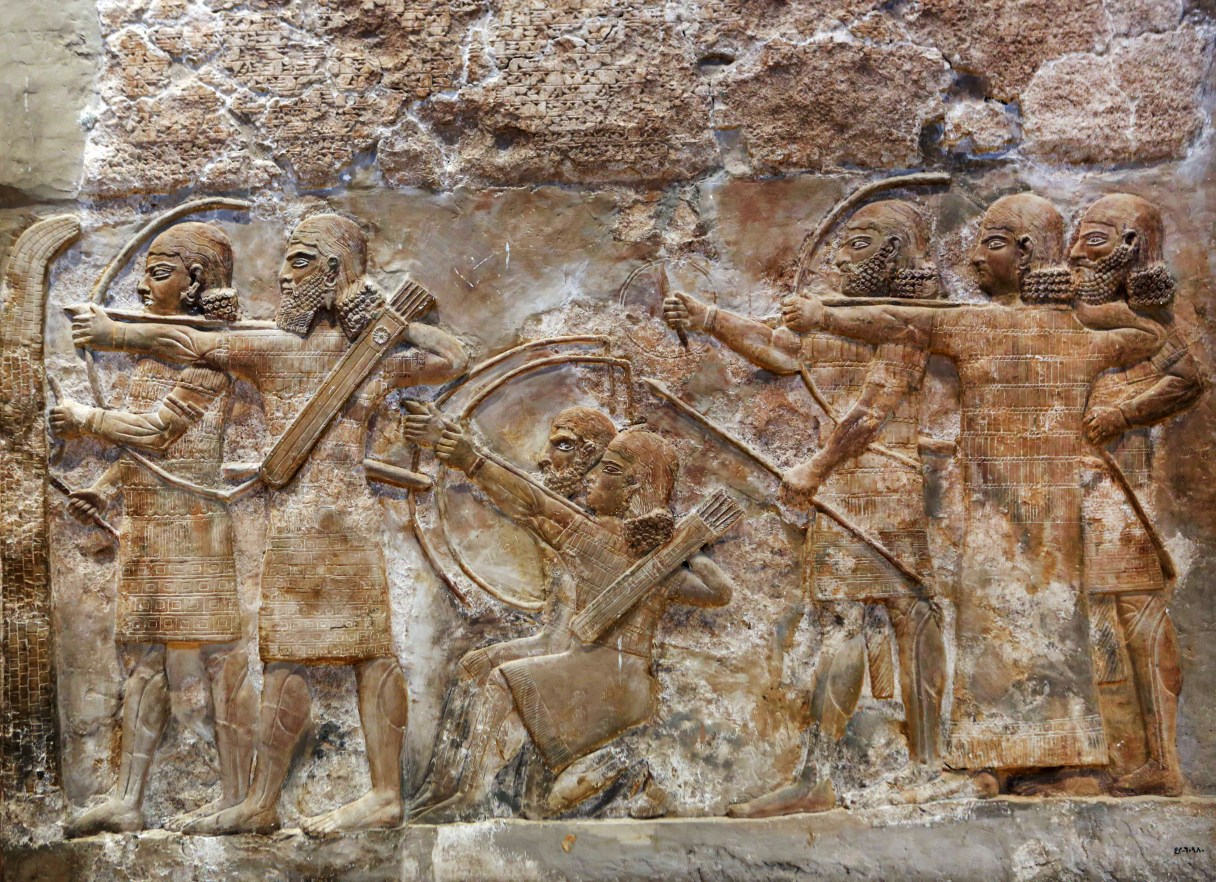
BAGHDAD (AP) – For more than 5,000 years, numerous civilizations have left their mark on upper Mesopotamia – from Assyrians and Akkadians to Babylonians and Romans. Their ancient, buried cities, palaces and temples packed with monumental art are scattered across what is now northern Iraq and eastern Syria.
Now much of that archaeological wealth is under the control of extremists from the Islamic State group. The militants have demolished some artifacts in their zealotry to uproot what they see as heresy, but they are also profiting from it, hacking relics off palace walls or digging them out to sell on the international black market.
Antiquities officials in Iraq and Syria warn of a disaster as the region’s history is erased.
In Iraq, black market dealers are coming into areas controlled by the Islamic State group or in safe regions nearby to snap up items, said Qais Hussein Rashid, head of the state-run Museums Department, citing reports from local antiquities officials still in the area.
When the militants overran the northern city of Mosul and surrounding Ninevah province in June, they captured a region were nearly 1,800 of Iraq’s 12,000 registered archaeological sites are located. They snapped up even more as they pushed south toward Baghdad.