
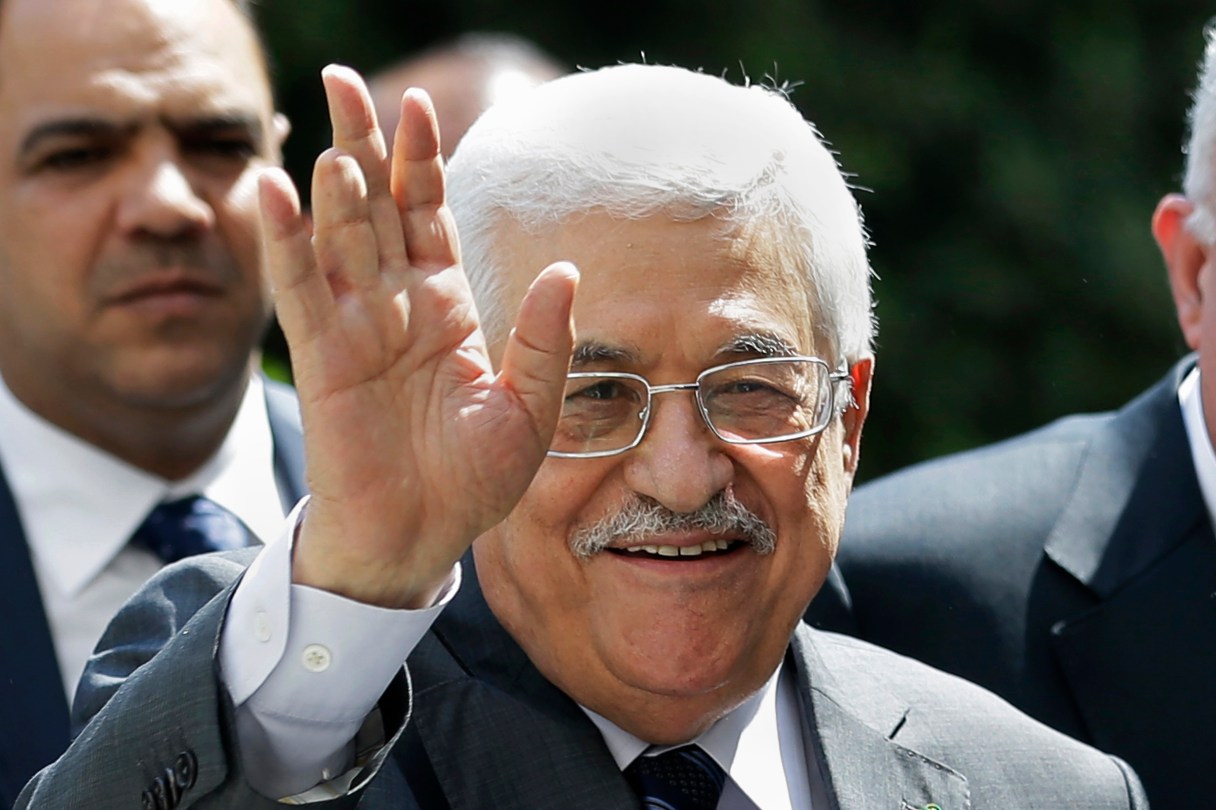
CAIRO (AP) – Rival Palestinian factions Hamas and Fatah on Monday began reconciliation talks in Cairo, one day ahead of negotiations with Israel on cementing the Aug. 26 truce that ended a 50-day war in Gaza, according to Egyptian security officials.
The talks were being held behind closed doors at the Egyptian intelligence headquarters in the capital, Cairo, the officials said, speaking on condition of anonymity because they were not authorized to speak to the media. There was no media access to the negotiations.
Blame-trading between the long-time rival Palestinian factions has become more frequent since the end of the Israel-Hamas war in Gaza earlier this summer, a sign that an agreement on running the coastal territory – now under Hamas’ control – is not within reach.
Before the war broke out, Western-backed Palestinian President Mahmoud Abbas, whose Fatah group is in control of the West Bank, had worked out a tentative agreement with Hamas under which he would head a temporary unity government of experts in both the West Bank and Gaza until new elections are held. However, major issues were left unresolved under that deal, including the fate of 40,000 government employees hired by Hamas in the Gaza Strip as well as control over Gaza’s Hamas-dominated security forces.
Hamas was mired in a severe financial crisis when it struck the deal, but has become emboldened since the end of the summer war because fighting Israel boosted its popularity among Palestinians.