
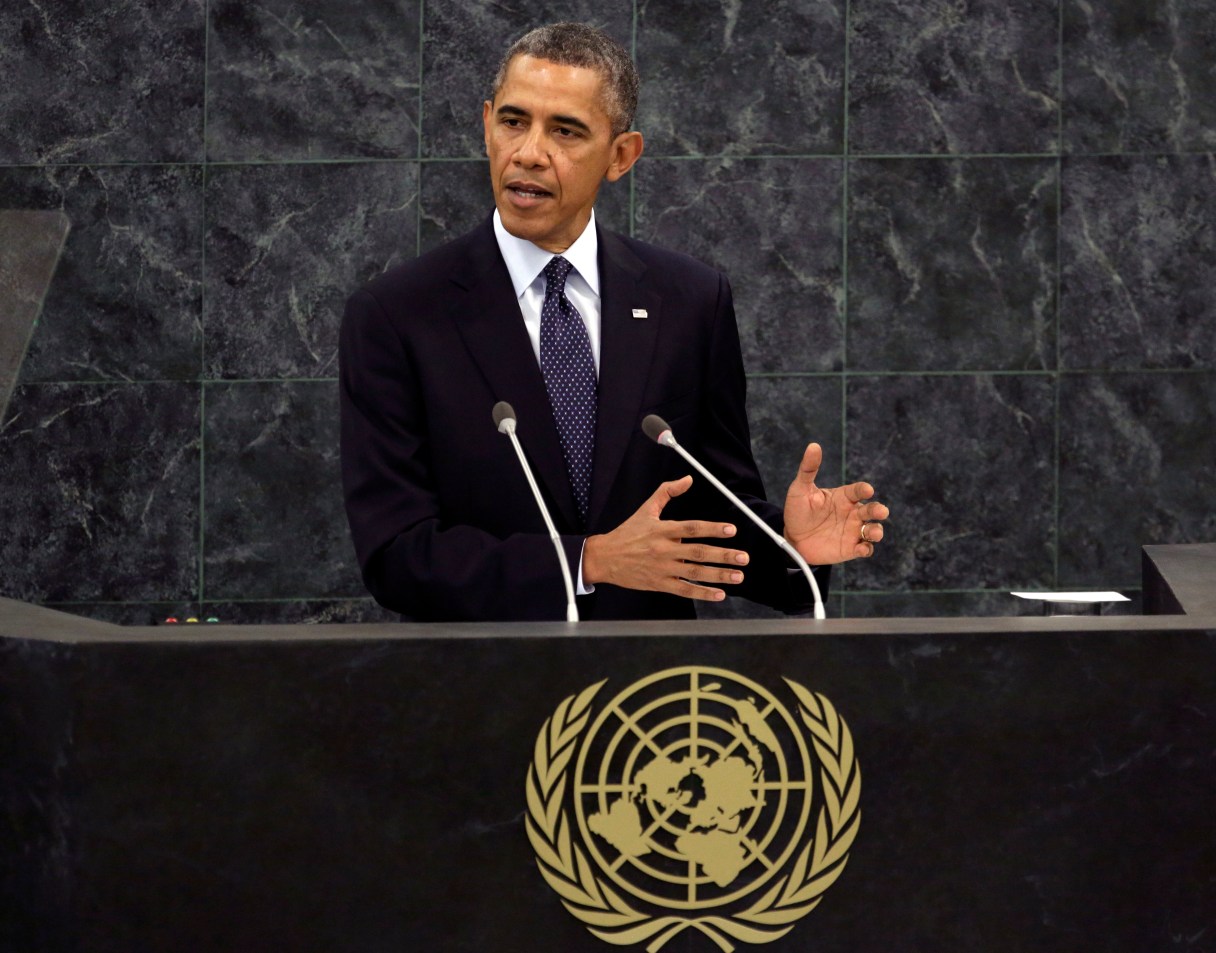
NEW YORK (AP) – For President Barack Obama, the participation of five Arab nations in airstrikes against militants in Syria marked an unexpected foreign policy victory as he plunges the U.S. deeper into a military conflict in the Middle East that he has reluctantly embraced.
The U.S. announced the strikes hours before Obama was due to arrive in New York for three days of talks with foreign leaders at the annual United Nations General Assembly. The cooperation by Arab partners provided a significant boost to Obama’s efforts to build an international coalition to take on the Islamic State militants who have moved freely across the border between Iraq and Syria.
U.S. officials said Bahrain, Qatar, Saudi Arabia, Jordan and the United Arab Emirates participated in the strikes against Islamic State targets, as Obama significantly ramped up U.S. military involvement in Syria, a country that has been mired in a brutal three-year civil war.
As Obama arrives in New York for the U.N. meetings, he’ll also be facing other crises that highlight the extraordinary range of challenges demanding U.S. attention across multiple continents. He’ll speak at a high-level U.N. meeting on the Ebola outbreak in West Africa and meet with other leaders to discuss Russia’s provocations in Ukraine.
Along with the fight against the Islamic State, the trio of crises has raised questions about the effectiveness of Obama’s foreign policy and negatively affected the American public’s views of his handling of world affairs.