
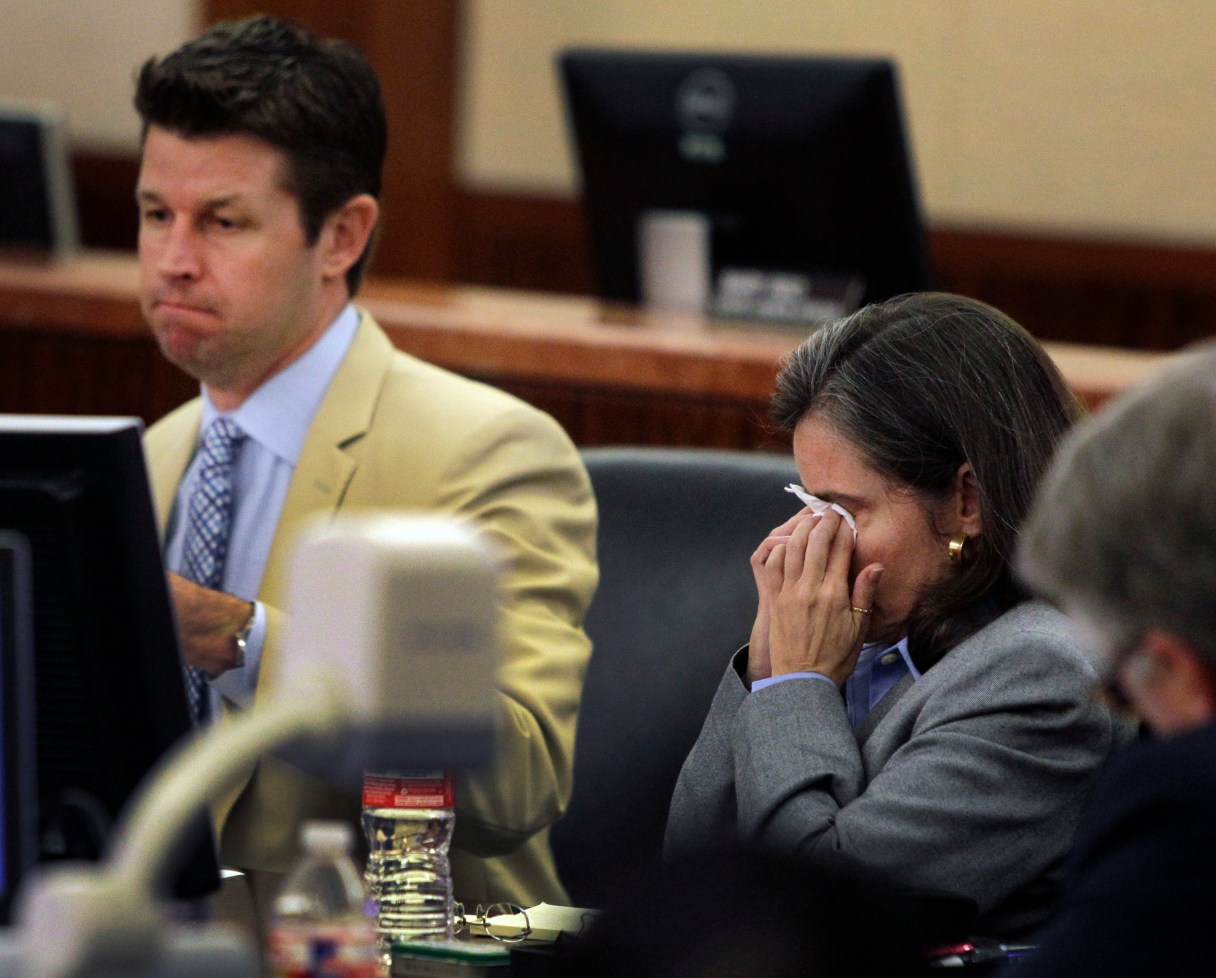
HOUSTON (AP) – A Texas cancer researcher accused of poisoning a colleague who was also her lover was described by prosecutors on Wednesday as a devious and manipulative person who took extreme action when the man she’d become obsessed with rejected her.
Dr. Ana Maria Gonzalez-Angulo’s attorneys countered that there was no direct evidence against their client in the poisoning – which fellow researcher George Blumenschein survived – and that the prosecution’s case was “nothing but speculation and guesswork.”
Jurors deliberated for about two hours Wednesday after hearing closing arguments in the aggravated assault trial, which began last week. They will return Friday to resume deliberations.
Prosecutors said the affair between Gonzalez-Angulo and Blumenschein turned into a “fatal attraction” after Blumenschein spurned her in favor of Evette Toney, his 10-year live-in girlfriend, with whom he was trying to have children.
They alleged that after a sexual encounter on Jan. 27, 2013, Gonzalez-Angulo laced Blumenschein’s coffee with ethylene glycol, a sweet-tasting chemical found in antifreeze. Blumenschein told jurors he now has about 40 percent of his kidney function.