
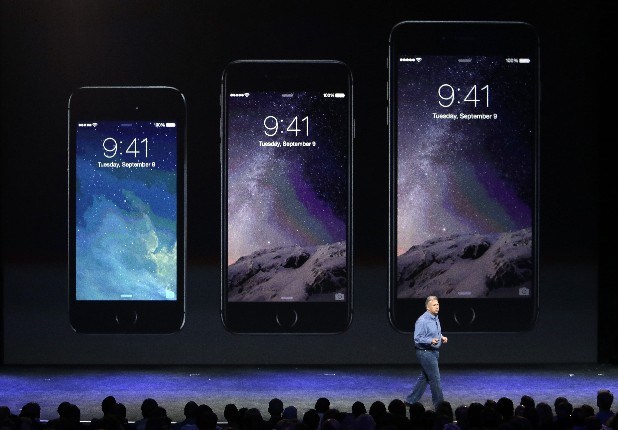
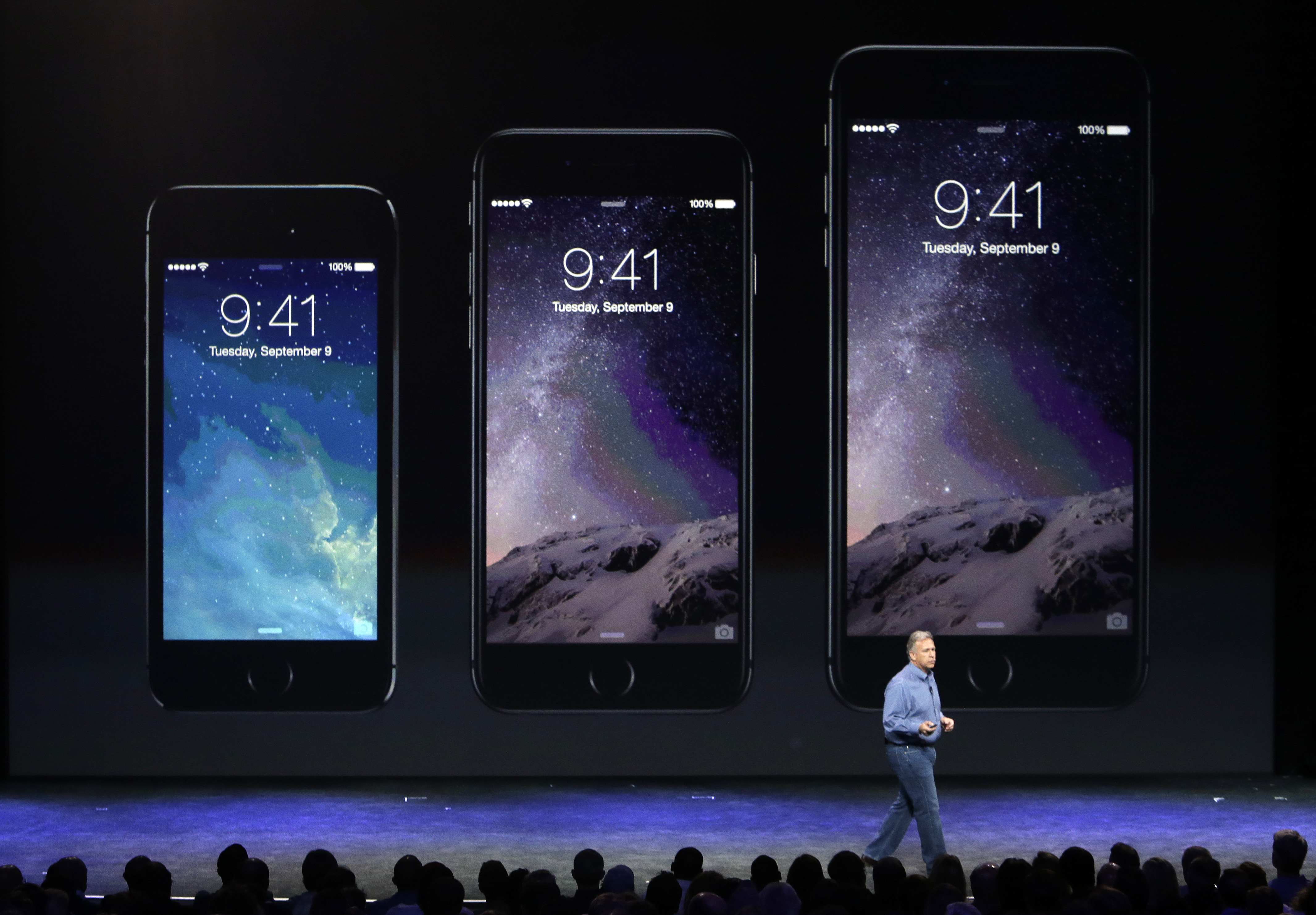
 Phil Schiller, Apple’s senior vice president of worldwide product marketing, discusses the new iPhone 6, center, and iPhone 6 plus, right, on Tuesday, Sept. 9, 2014, in Cupertino, Calif.
WASHINGTON — Devoted customers of Apple products these days worry about whether the new iPhone 6 will bend in their jean pockets. The National Security Agency and the nation’s law enforcement agencies have a different concern: that the smartphone is the first of a post-Snowden generation of equipment that will disrupt their investigative capabilities.
The phone encrypts emails, photos and contacts based on a complex mathematical algorithm that uses a code created by, and unique to, the phone’s user — and that Apple says it will not possess.
The result, the company is essentially saying, is that if Apple is sent a court order demanding the contents of an iPhone 6 be provided to intelligence agencies or law enforcement, it will turn over gibberish, along with a note saying that to decode the phone’s emails, contacts and photos, investigators will have to break the code or get the code from the phone’s owner.
Already the new phone has led to an eruption from the director of the FBI, James B. Comey. At a news conference Thursday, Comey said, “What concerns me about this is companies marketing something expressly to allow people to hold themselves beyond the law.”
He cited kidnapping cases, in which exploiting the contents of a seized phone could lead to finding a victim, and predicted there would be moments when parents would come to him “with tears in their eyes, look at me and say, ‘What do you mean you can’t'” decode the contents of a phone.
Apple declined to comment.