
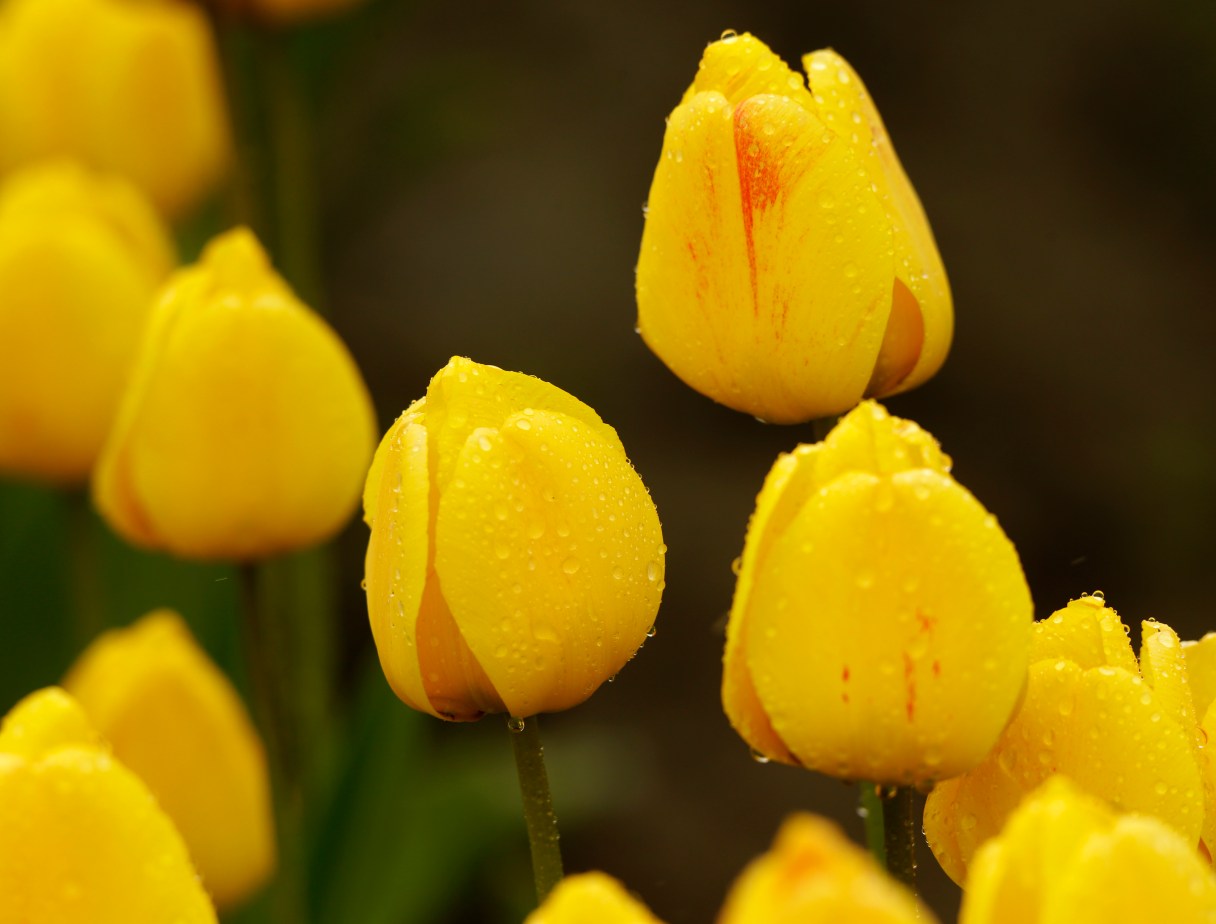
Maybe it’s time to rethink the way we landscape using tulips.
True, the familiar, large, goblet-shaped blooms make a colorful springtime splash grouped in beds and pots. But those hybrids are softies compared to their wild ancestors – species tulips growing in unforgiving sites from Algeria to China. They thrive in problem areas.
Tulips are not native to Holland, but growers there over the past 400 years have built an industry around developing hybrids for the commercial trade. Their classic tulips perform best with fertile soil and an ample moisture supply.
That’s not the story, however, with clones of the botanical or species tulips. Those you can plant and forget. Neglect them. Sear them under the sun. Simply scratch the small bulbs into some gravel or tuck them into rocky crevices and they’ll survive that austerity just as they have the harsh, hardscrabble mountain conditions of Afghanistan, Switzerland, Kazakhstan, Turkey or Mongolia.
“Wild tulips are better adapted to difficult conditions,” says Christian Curless, a horticulturist for the flower bulb company Colorblends.com. “They’re happiest with parched conditions in summer – places where the grass dries up. These are the kinds of flowers you can plant in a rock garden or elevated a little bit for good drainage.”