
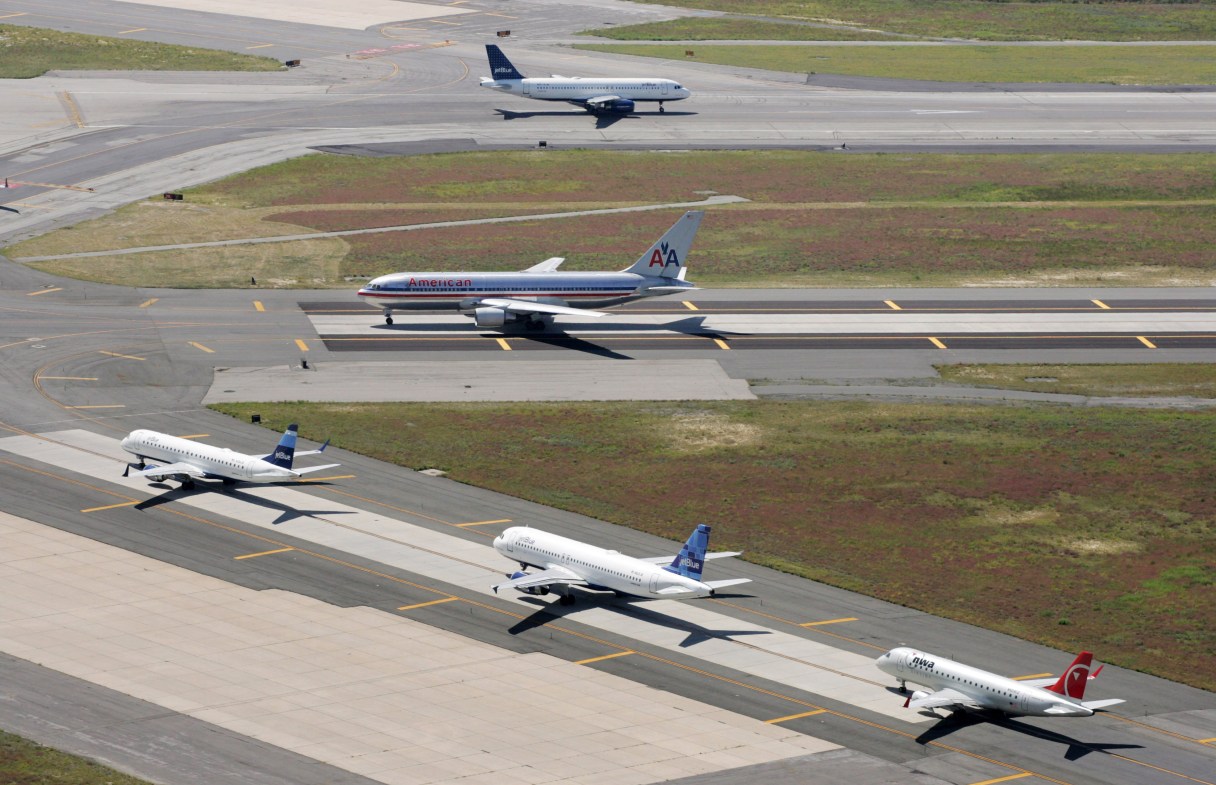
NEW YORK (AP) – The closure of a runway at John F. Kennedy International Airport could create a traffic jam in the skies above New York City this summer.
The main arrivals runway at Kennedy will be closed for repairs and resurfacing for about five months starting at the end of April, just as the summer travel season gets underway, and will likely remain closed through most of hurricane season. When the winds are calm and visibility is clear, the closure of one runway doesn’t cause major disruptions at JFK, which has four runways and rarely operates all four at the same time. But during inclement weather, the loss of that runway could cause a ripple effect of delays at all three of the major airports in the crowded skies above New York.
“It’s probably the most complex air space in the world. When you create limitations in one part of it, it has effects in other parts of it, including other airports,” said Robert Mann, an airline industry analyst and consultant based in Port Washington. “It may limit the capacity of (each) airport in terms of the number of hourly arrivals and departures that can be handled.”
Runway selection is driven by weather and wind. Pilots prefer to land and take off into the wind to create either lift or drag on a plane. Because of this, airport officials are assessing wind direction all day long. When the wind changes, they will redirect planes to a different runway.
With the main arrivals runway out of commission, the Federal Aviation Administration could be forced to land planes on runway 13L, an interior runway that runs parallel to Jamaica Bay. And in poor visibility, landing aircraft on this runway creates a logistical mess for the FAA, officials say.