
CHICAGO (AP) – Voters in Chicago’s first mayoral runoff sent a message Tuesday as they chose between Mayor Rahm Emanuel and his challenger, Cook County Commissioner Jesus “Chuy” Garcia: The winner needs to pay better attention to them.
Emanuel, a former White House chief of staff, failed to win an outright majority in February, forcing the runoff. Since then he’s been campaigning to persuade voters that a second term is the best way to help Chicago out of its serious financial problems. But Garcia has criticized Emanuel’s leadership as focused too heavily on the city’s business core and not neighborhood residents.
Both sides campaigned furiously – including last-minute stops at diners, train stops and campaign offices on Tuesday – and thousands of volunteers from each campaign hit phones and doors hoping to coax voters to get to the polls.
Several precincts that opened late were still accepting ballots Tuesday evening after polls closed.
The mayoral runoff was the first since the city changed the way it conducts elections in 1990s. Initial estimates showed turnout to be light.
Many of those heading to the polls Tuesday said, either way, the election should be a signal to the city’s new mayor.
“Hopefully he (Emanuel) takes heed of the runoff when he should have been a shoo-in,” said Richard Rowe, a 50-year-old, who planned to vote for the incumbent.
That was Jesus Fernandez’s hope too. He voted for Garcia but didn’t think the challenger would garner enough votes to win.
“If he (Garcia) gets close, we might push Rahm to do something,” said Fernandez, a 44-year-old window washer. “At least we push him a little bit.”
Emanuel has highlighted tough decisions he’s made since succeeding former Mayor Richard M. Daley in 2011 but admitted that his management approach too often rubbed city residents the wrong way. He portrayed Garcia as not experienced enough to handle a financial crunch faced by the nation’s third-largest city.
Emanuel raised far more money than Garcia, plastered the airwaves with ads and had support from his former boss, President Barack Obama, who cast an early ballot for him from Washington.
“This is a big election with clear choices,” Emanuel said at a campaign office the day before the election. “There’s a lot at stake for the city of Chicago.”
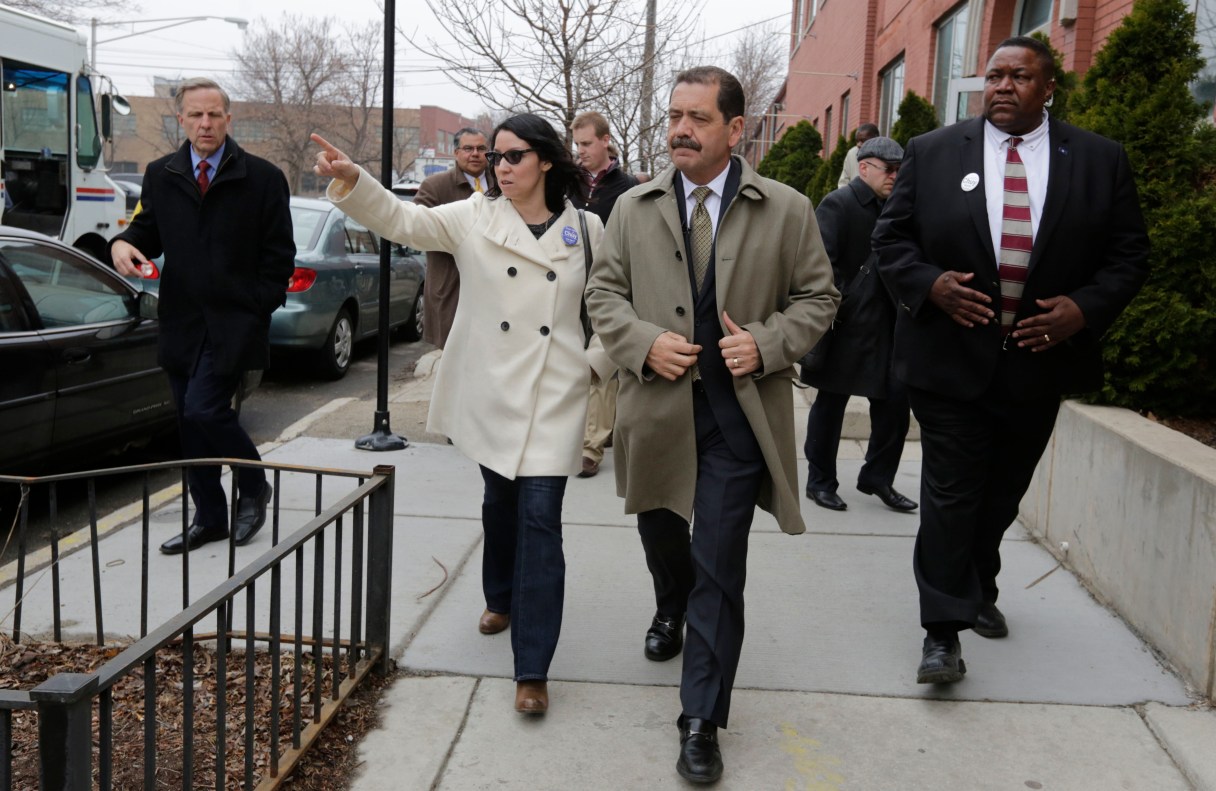
Garcia, a former community organizer, alderman and state lawmaker, ran a campaign focused on the city’s neighborhoods, with support from teachers and unions upset with Emanuel. He accused the mayor of being out of touch with voters and blamed him for the fiscal problems, while playing up the mayor’s push to close about 50 schools and a gang violence problem that spiked during Emanuel’s first term.
He also vowed to end Chicago’s troubled red-light camera system, which some residents believe is discriminatory and focuses more on revenue than safety.
“The people had their say in Chicago,” he told supporters the day ahead of the election. “They want someone to listen to them. They said they wanted their families and their neighborhoods back and they want those things to matter to the leader of Chicago. They said they wanted change. And that’s why we’re in this historic runoff.”
Polls put Emanuel ahead of Garcia in the weeks leading up to the runoff.
But both sides pushed early voting and focused on get-out-the-vote efforts, particularly in minority neighborhoods. Election officials said more than 142,300 Chicago voters cast early ballots for the runoff, far outpacing early voting turnout in February and four years ago.
However, election day turnout wasn’t robust according to the Chicago Board of Election Commissioners. Initial estimates in the afternoon clocked in at 28 percent. Turnout in February was roughly 34 percent. In 2011 it was about 42 percent after Daley announced his retirement after more than two decades.
___
Follow Sophia Tareen at http://twitter.com/sophiatareen and Sara Burnett at http://twitter.com/sara_burnett.