
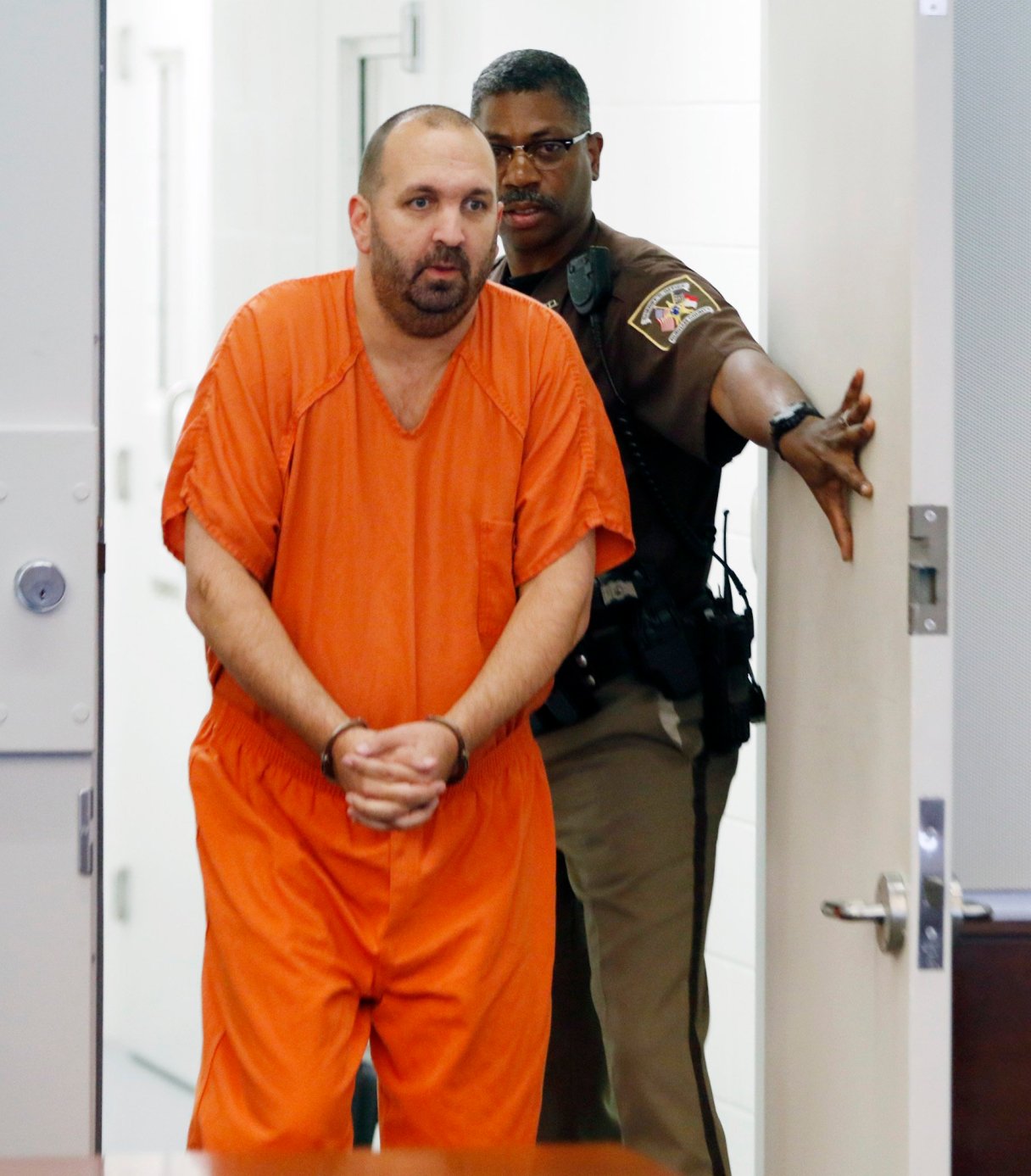
DURHAM, N.C. (AP) – When he was arrested, prosecutors say the man charged with killing three North Carolina college students had possession of the murder weapon, gunshot residue on his hands and blood from one of the victims splattered on his pants.
The evidence against Craig Stephen Hicks, 46, was disclosed Monday in brief hearing where Senior Resident Superior Court Judge Orlando Hudson Jr. ruled that he can face a death penalty trial.
Hicks, who remained handcuffed throughout the court proceedings, showed no visible emotion as the judge announced his decision. He is charged with three counts of first-degree murder in the Feb. 10 killings of 23-year-old Deah Shaddy Barakat; his wife, 21-year-old Yusor Mohammad Abu-Salha; and her sister, 19-year-old Razan Mohammad Abu-Salha.
Durham County Assistant District Attorney Jim Dornfried said at the preliminary hearing that when Hicks turned himself in, a .357-caliber handgun was found in the car he was driving. Dornfried said ballistics testing later matched that pistol to the eight shell casings recovered at the victims’ apartment.
Police have said Hicks appeared to have been motivated by a long-running dispute over parking spaces at the condominium complex near the University of North Carolina at Chapel Hill, where he lived in the same building as dental student Barakat and his wife. Dornfried said Monday that Hicks had revealed details about the killings while under questioning by investigators.