
Monday, November 16, 2026Nov 16

Polo not just for rich and famous, college players say

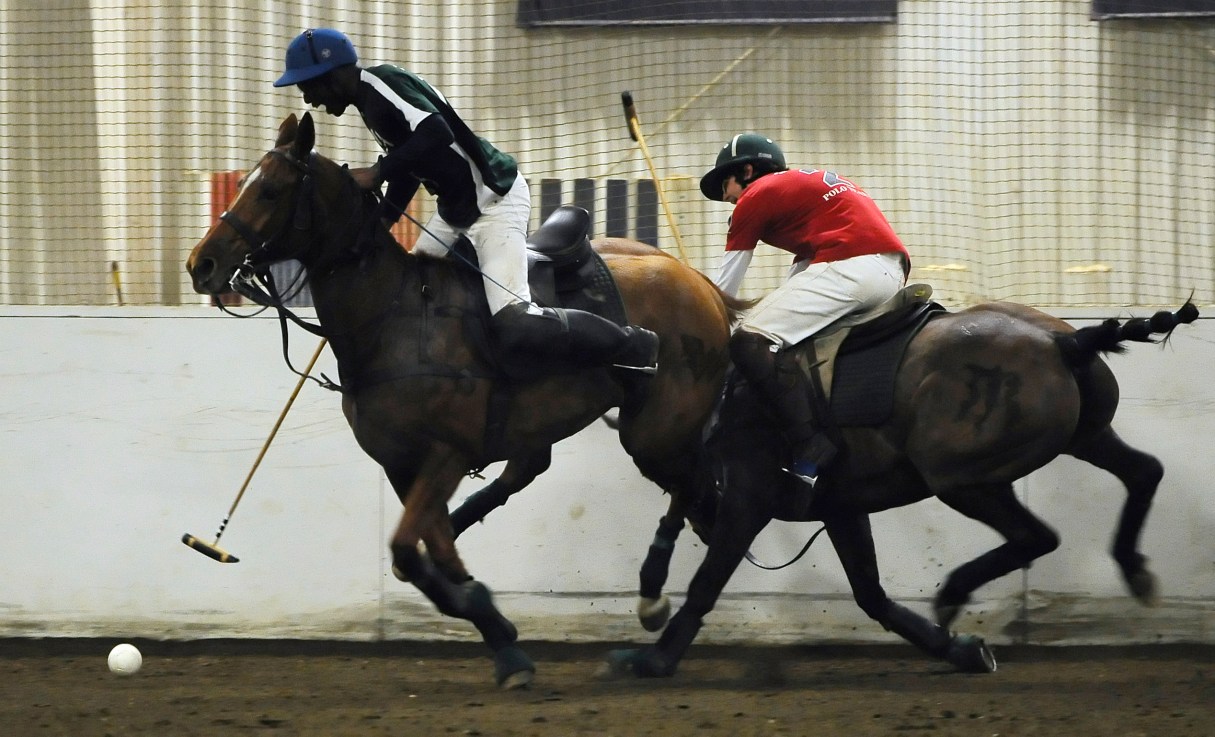
In this Wednesday, April 8, 2015, photo, Colorado State's Kareem Rosser, left, is pursued by SMU's Manuel Huarte during a polo match in the intercollegiate polo championships at the University of Connecticut, Wednesday, April 8, 2015, in Storrs, Conn. Rosser who grew up in poverty in West Philadelphia led Colorado State into the national championship game on Wednesday. About 50 schools field teams in what participants say is no longer just a sport for kings and millionaires. (AP Photo/Jessica Hill)

STORRS, Conn. (AP) – Kareem Rosser approached the ball knowing his performance in the overtime shootout would go a long way toward determining whether Colorado State would advance to its second national championship game in three years.

The senior, who grew up on welfare in west Philadelphia, Pennsylvania, raised his mallet, brought it down alongside his horse and struck what looks like a mini soccer ball into a goal 25-yards away. CSU’s top-seeded arena polo team rode off Wednesday night with the 24-23 win over SMU after trailing by two goals late in regulation.

“My stomach was in my saddle,” Rosser said.

Colorado State, which will play Texas A& M for the title Saturday, is one of about 50 U.S. colleges and universities with competitive polo programs, according to the United States Polo Association, which is holding its national championships this week at the University of Connecticut.

That is a 35 percent increase over the last five years, according to the USPA. About 60 other schools have programs, but don’t participate in intercollegiate competitions.