
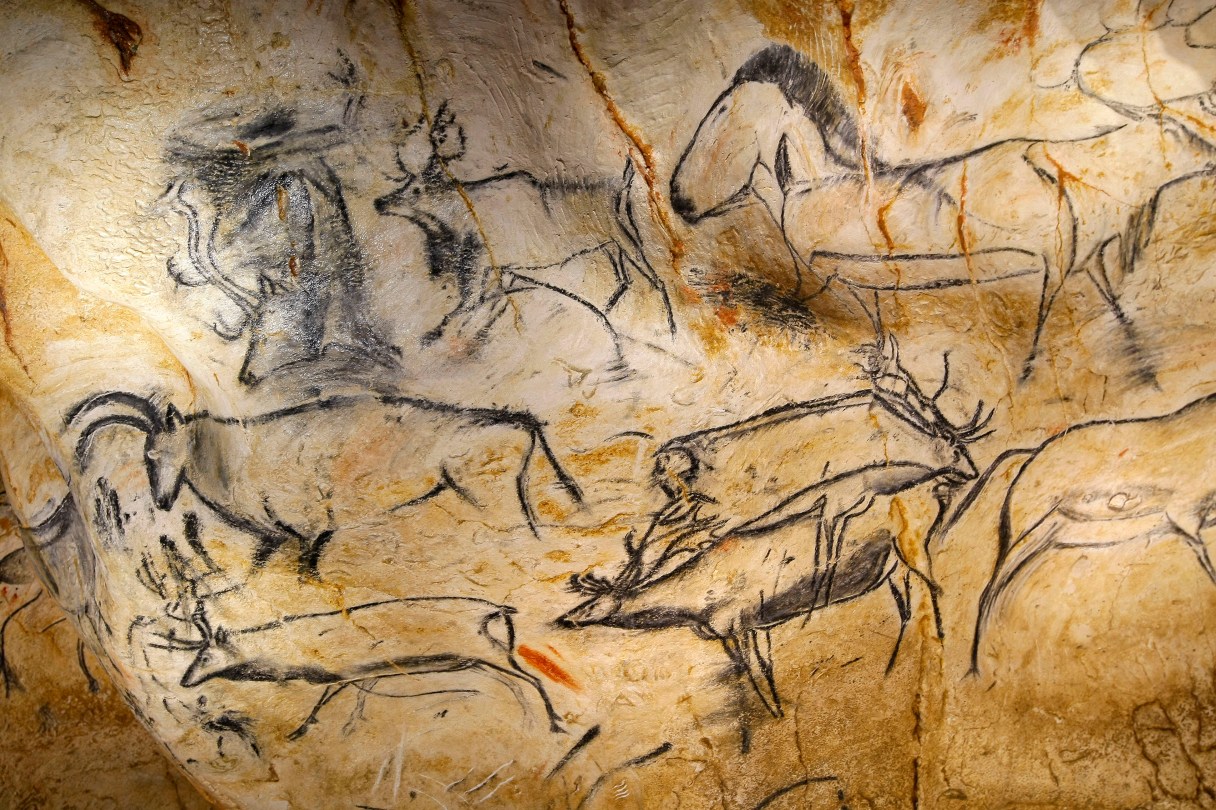
PRIVAS, France (AP) – Jean-Marie Chauvet noticed air whistling out from a crack on a plateau in southern France, so he and fellow cave enthusiasts went to investigate. What they found that Sunday in 1994 still fills Chauvet’s voice with wonder: an immense cave covered with prehistoric paintings of horses, mammoths and rhinos – paintings so vivid, he says, it felt like the Stone Age artists had just moments ago put down their ochre and walked away.
The discovery of the long-hidden artwork created a sensation, but the site was quickly closed to the public. Just by breathing, tourists could erode the images.
Since most modern humans will never get to see the masterpieces in what is widely known as the Chauvet Cave, scientists, artists and the French government have spent 56 million euros (about $60 million) and several years creating the next best thing: a near-exact replica of the cave about two kilometers (1.2 miles) away, including more than 400 paintings of horses, bears, rhinoceros and mammoths, hand prints and carvings. Experts even recreated stalactites and stalagmites from the original site, as well as the cool temperatures and thick smell of humidity.
French President Francois Hollande unveiled the site Friday, and it opens to the public later this month.
In a rare interview, Chauvet described digging through narrow passageways and guiding a flashlight in the blackness until one of his fellow spelunkers came across “the two lines of red ochre. . That’s when it started.”