
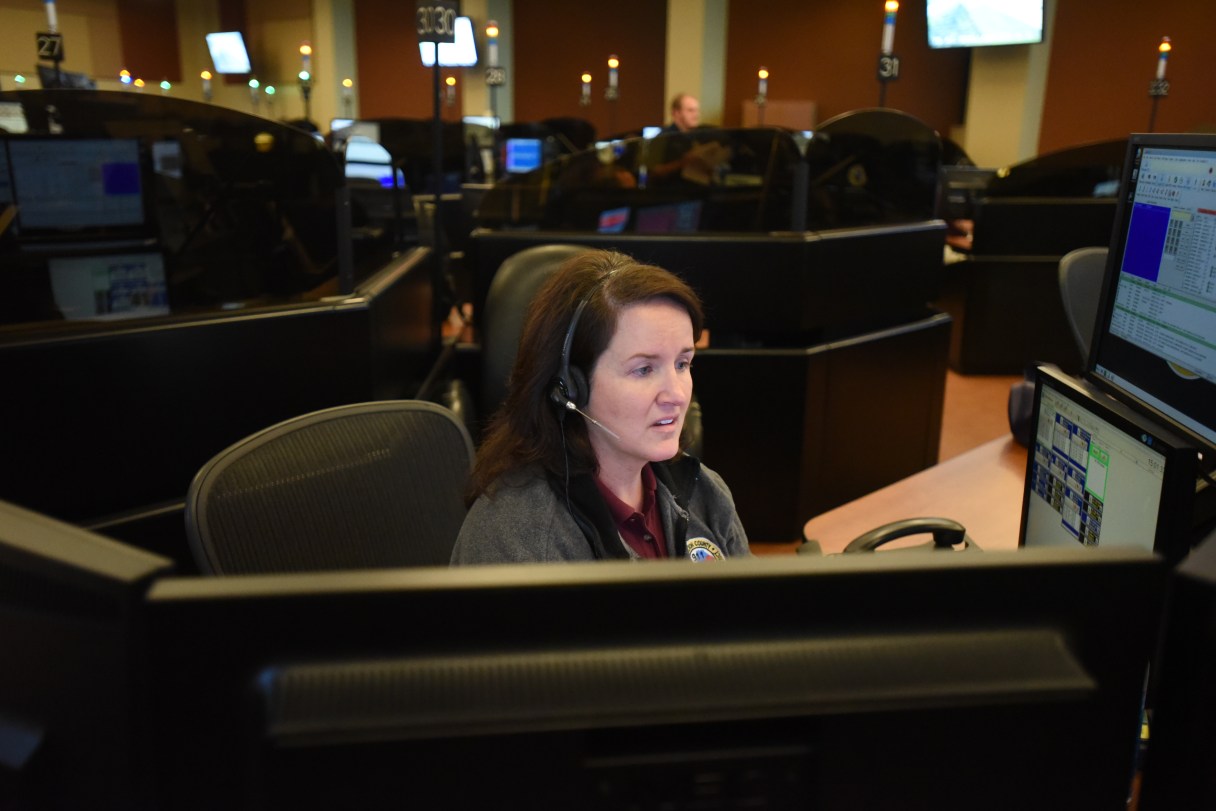
HAMILTON COUNTY 911 TELECOMMUNICATORS’ EXPERIENCE
0-1 year: 9 1-5 years: 46 5-10 years: 40 10-15 years: 18 15-20 years: 4 More than 20 years: 8 Total: 125 Source: Hamilton County 911 Emergency Communications District
When you call 911 in Hamilton County, there’s a whole lot of stuff the operator has to do, and do right.
Within 60 seconds, the operator must try to get the address of the emergency, find out the caller’s name and phone number, determine the nature of the call, obtain the age and gender of the patient in a medical call and start the process of sending help.
The operator can’t let the line go silent for more than 15 seconds and should ask questions one at a time, with age-appropriate wording.
The Hamilton County 911 Emergency Communications District telecommunicators answer about 330 emergency 911 calls every day. That’s about 120,000 a year, but only a fraction of the load — because another 480,000 calls are rated as non emergencies.
To ensure that all those calls are being answered consistently and correctly, industry standards call for 911 centers to review and evaluate between 7 and 10 percent of all 911 calls in a calendar year.
Last year, Hamilton County 911 failed to meet that standard. The district reviewed only about 6,500 calls — about 5 percent. But this year, with a new, streamlined $335,000 system in place, district leaders plan to double that number and review 12,000 calls to 911.
The new call recording system was installed in July 2014, Executive Director John Stuermer said. Developed by a company called Voice Print International, or VPI, the system significantly reduces the manpower needed to complete a call review.
Before VPI, quality assurance reviewers at the 911 center had to use three different programs to pull recorded 911 calls and complete the evaluation, and there was no way to ensure that the same number of calls was reviewed for each 911 operator. One operator might be reviewed 20 times a month while another was only reviewed twice.
“It was a very time-intensive, laborious process,” said Jeff Carney, director of operations.
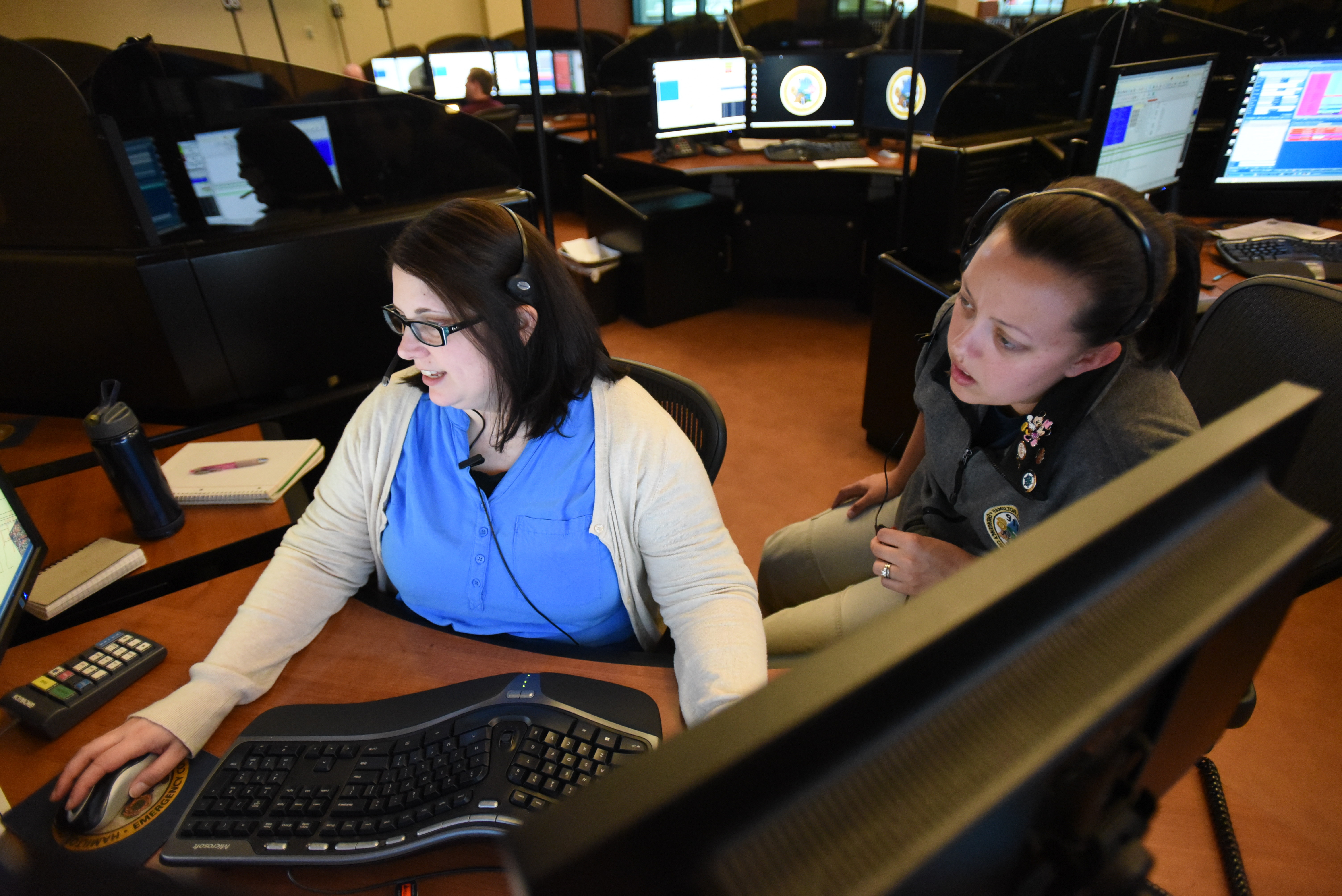 Rachel Brantley, left, takes calls as Felicia Driscoll observes at the 911 Center on April 6, 2015. Brantley is nearing the end of her training.
With VPI, a reviewer can sort and pull calls by type — EMS, fire, police — by operator and by date. Everything happens in one program, and when the evaluation is finished it is automatically sent back to the phone operator. The system also takes a video-style recording of the operator’s screen during the call so the evaluator can follow the operator’s clicks.
“It gives us the ability to give direct feedback to our people and get them back on procedure quickly before they get way off base,” Stuermer said.
Last year, quality assurance evaluations were sent back to the dispatcher within 30 days of the call. Now the goal is seven days, Carney said.
And while most standards for 911 centers are voluntary — not mandated by local, state or federal laws — the standards are critical to ensuring that each 911 caller receives the most efficient and effective help, said Ty Wooten, director of education at the National Emergency Number Association.
“Most standardized protocols are based on research on how to ask questions to get the response you need to make better decisions about what to send, who to send,” he said. “They exist so every call is answered the exact same way.”
Carney said the focus on evaluations this year is about making his employees better.
“I want them to be masters of this profession,” he said. “[Callers] deserve people who are at the top of their game when they’re in their time of need.”
Contact staff writer Shelly Bradbury at 423-757-6525 or at sbradbury@timesfreepress.com with tips or story ideas.