
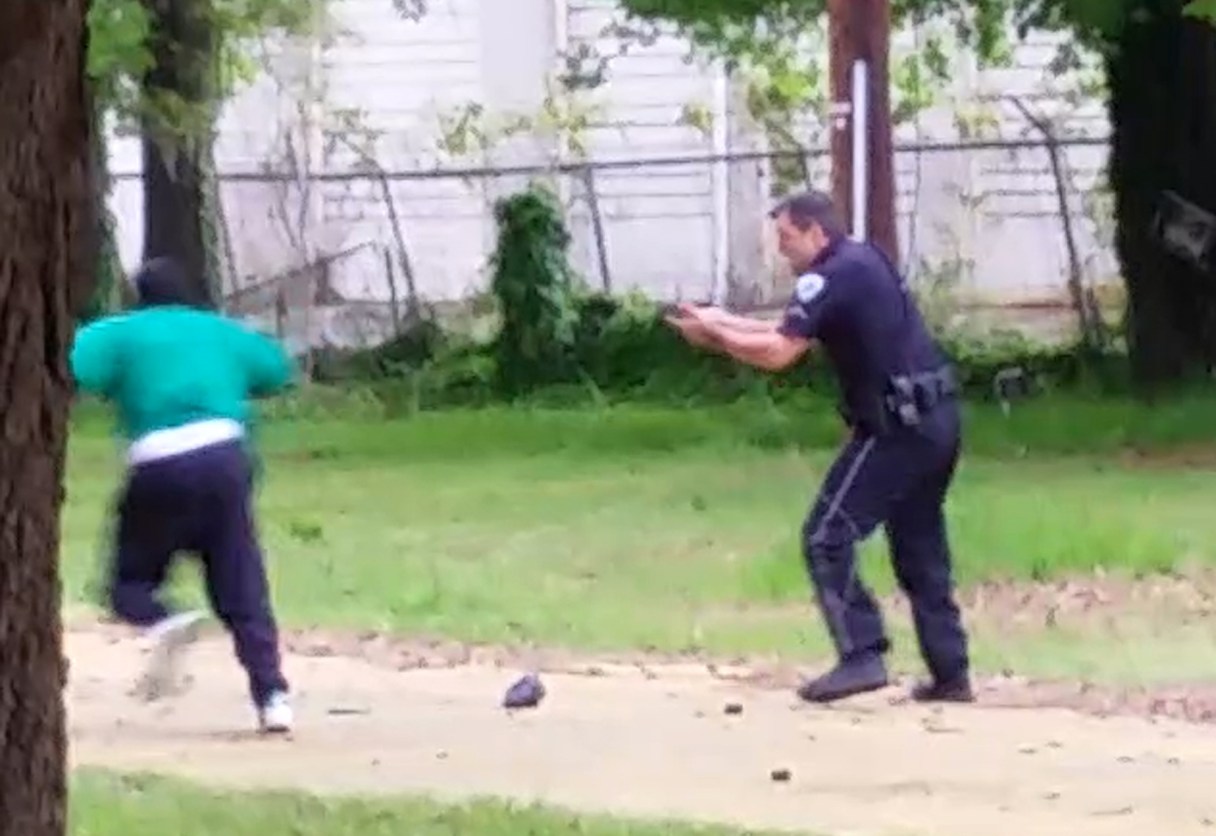
The officer had an immediate explanation after shooting an unarmed black man during a traffic stop in South Carolina: He said he fired in self-defense after a struggle over his stun gun.
But his initial claim points to a policing paradox that has civil rights advocates alarmed. Promoted as tools to avoid lethal force, stun guns can sometimes become part of a deadly equation.
“Officers need to be spending more time de-escalating situations, instead of resorting to the use of this very convenient tool,” said Emma Andersson, a staff attorney with the American Civil Liberties Union. “The jury’s still out on whether or not its lethal force, but it’s not nothing – it’s very dangerous.”
Officer Michael Slager was charged with murder and then fired from the North Charleston Police Department after a bystander’s iPhone video captured him shooting a fleeing Walter Scott in the back after failing to subdue him with a Taser.
Just two days before Scott’s April 4 death, a 73-year-old reserve sheriff’s deputy who said he thought he was firing his stun gun instead fatally shot another black man, 44-year-old Eric Harris, after a chase in Tulsa, Oklahoma. A video of that killing, released this weekend, is raising new concerns about how Tasers can have deadly consequences.