
JAKARTA, Indonesia (AP) – South Korea expressed deep regret Wednesday that Japan’s leader did not repeat his predecessors’ apologies for the country’s aggression during World War II.
Prime Minister Shinzo Abe told Asian and African leaders in Indonesia on Wednesday that Japan has “feelings of deep remorse” over the war. But he did not express a “heartfelt apology” for Japan’s past “colonial rule and aggression” – key phrases that previous prime ministers have used in official statements about the war.
Abe’s remarks are fueling speculation that he also will not apologize in a key statement in August marking the 70th anniversary of the end of the war.
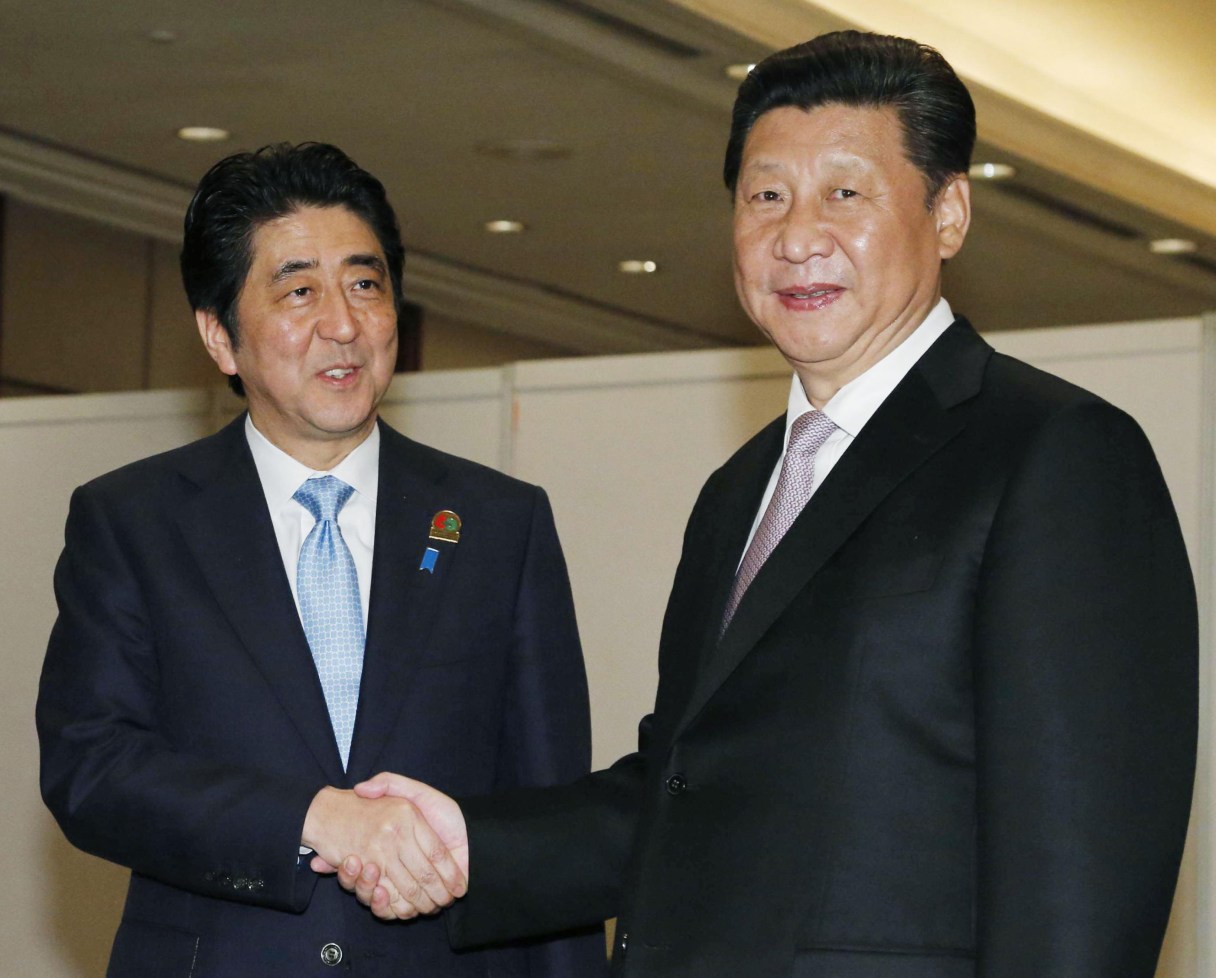
Abe met with Chinese President Xi Jinping for nearly half an hour Wednesday on the sidelines of the Asia-African Summit in Jakarta. Both leaders refused to talk to reporters afterward.
Ties between Japan and its closest neighbors China and South Korea, both victims of Japanese militarism before and during World War II, have worsened in recent years largely over history and territorial issues. Critics say Abe’s administration has stepped up efforts to whitewash the country’s wartime atrocities.
On Monday, Abe said he does not plan to repeat a landmark apology made in 1995 by then-Prime Minister Tomiichi Murayama that included the three key phrases.
Former Prime Minister Junichiro Koizumi made a similar apology in 2005 on the 60th anniversary of the end of the war, and at the Asian-African meeting the same year.
South Korea’s Foreign Ministry expressed “deep regret because Prime Minister Abe omitted the key expressions of apology and repentance.”
Asked about Abe’s comments, Chinese Foreign Ministry spokesman Hong Lei told a regular ministry briefing in Beijing on Wednesday that the global community is “looking forward to seeing that Japan can squarely face and reflect upon the history of aggression, so as to improve the reconciliation with neighboring countries in Asia and gain trust from the global community.”
“We hope the Japanese side can take heed of this call for justice from the international community,” he said.
___
Associated Press writers Mari Yamaguchi in Tokyo, Hyung-jin Kim in Seoul, South Korea, and Ian Mader in Beijing contributed to this report.