
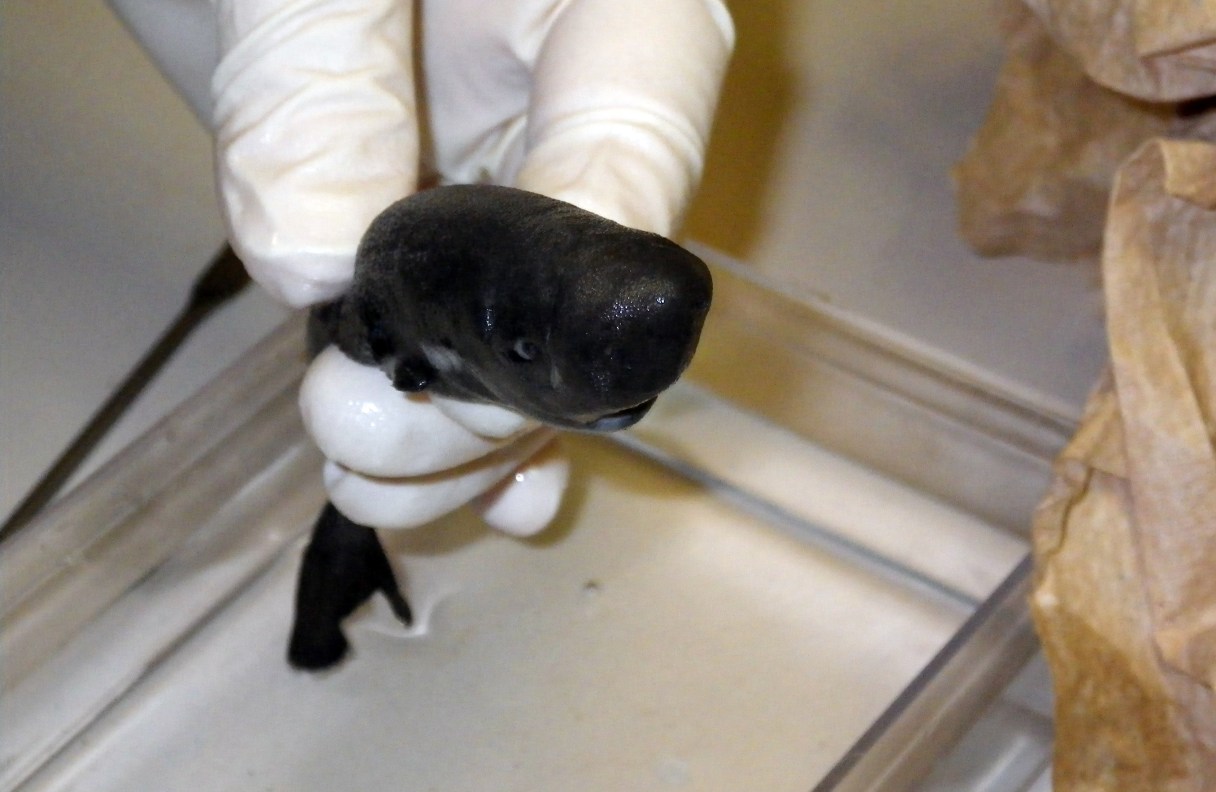
WASHINGTON (AP) – Think Jaws meets a kangaroo, with maybe a touch of cute kitten, and you’ve got the aptly named pocket shark – the newest and rarest species found off the U.S. coast.
Surprised scientists found a tiny, young version of the extraordinarily rare shark that was fished out of the deep Gulf of Mexico in 2010 with lots of other creatures in a government research trip. The dead specimen spent more than three years in a giant freezer waiting to be identified.
It turned out to be only the second of its species ever seen. The first pocket shark was found 36 years in the Pacific Ocean off the coast of Peru and it’s been sitting in a Russian museum since.
This pocket shark was a male, maybe a few weeks old, about 5.5 inches long. Strangely, this type of shark has two pockets next to its front fins; their purpose is not known. It’s not quite like a kangaroo, which uses its pouch to carry young, but few species have pockets this large – about 4 percent of the shark’s body.
“It’s cute,” said Tulane University biologist Michael Doosey, who co-authored a study in a zoological journal identifying the shark. “It almost looks like a little whale.”