
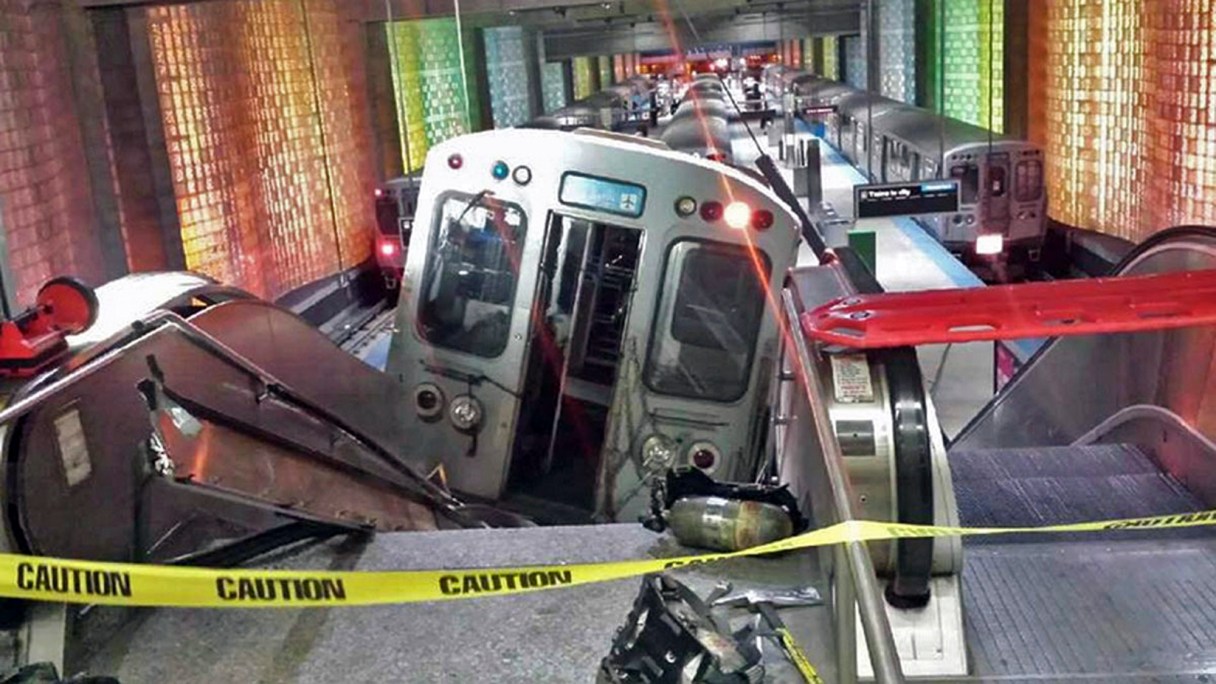
CHICAGO (AP) – Chicago’s transit agency shares in the blame for an accident last year in which a driver fell asleep and crashed a commuter train into a platform and up an escalator at O’Hare airport, federal investigators concluded Tuesday. And they warned that, without changes, a similar accident could happen elsewhere.
The National Transportation Safety Board announced its findings at a meeting in Washington, D.C., and made nationwide safety recommendations, including that all U.S. transit agencies consider the effects of operator fatigue when preparing employee work schedules. The board also pressed for transit agencies to install more advanced control systems that automatically apply a train’s brakes and prevent collisions if a driver fails to act.
The Chicago derailment happened just before 3 a.m. on March 24, 2014, when the exhausted driver was on her 12th straight day of working primarily nightshifts. The accident injured more than 30 passengers and caused $9 million in damage to the transit station at one of the country’s busiest airports. No one was on the usually busy escalator at the time.
The train operator acknowledged dozing off and was fired. But the investigation also found that the Chicago Transit Authority had the driver working a schedule that contributed to her exhaustion. The agency also failed to spot hazards in the station’s design that meant track-side emergency braking systems and the platform bumper could not stop the train at the speeds permitted in the station.
Those conclusions should raise alarms around the country, NTSB Chairman Christopher Hart said, noting that overnight schedules have become the norm in today’s 24-7 culture, even in safety-critical jobs.