
UNITED NATIONS (AP) – What a nuclear attack didn’t take from them, old age will.
Seventy years have passed since the United States shocked the world by dropping atomic bombs on the Japanese cities of Hiroshima and Nagasaki. As nuclear powers gather this week to discuss a landmark disarmament treaty, the now-fragile survivors warn this may be their last chance to use their personal horror to hurry that work along.
The Nuclear Nonproliferation Treaty, or NPT, review conference happens just every five years. The average survivor, called hibakusha, is about 80 years old.
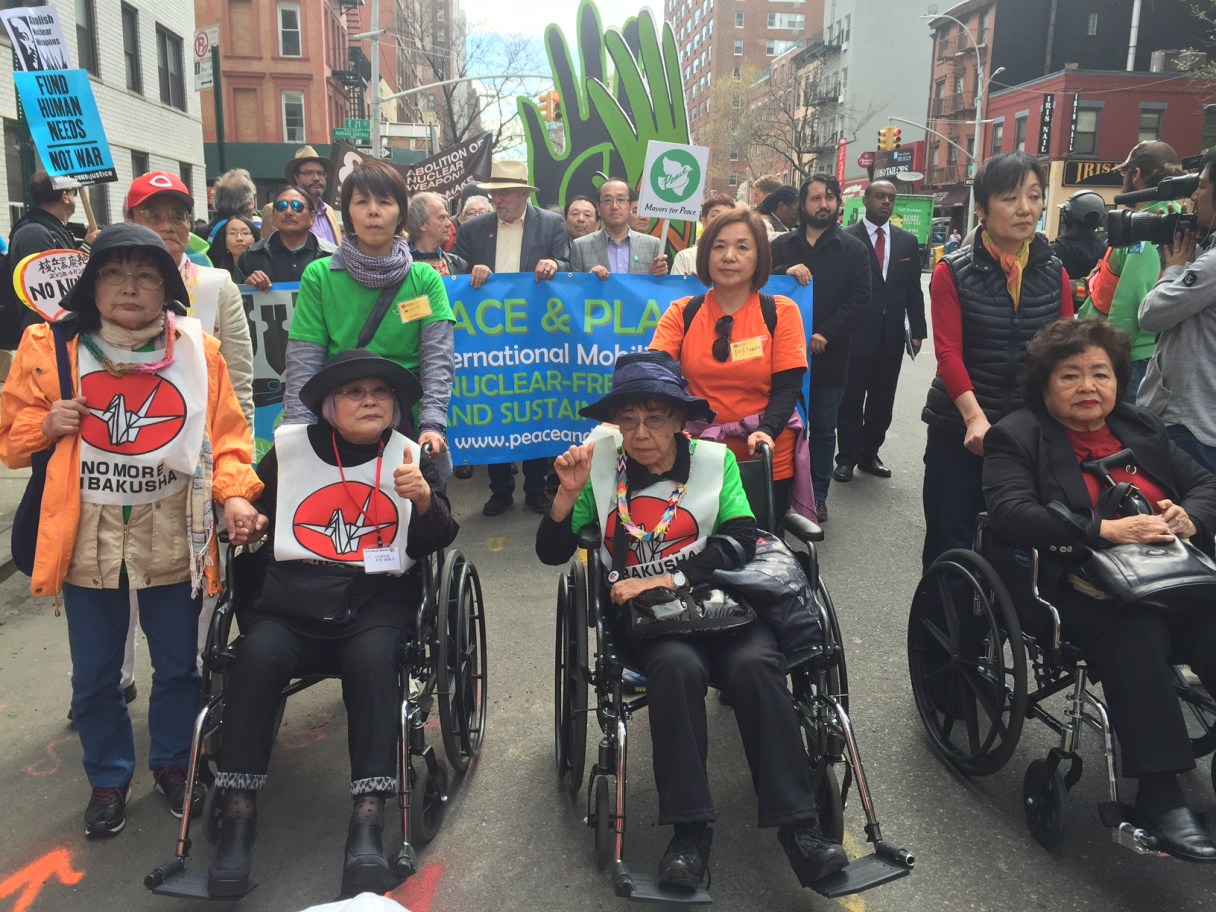
There are signs they are fading. Sunday’s thousand-strong rally in Manhattan against nuclear weapons was led by a trio of women in wheelchairs, slowly making their way along the mile-and-a-half route.
One of the most famous survivors, 86-year-old Sumitero Taniguchi, could not join them. Frail and silent, he sat in a wheelchair and watched the march set off up the avenue. Japanese media surrounded the Nagasaki survivor with cameras, leaning in for a better view.