
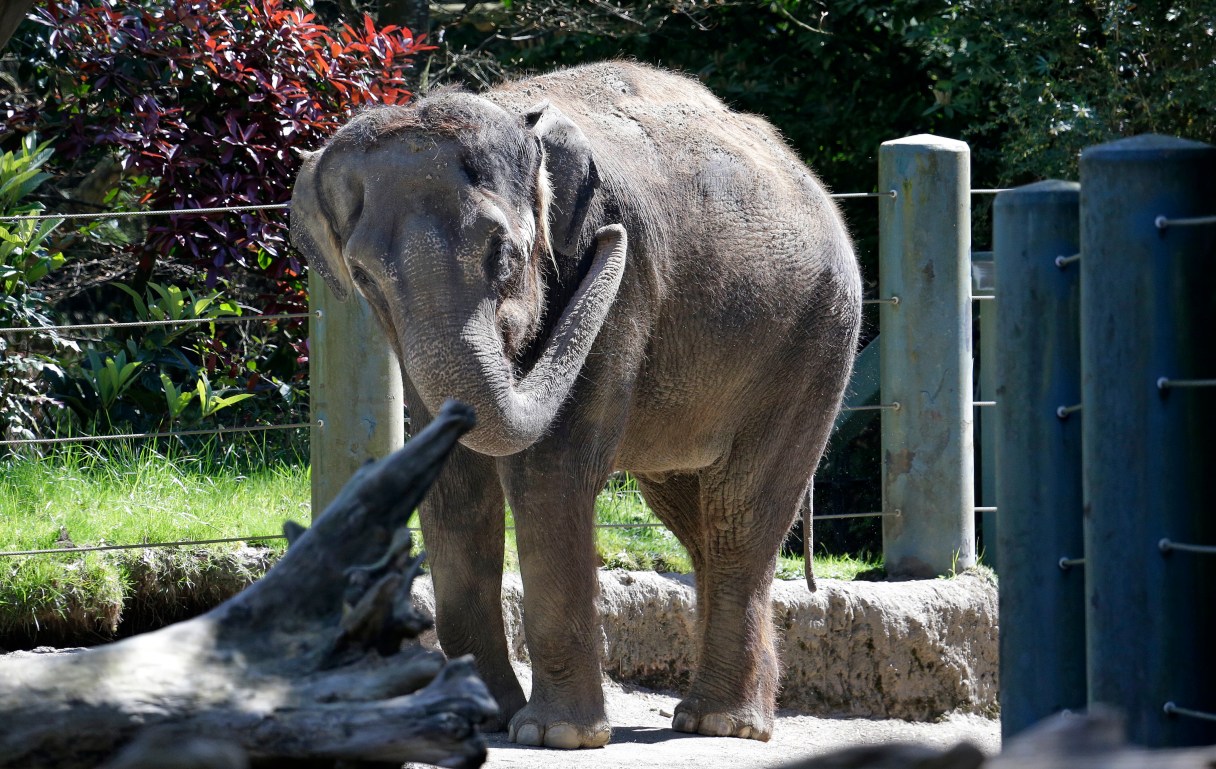
SEATTLE (AP) – Visitors flocked to the leafy enclosure at Seattle’s zoo to watch the two elephants, Chai and Bamboo, as they used their long trucks to play with balls and snack on carrots and apples.
The elephants would sometimes exhibit other behavior. Chai would pace from side to side and bob her head up and down – a sign, animal activists say, of the stress of being confined inside the 1-acre area. It is common behavior, and a growing number of people feel the giant animals – hard-wired to roam free across thousands of square miles in Africa and Asia – don’t have a place in American zoos.
Seattle’s Woodland Park Zoo recently made the difficult and controversial decision to close its popular elephant exhibit and move Chai and Bamboo to a larger zoo in Oklahoma so they can join a larger herd. Others, like the Bronx Zoo in New York City, say they are moving in the same direction, but will wait until one or more of their existing herd dies. And zoos like Detroit have already retired their pachyderms to one of two U.S. animal refuges.
Many zoos can’t give elephants the space they need. They are also social animals that prefer to live in a herd, but that is hard to provide as elephant numbers dwindle, both in captivity and in the wild.
As of December 2014, there were 159 African elephants at 39 North American zoos and 139 Asian elephants at 34 zoos in the U.S. and Canada, according to the Maryland-based Association of Zoos & Aquariums. The group In Defense of Animals says 21 zoos in North America have closed their elephant exhibits since 1991.