
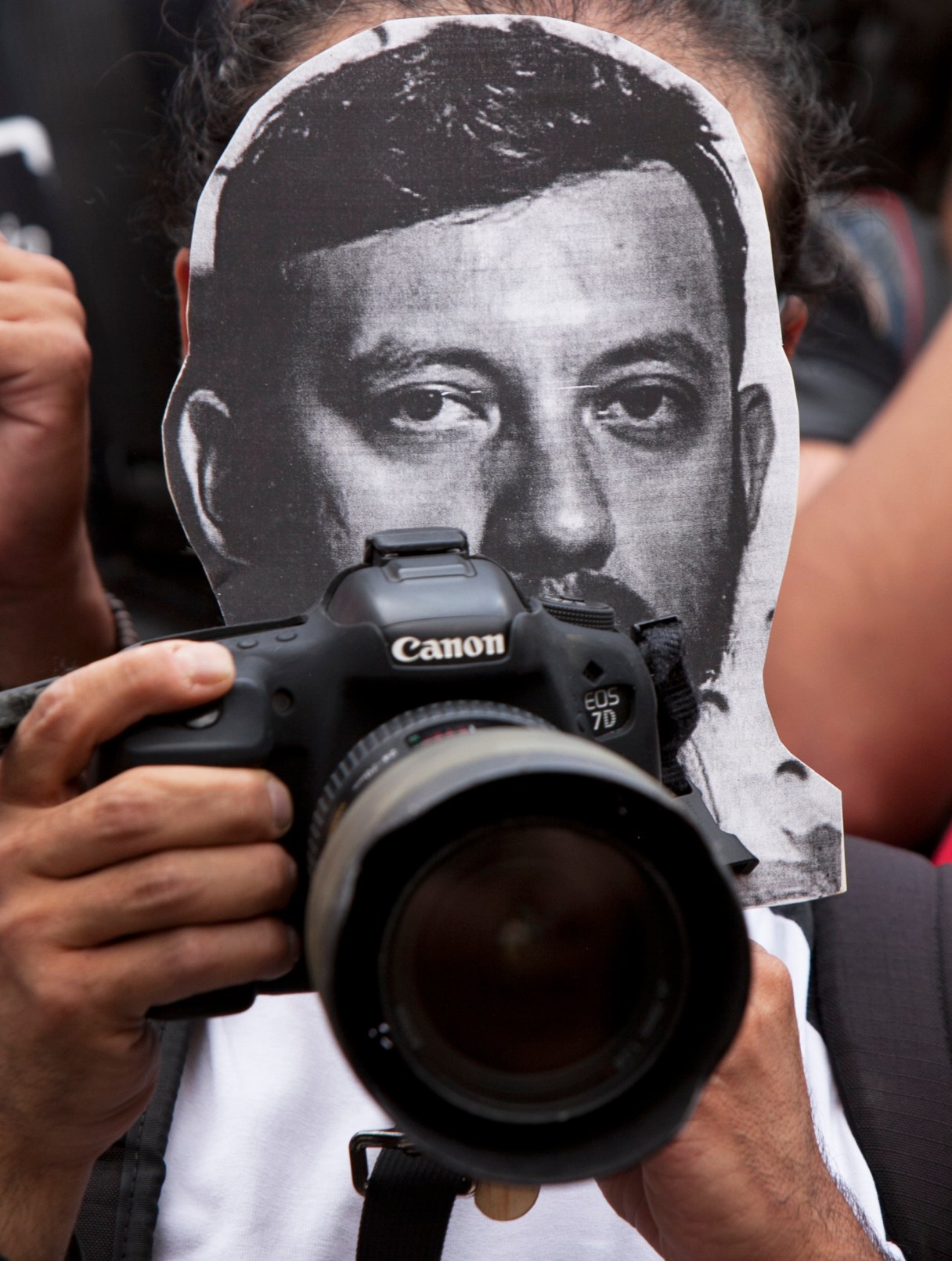
MEXICO CITY (AP) – With an investigation barely underway, Mexican journalist protection groups are already expressing fears that authorities won’t consider the brutal killing of a photojournalist as being related to his work – even though he fled the state he covered fearing for his safety.
Mexico City officials said Sunday they are pursuing all lines of investigation in the death of Ruben Espinosa, whose tortured body was found along with four slain women in an apartment in Mexico’s capital. Prosecutor Rodolfo Rios Garza said authorities were following protocols for crimes against journalists and crimes against women, as well as looking at robbery as a possible motive in the case.
But when dealing with journalists’ killings, authorities in Mexico historically have been quick to discard their work as a motive, even though the country is the most dangerous in Latin America for reporters. Some 90 percent of journalist murders in Mexico since 1992 have gone unpunished, according to the Committee to Protect Journalists.
“What’s particularly pernicious is that violence against the press is violence against society,” said Dario Ramirez, director of the Article 19 free press advocacy group. “There are many places in the country where silence paves the road so that organized crime, corruption, everything that destroys a society can continue in a manner without … setbacks or obstacles.”
Espinosa fled Xalapa, the capital of the Gulf Coast state of Veracruz, for Mexico City in June after he said that unknown people were following him, taking his photograph and harassing him outside his home. Veracruz has been a dangerous state for reporters, with 11 journalists killed just in current administration of Gov. Javier Duarte that started in 2010. Two more, including Espinosa, have been killed outside of the state and three have gone missing.