
They promised me from the beginning that I would be involved, and they kept their word
Craig Ryan remembers being given a column with total freedom to choose any topic he wanted for the Notre Dame High School newspaper.
Being a teenager, he was a little skeptical that the faculty adviser, Sister James Marie, was sincere when she told him he would be given carte blanche. This was 1971, and Notre Dame is a Catholic school after all.
“She was very impressive to me and really challenged me,” says Craig, a 1972 graduate. “I submitted a couple of articles and she challenged me to do better, and ended up giving me a column. She told me I could write anything. I didn’t believe her, but she said, ‘No, I won’t censor you.’ I thought I would test her.”
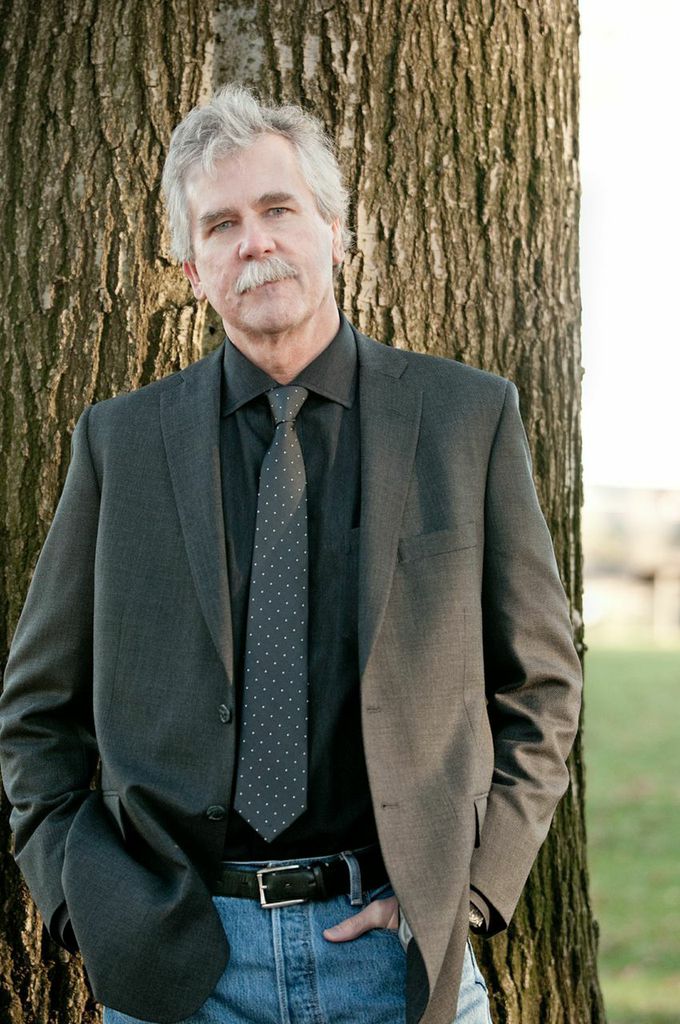 Craig Ryan, a 1972 Notre Dame High School graduate, is the author of “Magnificant Failure.” It was the basis of the film “Angry Sky,” which Ryan also co-produced.
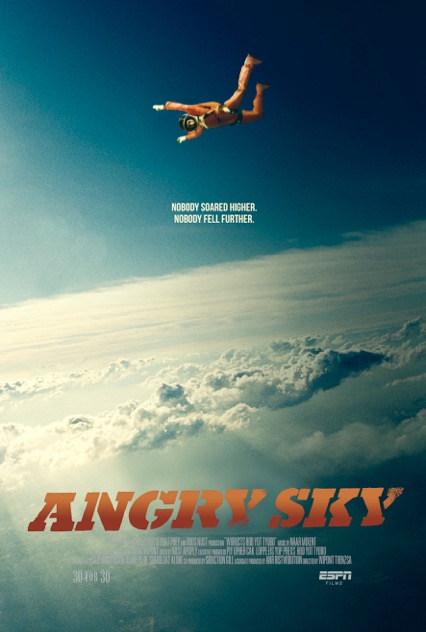 ESPN made a movie called “Angry Sky” based on Craig Ryan’s book, “Magnificent Failure: Free Fall from the Edge of Space.”
Ryan doesn’t remember exactly what he wrote, though he’s pretty sure it was a commentary on some school policy, but he does remember her response when he turned it in.
“She came back and says, ‘I’ll run it, but are you really as immature as this sounds?’ “
Ryan revised the column and submitted another that was more suitable.
From Notre Dame, he went to Webster College in St. Louis and then to Reid College in Portland, Ore., before attending graduate school at Brown University. At each place his goal was always to become a novelist.
“I actually did that and had some success writing short stories and a couple of novels,” he says.
Then he got his pilot’s license and in the late ’80s made his first parachute jump, opening up a whole new universe to him. He started doing research on the history of skydiving and discovered the world of high-altitude balloon jumping and, in particular, Nick Piantanida.
Ryan wrote a book about Piantanida’s jumps called “Magnificent Failure: Free Fall from the Edge of Space,” which was released in 2003. ESPN made a movie called “Angry Sky” based on the book for its “30 For 30” series. Directed by Jeff Tremaine (“Jackass”), it debuted Thursday on ESPN and can be seen on espn.go.com and the espngo app.
In his review in The Hollywood Reporter, John DeFore says Tremaine veers away from “his usual prankster mode in favor of a straightforward approach that serves his subject well. The doc will be a fine addition to ESPN’s 30 For 30 series where one hopes it won’t inspire others to do things the way Piantanida did.”
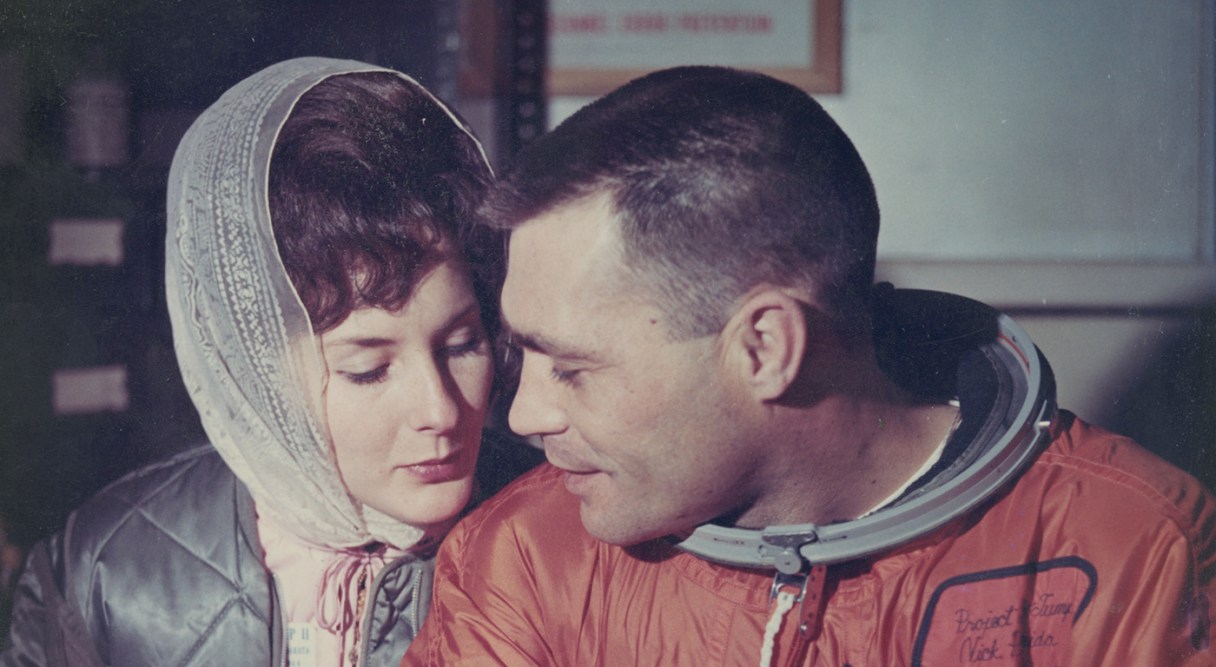
A truck driver and untrained parachutist from New Jersey, Piantanida became obsessed with setting a world high-altitude jump record. His first attempt in 1965 failed when his balloon malfunctioned, forcing him to bail out at 16,000 feet. In February 1966 he tried again, rising more than 21 miles above South Dakota in a balloon, setting a new world altitude record that wasn’t broken until 2012 by Felix Baumgartner.
But again, he failed to set the jump record when technical problems set in and the oxygen hose connected to his suit wouldn’t disconnect. To get back to Earth, the ground crew had to jettison the main balloon and rely on the cargo parachute tethered underneath the balloon. To keep him from falling out when the cargo chute deployed and savagely jerked the gondola, Piantanida needed to reattach the belt that ran across the gondola’s doors, but the gloves on his pressure suit were too unwieldy and he couldn’t reconnect the belt. With the doors wide open, all he could do was wedge himself in and hope he didn’t fall out. He fell 25,000 at 600 mph before the cargo chute finally opened.
In May 1966, he tried again, planning to rise to 120,000 feet and jump, but at 57,000 feet, the ground crew heard a “whoosh” over the radio and communication with Piantanida was cut off. For several minutes, the crew waited, not knowing what had happened. Finally, the gondola was spotted floating back to Earth underneath the cargo chute, but when Piantanida landed, the crew discovered that lack of oxygen had left him brain damaged and in a coma. He never woke up and died four months later.
The record for a high-altitude parachute jump is held by U.S. Air Force Capt. Joseph Kittinger, who leapt from a balloon at 102,800 feet in 1966 as part of a U.S. Air Force research program into high-altitude bailouts.
Along with writing the book that “Angry Sky” is based upon, Ryan served as co-producer of the film.
“They promised me from the beginning that I would be involved, and they kept their word,” Ryan says. “I had two requirements before selling the rights: First, it had to be respectful of the family. Nick Piantanida did not survive his last attempt. I almost felt like I’d become a member of the family.
“Second, it can’t be boring. I knew Nick would never want to be part of something that was boring. They came through on both.”
Ryan says “Angry Sky” also tells a strong family story in addition to the action.
Ryan’s latest book is “Sonic Wind: The Story of John Paul Stapp and How a Renegade Doctor Became the Fastest Man on Earth.” It’s the story of John Paul Staff and his fascination with building machines that could not only travel faster than a speeding bullet but could protect the driver should they succeed or fail. It’s essentially a history of America’s move into the Space Age.
Ryan says the topic dovetails with his research into high-altitude balloon jumping since both groups were interested in developing equipment that allowed them to do what they did.
“The balloon guys developed stuff used by NASA later,” he says. “They put a guy in a capsule that allowed breathing and protected them from radioactive rays. They developed ejection seats. They later moved into auto safety and keeping people alive.”
Contact Barry Courter at bcourter@times freepress.com or 423-757-6354.