
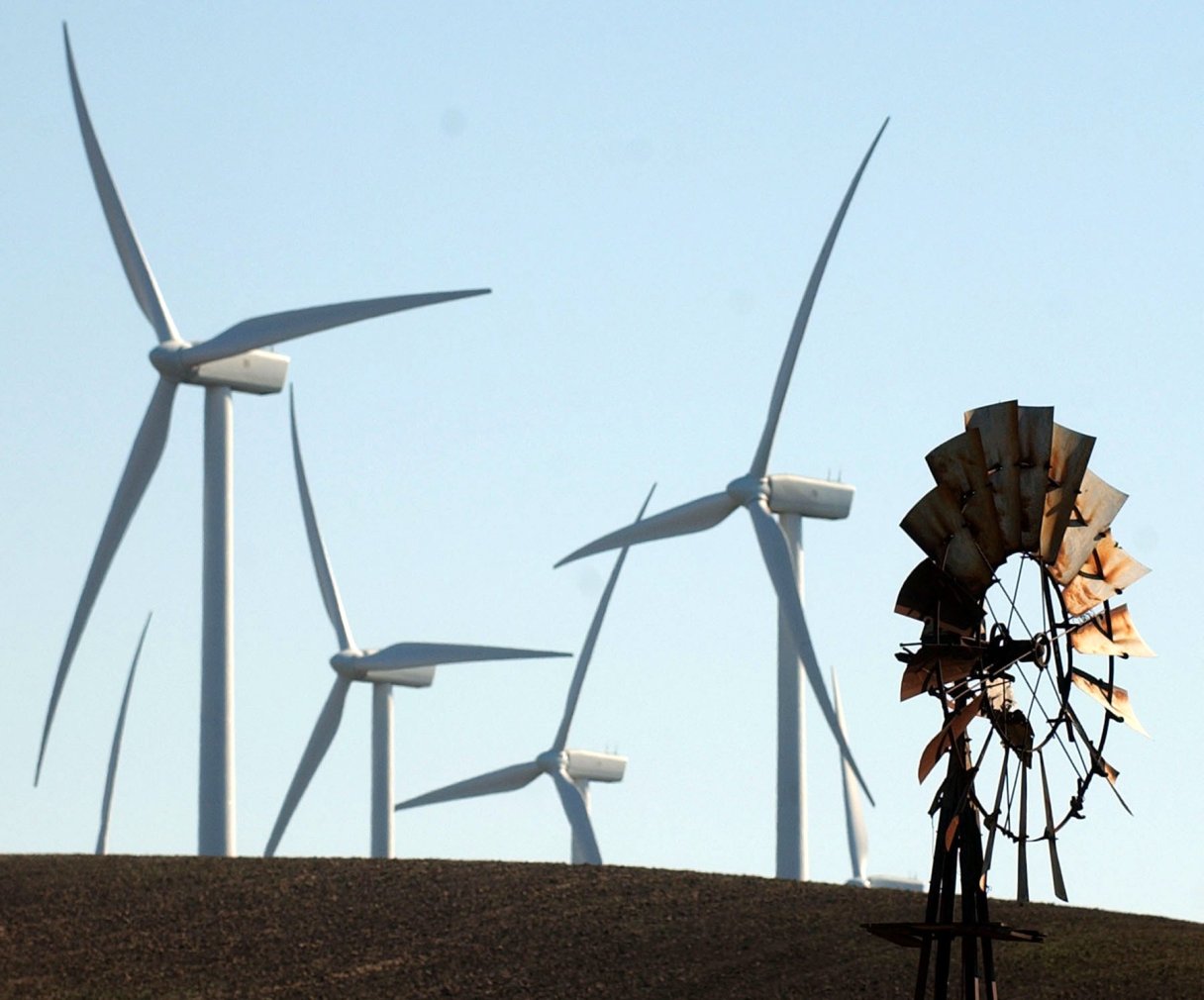
President Barack Obama’s too-long-awaited new clean power plant regulations designed to curb greenhouse gas emissions are not the fix we need.
Why? The president said it himself: “There is such a thing as being too late with climate change.”
Read more
Obama calls for carbon cuts by U.S. power plants
But because the administration is trying to be collaborative rather than mandating, states will be allowed to decide how to meet their assigned targets for carbon pollution reductions. The trouble with that is obvious. As with the Affordable Care Act, states now have the incentive to let partisan politics hold sway. At least five Republican governors already have said they won’t comply, following the encouragement of Sen. Majority Leader Mitch McConnell, a Republican from the coal-heavy state of Kentucky. In March, McConnell urged governors to disregard the rule’s requirement that states draw up and submit their own plans for achieving emission targets.
Here’s the thing. This is a common-sense rule. It’s not unlike the common sense rules that resulted in Chattanooga’s transformation from dirtiest-air city to the clean-air city of today where residents can now see the beauty of our river and mountains.
The rule imposes the first nationwide limits on carbon dioxide pollution from power plants, the source of 31 percent of America’s total greenhouse gas emissions. It is not a job killer. In fact, most of the decades-old coal power plants that will shut down in coming decades would have been doing so anyway as cheaper power comes online. And it will. And it will be cheaper. In fact, alternative power almost already is cheaper.
The United States now gets just 39 percent of its power from coal-fired plants, down from more than half just a decade ago. That’s because coal used to be our cheapest source of power, but it’s not anymore – and that’s not just because carbon costs are now being talked about. Don’t forget about things like TVA’s $1.2 billion coal ash spill clean-up. And don’t be fooled by political and industry talking points using out-of-date information.
The levelized cost of electricity is the net present value of a unit of electricity over the lifetime of a generating asset – a coal plant or a nuclear plant or a windmill. That “levelized” cost often is taken as a proxy for the average price a power generating plant must receive in order to break even over its lifetime. It calculates initial investment, operations and maintenance, cost of fuel and cost of capital.
According to the Energy Information Administration’s Annual Energy Outlook released in 2015 and looking ahead to 2020, coal-fired plants not only were not the cheapest, they were not even in the top five cheapest. Geothermal took first place, followed by natural gas advanced combine cycle plants, onshore wind plants, natural gas conventional combined cycle plants and hydro plants.
Conventional coal came in sixth. Advanced nuclear came in seventh. Biomass plants came in ninth, while solar photovoltaics ranked 12th and off-shore wind ranked 15th – all among 16 power plant types, most of them some other forms of natural gas-powered plants. It should be noted that solar advocates took deep exception to this study, noting that the drastic drop in solar photovoltaic costs (from $76.67 per watt in 1977 to $0.30 cents per watt in 2015) was not reflected in the study that used 2013 cost data.
Looking only at the economics, our U.S. status-quo power plants – especially coal plants – already are, themselves, the real job killers because they are holding back research, construction and jobs in those new and proven alternative technologies.
What’s more, these “cost” numbers didn’t figure in the hidden expense of coal – like environmental degradation from mountain top removal, mercury-polluted water, acid rain or coal mining deaths. Today, coal plant owners mostly only pay for equipment to reduce acid rain. They don’t have to pay for past pollution or emitted airborne particulate matter. Nor do they pay for the difficult-to-measure but real contributor of lung cancer, chronic obstructive pulmonary disease and asthma. Additionally, it’s unclear how to add in the cost of climate change from carbon dioxide emissions – about a third of which is from coal power plants.
Finally, don’t allow the conservatives’ collective whine that wind and solar are only coming down in cost because of tax breaks or subsidies.
Tax breaks are helping to make wind competitive, and solar power, as well. But coal and nuclear power also received substantial subsidies for far more years – decades – than alternative energy sources.
So it’s little wonder that now, even though solar and wind traditionally have been considered far more expensive, some computer models already suggest that, combined with today’s tax breaks and stricter scrubber rules on fossil fuel plants, some types of wind farms may be cheaper (over the plant lifetime) even than the new technologies for coal and natural gas.
Model Ts were once thought to be job killers. Especially for the buggy whip manufacturers.
Thank goodness buggy whip makers didn’t have Mitch McConnell and today’s Republican Party.