
ALBUQUERQUE, N.M. (AP) – Russell Begaye stared into a hole in the side of a Colorado mountain, watching as yellow water contaminated with heavy metals poured out and raced down a slope toward a creek that feeds rivers critical to survival on the nation’s largest Native American reservation and in other parts of the Southwest.
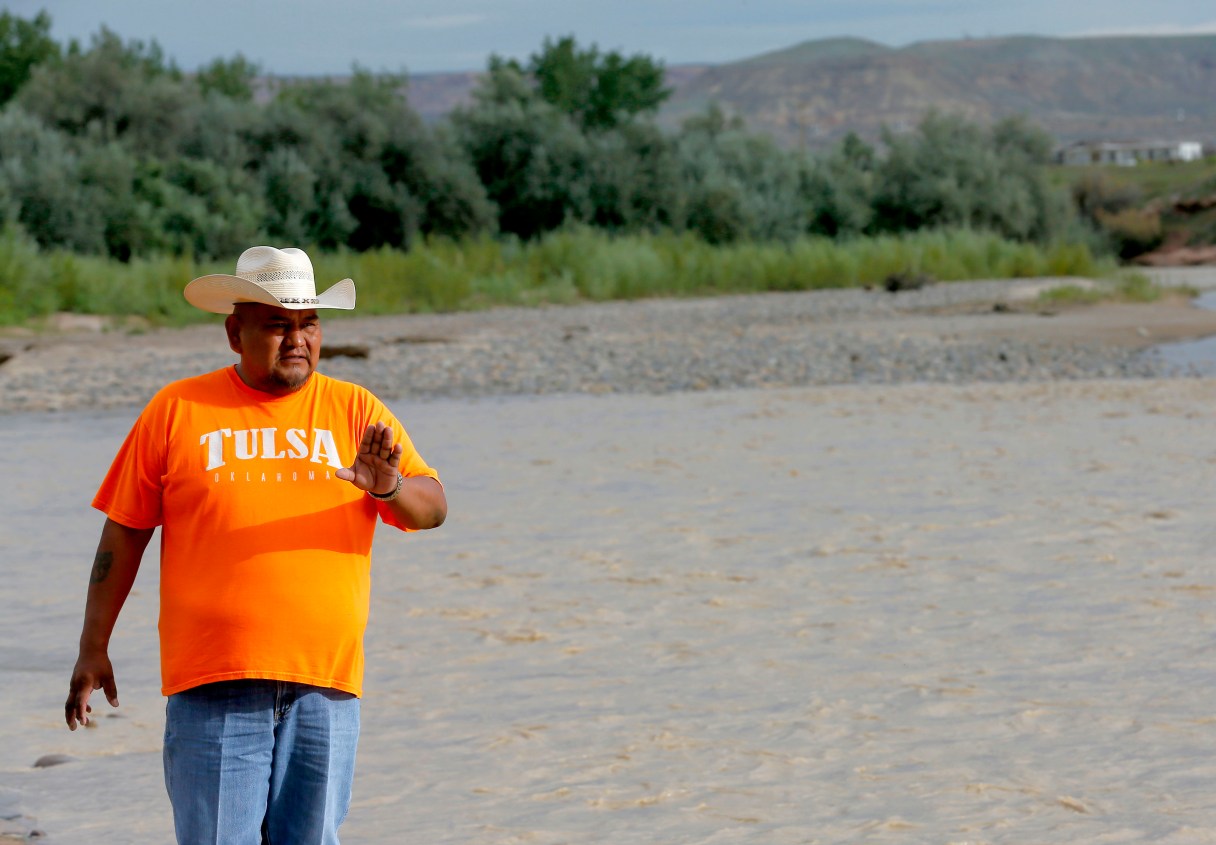
At the Gold King Mine, Begaye, president of the Navajo Nation, couldn’t help but see the concerned faces of his people – the farmers who no longer had water for corn crops and the ranchers who had to scramble to get their cattle, sheep and goats away from the polluted San Juan River.
“We were told that the water was clearing up and getting back to normal,” he said. “This is what EPA was telling us. We wanted to go up there as close as we could to the source. We wanted our people to see the water is still yellow.”
Begaye and a small contingent of Navajo officials worked their way unannounced past barriers and up the mountain over the weekend to get a closer look at the mine blowout that federal officials said sent more than 3 million gallons of water laden with lead, arsenic and other metals down the Animas River and into the San Juan River.
The 100-mile plume has since traveled through parts of Colorado, New Mexico and Utah on the way to Lake Powell, a key source of water for the Southwest.