
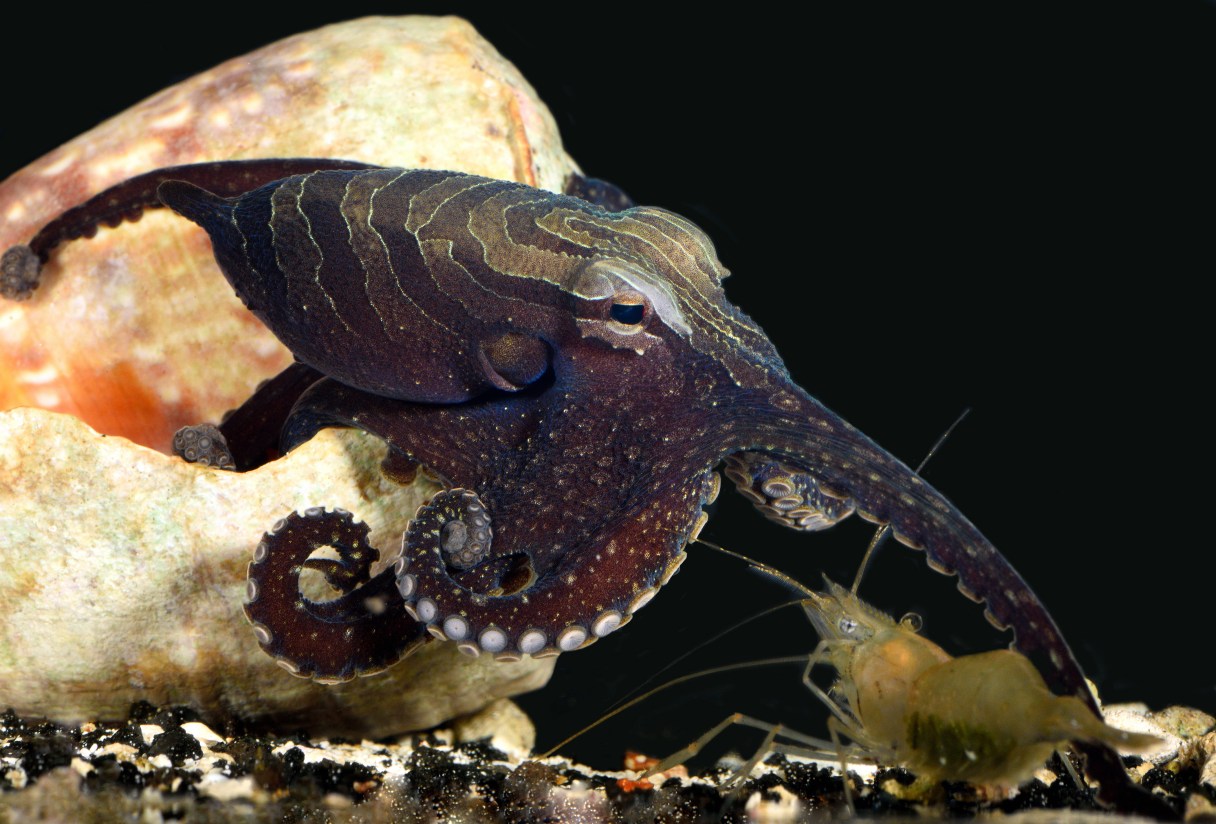
WASHINGTON – The octopus already is an oddball of the ocean. Now biologists have rediscovered a species of that eight-arm sea creature that’s even stranger and shares some of our social and mating habits.
With their shifting shapes, mesmerizing eyes, and uncanny intelligence, octopuses “are one of the most mysterious and captivating species,” said Rich Ross, a senior biologist at the California Academy of Sciences. “They’re aliens alive on our planet and it feels like they have plans.”
For Ross and colleagues, it got stranger when they got a batch of octopuses from Central America to study. The critters just didn’t fit the loner denizen-of-the-deep profile that scientists had drawn for the rest of the 300 or so octopus species.
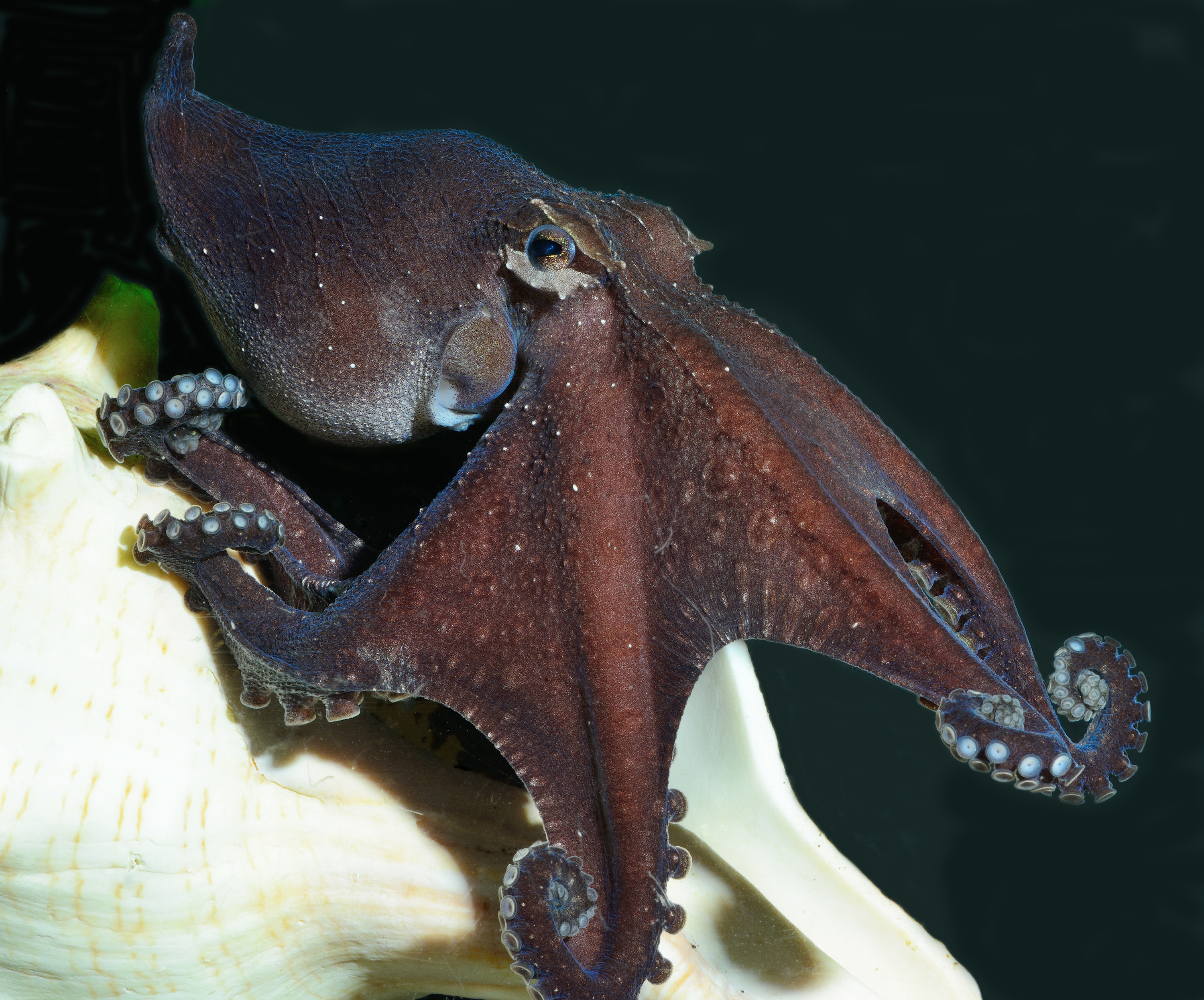 This handout photo provided by Roy L. Caldwell shows a small male larger Pacific striped octopus stalking its prey.
While most octopuses live alone, coming together for ever-so-brief and dangerous mating, couples of this species can live together to mate for a few days in the same cramped den or shell.
While other male octopuses mate from a distance to avoid being cannibalized, these octopuses mate entangled beak-to-beak. That style could almost be thought of as romantic, said Alvaro Roura, an octopus expert at La Trobe University in Australia, who wasn’t part of the study.