
Friday, November 13, 2026Nov 13

Israeli force-feeding law pits doctors against state

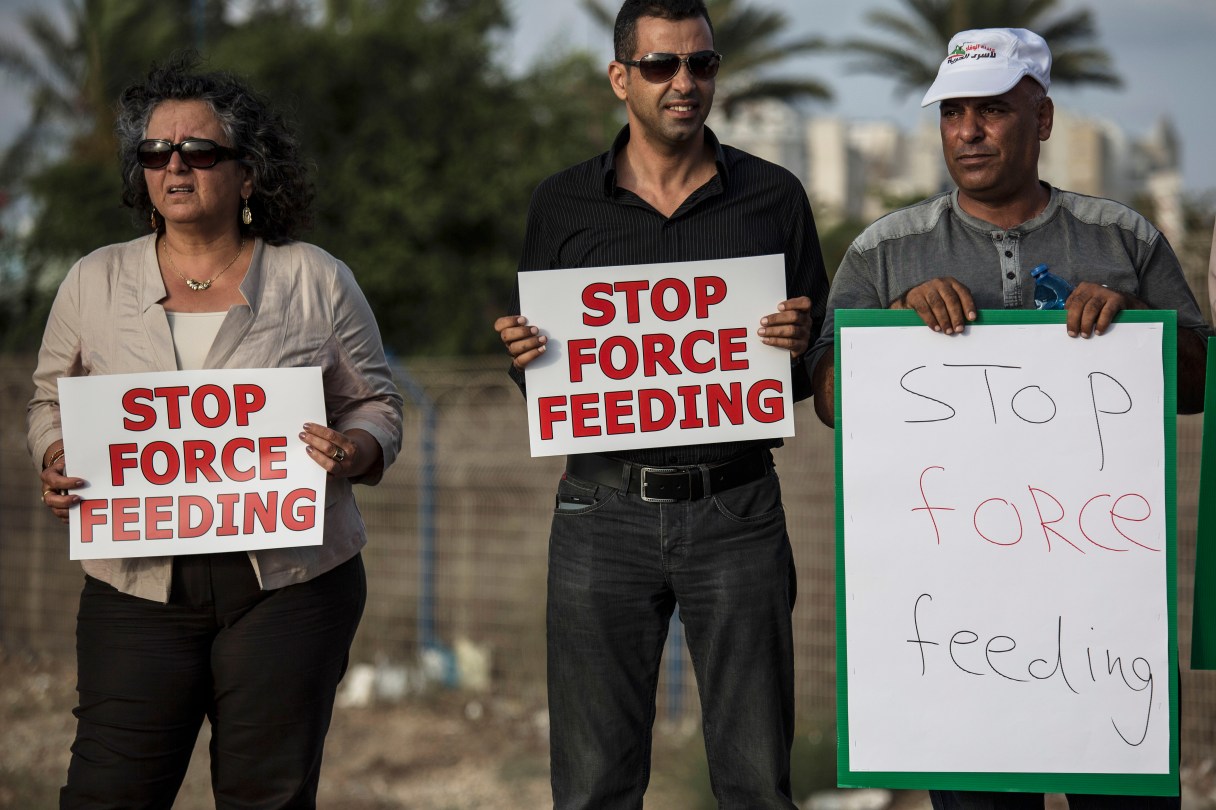
In this photo made on Tuesday, August 11, 2015, Israeli Arab supporters of Mohammed Allan, a Palestinian prisoner on a hunger strike, hold signs during a support rally outside Barzilai hospital, in the costal city of Ashkelon Israel. Israel passed a law to force feed hunger strikers by a slim margin in July and elicited harsh criticism. Critics call force-feeding an unethical violation of patient autonomy and akin to torture. The Israeli Medical Association, which has urged physicians not to cooperate, is challenging the law in the Supreme Court. (AP Photo/Tsafrir Abayov)
In this photo made on Tuesday, August 11, 2015, Israeli Arab supporters of Mohammed Allan, a Palestinian prisoner on a hunger strike, hold signs during a support rally outside Barzilai hospital, in the costal city of Ashkelon Israel. Israel passed a law to force feed hunger strikers by a slim margin in July and elicited harsh criticism. Critics call force-feeding an unethical violation of patient autonomy and akin to torture. The Israeli Medical Association, which has urged physicians not to cooperate, is challenging the law in the Supreme Court. (AP Photo/Tsafrir Abayov) In this photo made on Tuesday, August 11, 2015, Israeli Arab supporters of Mohammed Allan, a Palestinian prisoner on a hunger strike, hold signs during a support rally outside Barzilai hospital, in the costal city of Ashkelon Israel. Israel passed a law to force feed hunger strikers by a slim margin in July and elicited harsh criticism. Critics call force-feeding an unethical violation of patient autonomy and akin to torture. The Israeli Medical Association, which has urged physicians not to cooperate, is challenging the law in the Supreme Court. (AP Photo/Tsafrir Abayov)

RAMAT GAN, Israel (AP) – Hospital-bound and shackled, Palestinian detainee Mohammed Allan was 60 days into his hunger strike, launched in protest of his detention without charge in an Israeli jail, when he slipped into unconsciousness on Friday.

What happens next – whether or not the suspected militant becomes the first Palestinian prisoner force-fed to stay alive under a controversial new Israeli law – is an issue that has caused cleavages between doctors and the state in a clash over medical ethics and Israel’s detention policies.

At the heart of the matter is the new, contentious law that allows a judge to sanction force-feeding or administration of medical treatment if there is a threat to an inmate’s life, even if the prisoner refuses. Israel fears that a hunger-striking prisoner’s death could trigger Palestinian unrest amid widespread disillusionment with stalled peace negotiations.

The law passed by a slim margin in July and elicited harsh criticism. Critics call force-feeding an unethical violation of patient autonomy and akin to torture. The Israeli Medical Association, which has urged physicians not to cooperate, is challenging the law in the Supreme Court.

“There have been clashes between the IMA and the government, but never on such basic ethical issues,” said Raphi Walden, a physician and member of the group Physicians for Human Rights-Israel.