
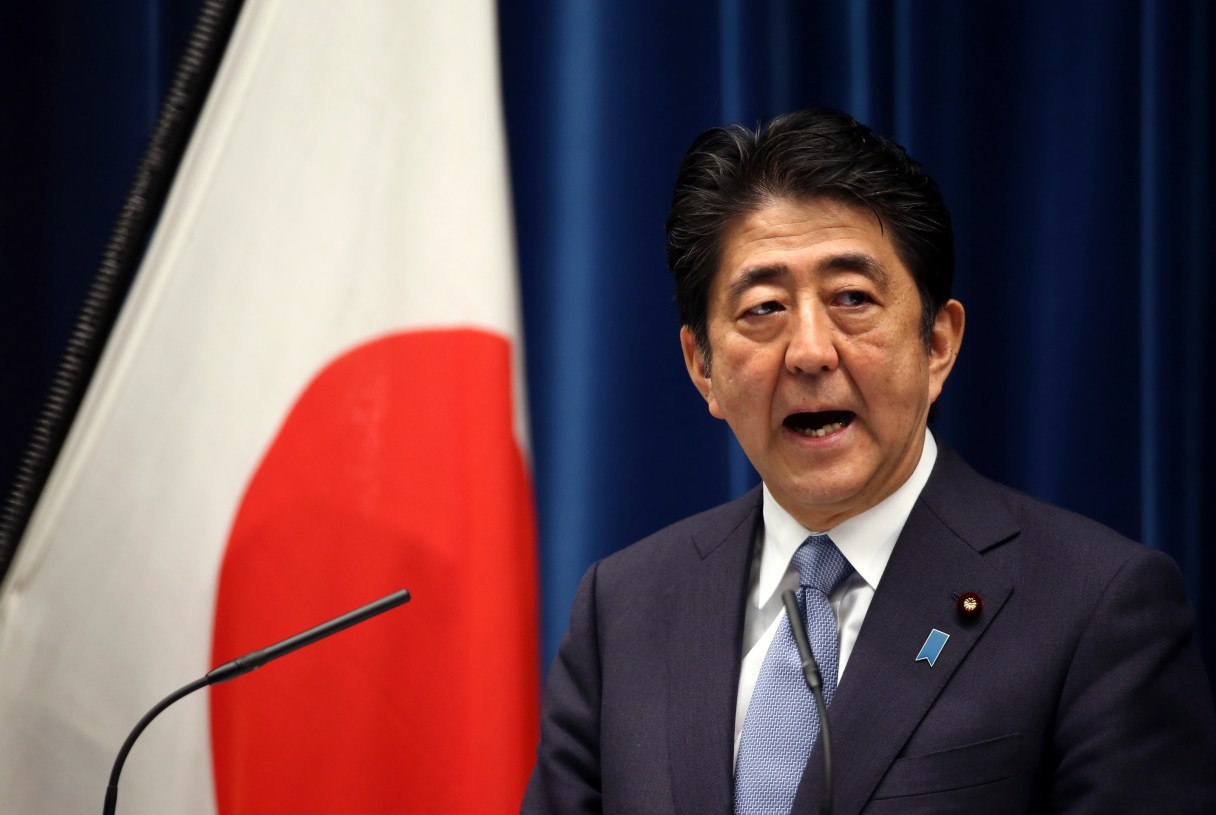
TOKYO — Prime Minister Shinzo Abe acknowledged Friday that Japan inflicted “immeasurable damage and suffering” on innocent people in World War II, but stopped short of offering his own apology and said future generations of Japanese should not have to make them either.
In a widely anticipated statement marking the 70th anniversary of his country’s surrender, he said instead that Japan’s repeated past “heartfelt apologies” would remain unshakeable in the future.
“On the 70th anniversary of the end of the war, I bow my head deeply before the souls of all those who perished both at home and abroad,” Abe said in a 25-minute address delivered live on national television. “I express my feelings of profound grief and my eternal, sincere condolences.”
The statement was closely watched by Japan’s neighbors, especially South Korea and China, and it was unclear whether it would satisfy them. China’s official Xinhua News Agency called Japan’s statement a diluted apology at best, and “a crippled start to build trust among its neighbors.”
“Abe trod a fine line with linguistic tricks, attempting to please his right-wing base on the one hand and avoid further damage in Japan’s ties with its neighbors on the other,” it said.