
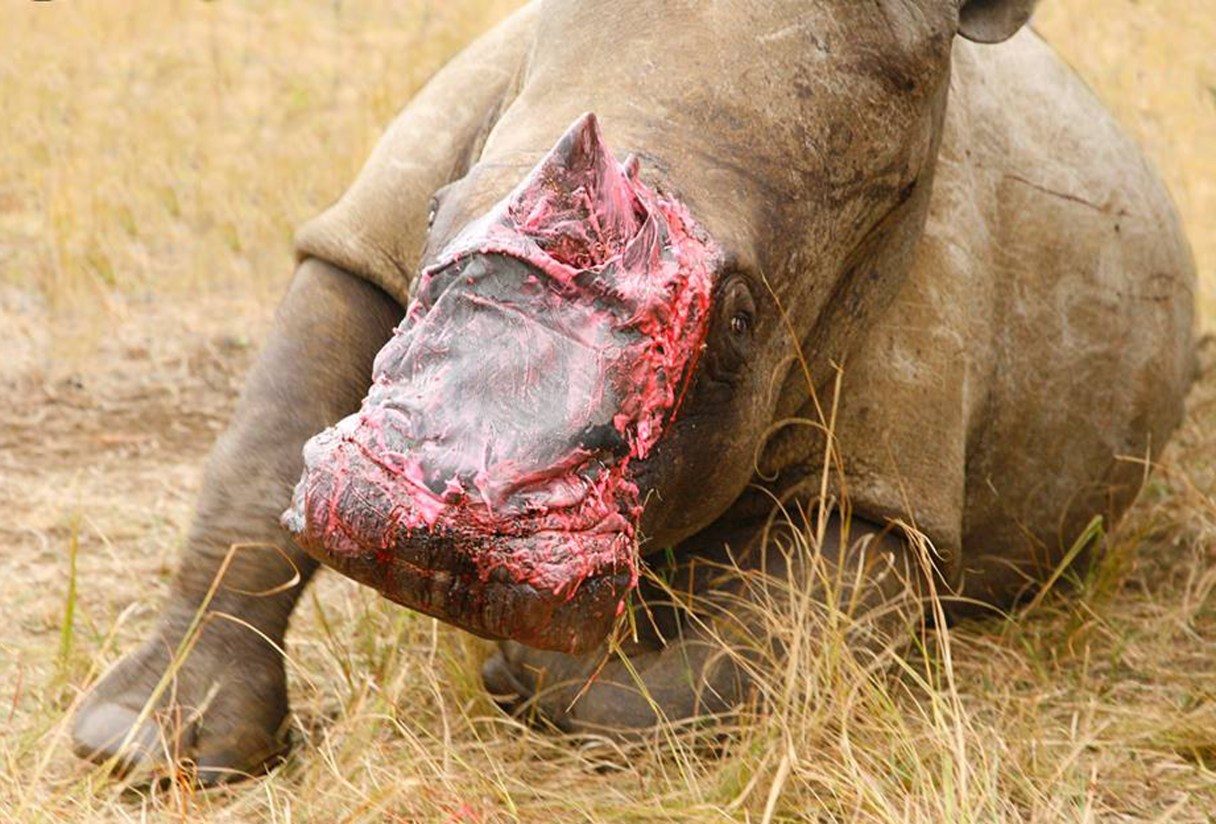
JOHANNESBURG (AP) – Veterinarians in South Africa have treated an injured rhino whose face was mutilated by poachers last week by fitting it with a bandage made of elephant leather.
Dr. Johan Marais, an equine and wildlife surgeon at the University of Pretoria, said Friday that he is experimenting with the elephant skin cover because plastic or fiberglass shields have proven too rigid to fit the contours of an injured rhino’s face.
“We’re looking for a material that’s strong, lightweight but pliable,” Marais said in a telephone interview with The Associated Press.
Marais, who got the elephant leather from a taxidermist, said it was “ironic” to use a part from one threatened species to treat an animal from another threatened species.
Marais belongs to Saving the Survivors, a group that treats rhinos with poaching injuries. Group spokeswoman Suzanne Boswell Rudham said the hide bandage was obtained by “ethical” means from a dead elephant that had not been poached or shot.