
Saturday, November 14, 2026Nov 14

AP PHOTOS: Migrants ditch Turkey for twinkling lights of Kos

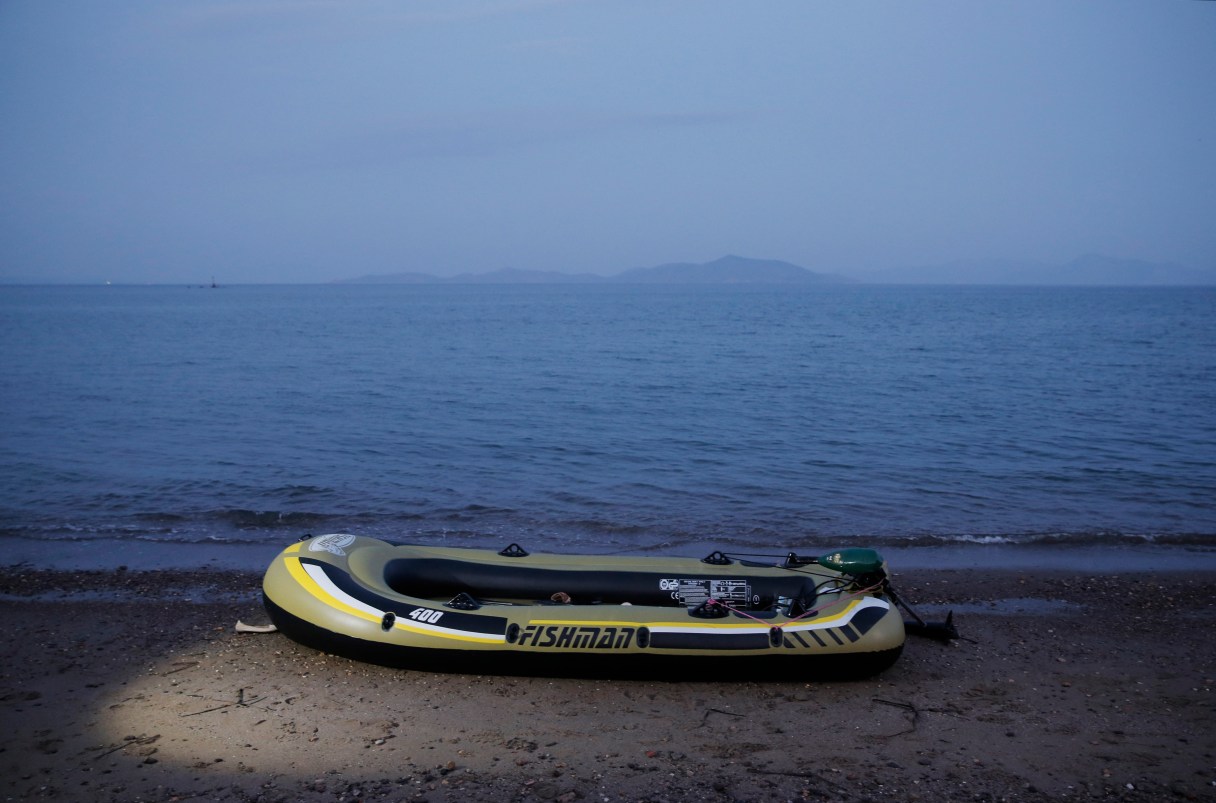
An abandoned rubber dinghy is left abandoned on the beach by migrants, following a failed attempt to cross from near the coastal town of Bodrum, Turkey, to the Greek island of Kos, Sunday, Aug. 16, 2015. The city of Bodrum, a magnet for wealthy tourists, is these days drawing plenty of other visitorsó migrants fleeing conflicts in the Middle East and Africa and seeking a better life in Europe. At its closest point, the Greek island of Kos is only 4 kilometers (2.5 miles) from Turkey and migrants, mostly from Syria, but also from Afghanistan, Iran and African nations often try to cross in groups upward of eight people in small inflatable plastic boats meant for a maximum of four, powered by tiny electric outboard motors and plastic paddles. (AP Photo/Lefteris Pitarakis)

BODRUM, Turkey (AP) – The lights of the Greek resort island of Kos twinkle at night, an irresistible lure to the scores of migrants who gather daily on Turkish beaches to cross the Aegean Sea.

The trip from Bodrum, a southern Turkish beach resort, to Greece is far less risky than other water journeys to Europe for those seeking a better life or asylum status. At its closest point, Kos is only 4 kilometers (2.5 miles) away from Turkey – a trip that takes barely an hour in a sailboat, locals say.

But the migrants travel in the dead of night to avoid Turkish and Greek coast guard patrols, giant oil tankers and large tourist cruisers. Strapped into lifejackets, squeezed into flimsy, overcrowded inflatable dinghies, they pay around $1,200 each to smugglers for the crossing.

For many, the trip is terrifying. Smugglers often jam the tiny boats with three or four times their maximum capacity of four people. Associated Press journalists saw one boat nearly underwater from the weight of its human cargo, its passengers fleeing in panic or bailing frantically. Many of the migrants – mostly from Syria, but also from Afghanistan, Iran and African nations – cannot swim.

The illicit trade is lucrative. Smugglers use a boat that can be ordered online for around 100 euros ($110), sometimes adding a tiny electric motor, for a journey that takes about half an hour.