
Monday, November 16, 2026Nov 16

Syrian rebel leader seeks Europe _ fleeing gov’t and jihadis

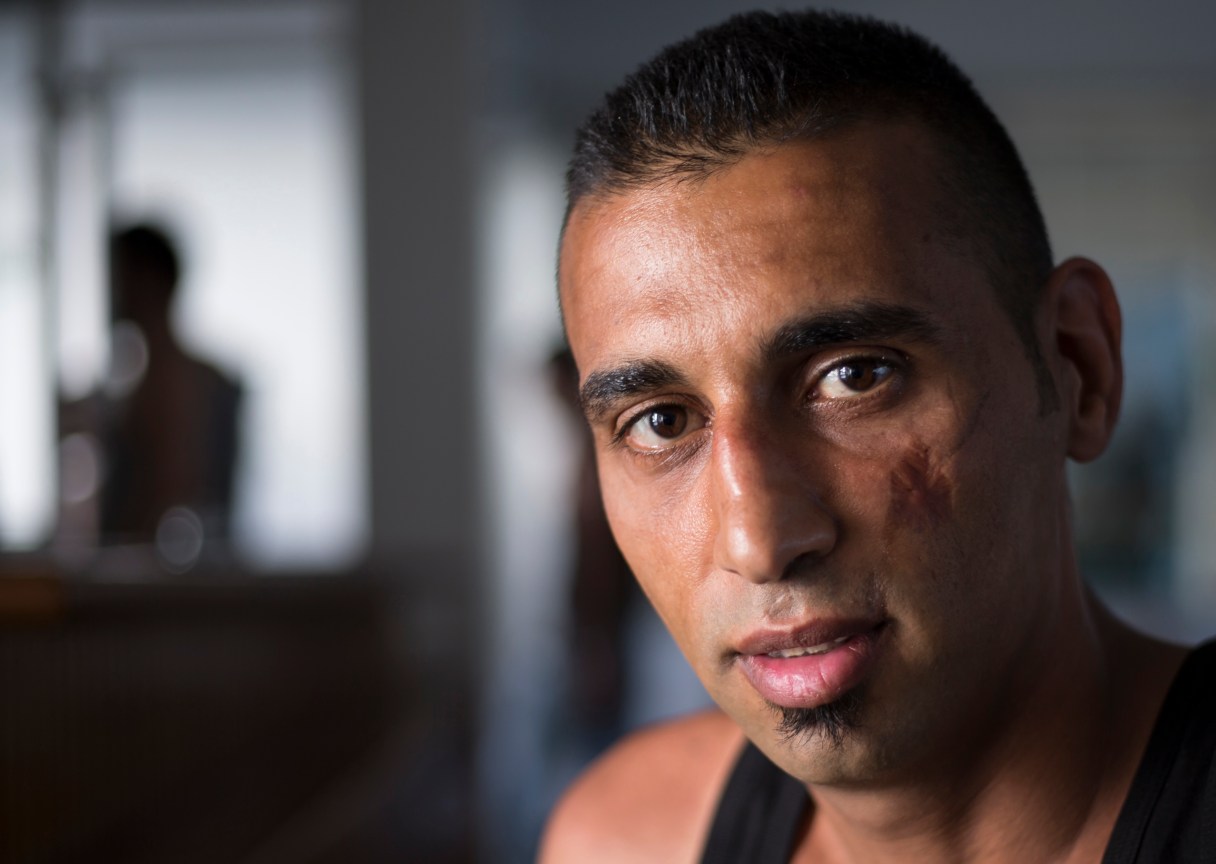
In this photo taken on Thursday, Aug. 13, 2015, Syrian former rebel commander Laith Al Saleh, 30, poses in a small, budget hotel on the Greek island of Kos. Al Saleh had a home, a wife and a normal life, before the start of the fighting that has claimed more than 250,000 lives and displaced up to a third of Syria’s population. Now, he’s one of the tens of thousands of Syrian men, women and children who risk drowning to be smuggled into Greece by sea on frail, crammed dinghies, paying up to thousands of dollars for the service. At least 135,000 people - mostly Syrians  have crossed over from Turkey this year, more than the total for all of 2014 and 2013 together. (AP Photo/Alexander Zemlianichenko)
In this photo taken on Thursday, Aug. 13, 2015, Syrian former rebel commander Laith Al Saleh, 30, poses in a small, budget hotel on the Greek island of Kos. Al Saleh had a home, a wife and a normal life, before the start of the fighting that has claimed more than 250,000 lives and displaced up to a third of Syria’s population. Now, he’s one of the tens of thousands of Syrian men, women and children who risk drowning to be smuggled into Greece by sea on frail, crammed dinghies, paying up to thousands of dollars for the service. At least 135,000 people - mostly Syrians have crossed over from Turkey this year, more than the total for all of 2014 and 2013 together. (AP Photo/Alexander Zemlianichenko)

KOS, Greece (AP) – In the jostling chaos of a crammed refugee center, one man tries to introduce order – forming migrants into lines and collecting names for overwhelmed Greek police clerks.

Laith Al Saleh, a plasterer from Aleppo, stands out from the crowd waiting in the sweltering August heat, and it’s not just his battle-scarred face that sets him apart. He is accustomed to being in command – he led a 700-strong rebel unit in Syria’s civil war – and he is now keen to help others dealing with exile.

Al Saleh, 30, had a home, a wife and a normal life, before the start of the fighting that has claimed more than 250,000 lives and displaced up to a third of Syria’s population. Now, he’s one of the tens of thousands of Syrian men, women and children who risk drowning to be smuggled into Greece by sea on frail, crammed dinghies, paying up to thousands of dollars for the service.

At least 135,000 people – mostly Syrians – have crossed over from Turkey this year, more than the total for all of 2014 and 2013 together.

None want to claim asylum in financially broken Greece, which can hardly provide for its own destitute. Their target destinations are wealthier parts of the European Union such as Germany, The Netherlands and Sweden, all only reachable after a further series of illegal border crossings, involving more danger, expense, humiliation and hardship.