
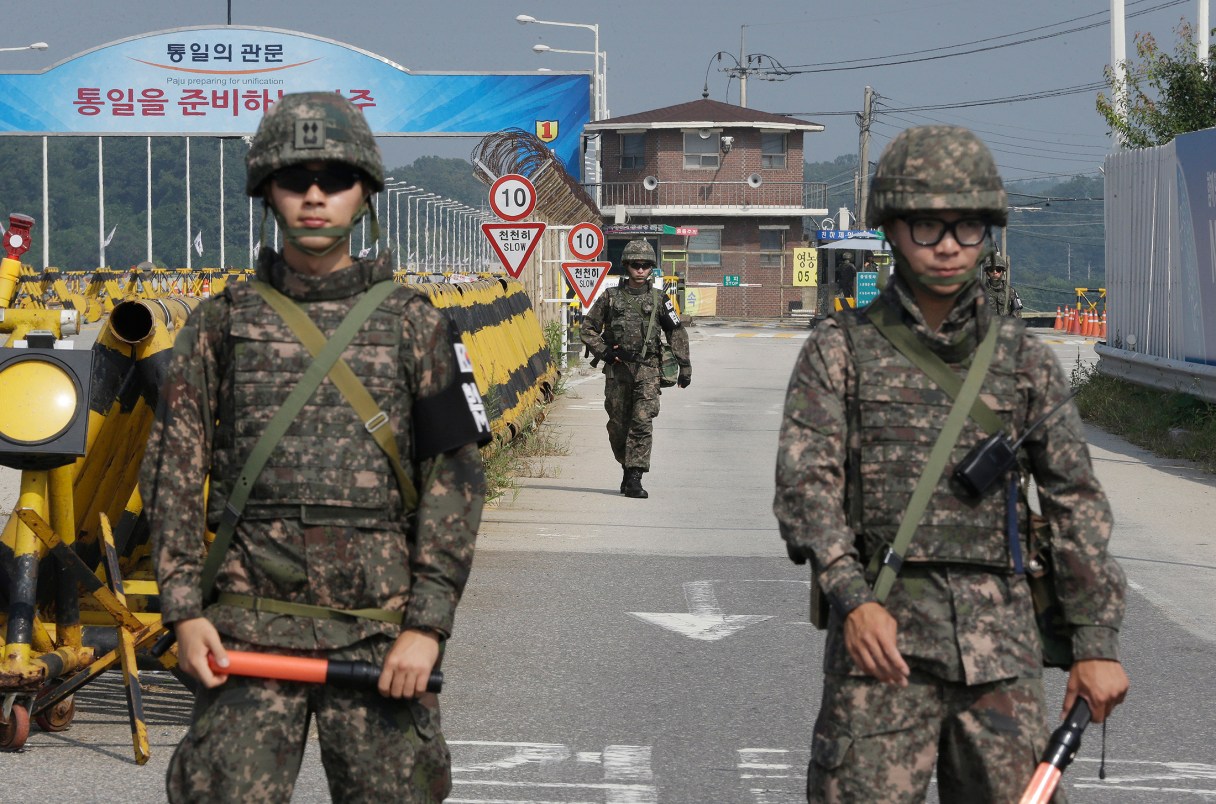
PYONGYANG, North Korea — For the moment, North and South Korea have pulled back from the brink, agreeing Sunday to continue their first high-level talks in nearly a year and temporarily pushing aside vows of imminent war.
The first round of marathon talks, however, came to nothing, and as they prepared for a second session Sunday, it was still unclear whether diplomacy would defuse what has become the most serious confrontation on the Korean Peninsula in years.
Still, even the decision for senior officials from countries that have spent recent days vowing to destroy each other to simply sit down at a table in Panmunjom, the border enclave where the 1953 armistice ending fighting in the Korean War was agreed to, is something of a victory.
The length of the first round of talks — nearly 10 hours — and the lack of immediate progress are not unusual. While the Koreas often have difficulty agreeing to talks, overlong sessions, once they do, are often the rule. After decades of animosity and bloodshed, however, finding common ground is much harder.
Seoul’s presidential spokesman Min Kyung-wook did not disclose details about the first round of talks, which adjourned just before dawn Sunday. The talks began shortly after a deadline set by North Korea for the South to dismantle loudspeakers broadcasting anti-Pyongyang propaganda at their border. North Korea had declared that its front-line troops were in full war readiness and prepared to go to battle if Seoul did not back down.