
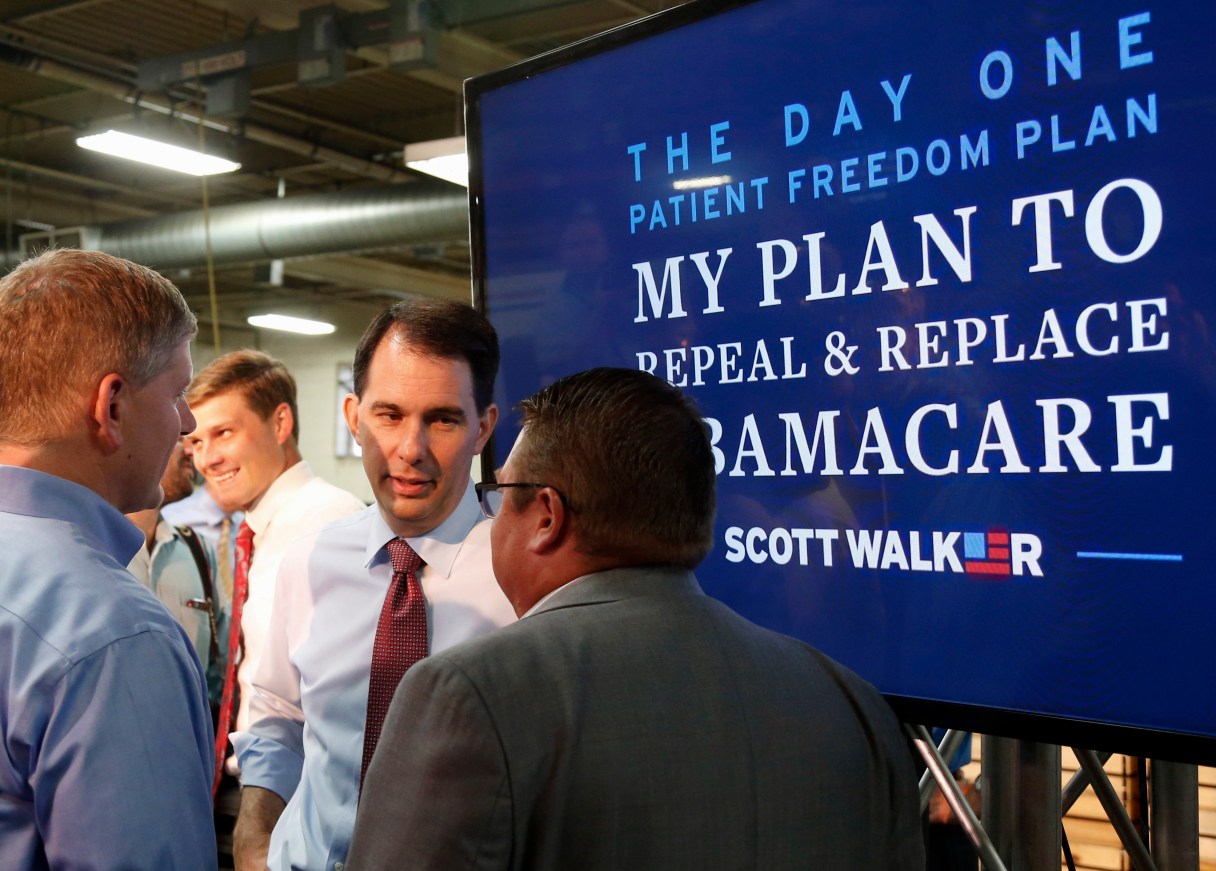
MADISON, Wis. (AP) – Republican Scott Walker’s plan for repealing and replacing President Barack Obama’s health care law hinges on what many see as a nearly insurmountable obstacle – getting 60 votes in the Senate.
Walker’s solution for winning over enough lawmakers? In a nutshell, he would first strip away the federal health insurance subsidies that they and their staff get as government employees. That, he says, would expose them to the same premium increases that many Americans have to pay and prompt Congress to act on his plan.
Skepticism abounds, and not just among defenders of the health law.
Would members of Congress really rally around his initiative after seeing their health subsidies disappear? And can he really end those subsidies without congressional action, as he vows he would do with an executive order on his first day as president?
“It shouldn’t be taken seriously,” Tim Jost, a law professor at Washington and Lee University in Virginia and an expert on the health law, said of Walker’s plan. “It’s just a political talking point.”