
Friday, October 30, 2026Oct 30

This story is free to read.

Global warming carving changes into Alaska in fire and ice

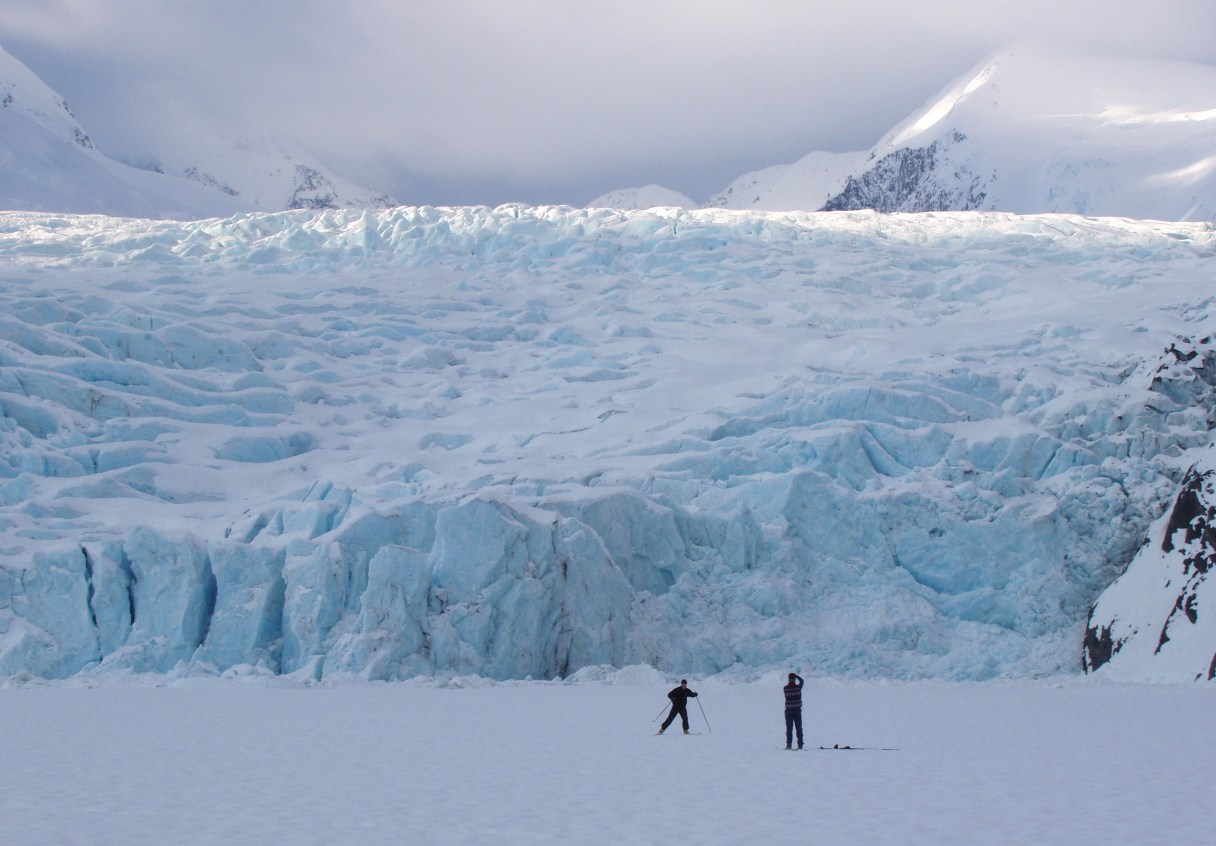
In this March 29, 2006 photo, a skier poses for a photograph on Portage Lake in front of Portage Glacier, about 50 miles south of Anchorage, Alaska. The Portage Glacier, which is a major Alaska tourist destination near Anchorage has retreated so far it no longer can be seen from a multimillion-dollar visitors center built in 1986.  President Obama leaves Monday, Aug. 31, 2015 for a three-day visit to the 49th state in which he will speak at a State Department climate change conference and become the first president to visit the Alaska Arctic. There and even in the sub-Arctic part of the state, he will see the damage caused by warming, damage that has been evident to scientists for years. (Evan R. Steinhauser/Anchorage Dispatch News via AP, File)
In this March 29, 2006 photo, a skier poses for a photograph on Portage Lake in front of Portage Glacier, about 50 miles south of Anchorage, Alaska. The Portage Glacier, which is a major Alaska tourist destination near Anchorage has retreated so far it no longer can be seen from a multimillion-dollar visitors center built in 1986. President Obama leaves Monday, Aug. 31, 2015 for a three-day visit to the 49th state in which he will speak at a State Department climate change conference and become the first president to visit the Alaska Arctic. There and even in the sub-Arctic part of the state, he will see the damage caused by warming, damage that has been evident to scientists for years. (Evan R. Steinhauser/Anchorage Dispatch News via AP, File) In this March 29, 2006 photo, a skier poses for a photograph on Portage Lake in front of Portage Glacier, about 50 miles south of Anchorage, Alaska. The Portage Glacier, which is a major Alaska tourist destination near Anchorage has retreated so far it no longer can be seen from a multimillion-dollar visitors center built in 1986. President Obama leaves Monday, Aug. 31, 2015 for a three-day visit to the 49th state in which he will speak at a State Department climate change conference and become the first president to visit the Alaska Arctic. There and even in the sub-Arctic part of the state, he will see the damage caused by warming, damage that has been evident to scientists for years. (Evan R. Steinhauser/Anchorage Dispatch News via AP, File)

ANCHORAGE, Alaska (AP) – Global warming is carving measurable changes into Alaska, and President Barack Obama is about to see it.

Obama leaves Monday for a three-day visit to the 49th state in which he will speak at a State Department climate change conference and become the first president to visit the Alaska Arctic. There, and in the sub-Arctic part of the state, he will see the damage caused by warming – damage that has been evident to scientists for years.

More than 3.5 trillion tons of water have melted off of Alaska’s glaciers since 1959, when Alaska first became a state, studies show – enough to fill more than 1 billion Olympic-sized pools.

The crucial, coast-hugging sea ice that protects villages from storms and makes hunting easier is dwindling in summer and is now absent each year a month longer than it was in the 1970s, other studies find. The Army Corps of Engineers identified 26 villages where erosion linked to sea ice loss threatens the communities’ very existence.

Permafrost is thawing more often as the ground warms, so as the ground oozes, roads, pipelines and houses’ foundations tilt and shift – sometimes enough to cause homes to be abandoned. In far northern Barrow, the upper part of the ground is 7 degrees warmer than it was in the late 1950s and getting closer to the melt point in the summer, data shows. And scientists fear the thawing permafrost will unleash large amounts of trapped greenhouse gases and speed up worldwide warming.