
Sunday, November 15, 2026Nov 15

‘Awakenings’ author, neurologist Oliver Sacks dies at 82

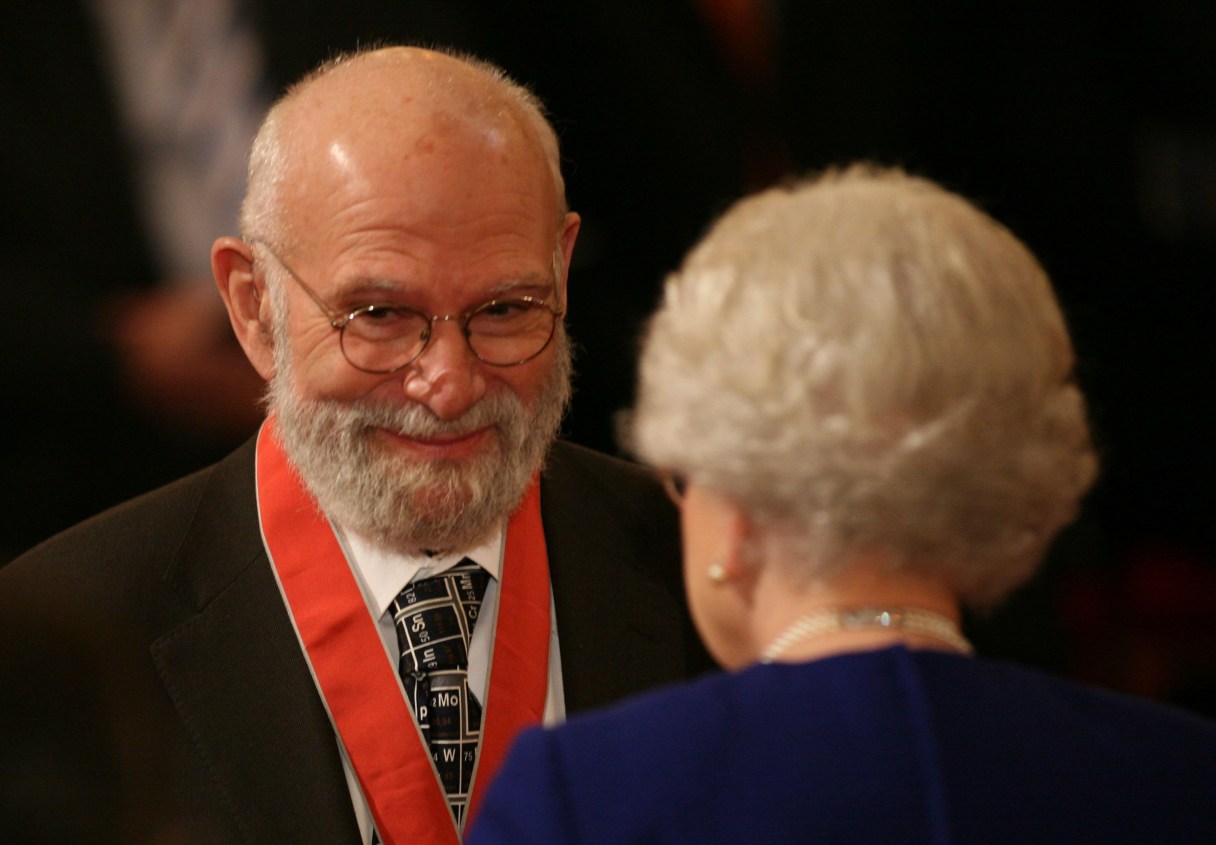
FILE - This is a  Nov. 26, 2008 file photo of  Dr Oliver Sacks, receiving his Commander of the Order of the British Empire (CBE ), by  Britain's Queen Elizabeth II at Buckingham Palace, London. Dr. Oliver Sacks, whose books like "The Man Who Mistook His Wife For a Hat" probed distant ranges of human experience by compassionately portraying people with severe and sometimes bizarre neurological conditions, has died. He was 82 .Sacks died Sunday at his home in New York City, his assistant, Kate Edgar, said. (Lewis Whyld/PA via AP) UNITED KINGDOM OUT
FILE - This is a Nov. 26, 2008 file photo of Dr Oliver Sacks, receiving his Commander of the Order of the British Empire (CBE ), by Britain's Queen Elizabeth II at Buckingham Palace, London. Dr. Oliver Sacks, whose books like "The Man Who Mistook His Wife For a Hat" probed distant ranges of human experience by compassionately portraying people with severe and sometimes bizarre neurological conditions, has died. He was 82 .Sacks died Sunday at his home in New York City, his assistant, Kate Edgar, said. (Lewis Whyld/PA via AP) UNITED KINGDOM OUT

NEW YORK (AP) – There was the blind man who had the disastrous experience of regaining his sight. The surgeon who developed a sudden passion for music after being struck by lightning. And most famously, the man who mistook his wife for a hat.

Those stories and many more, taking the reader to the distant ranges of human experience, came from the pen of Dr. Oliver Sacks.

Sacks, 82, died Sunday at his home in New York City, his assistant, Kate Edgar, said. In February, he had announced that he was terminally ill with a rare eye cancer that had spread to his liver.

As a practicing neurologist, Sacks looked at some of his patients with a writer’s eye and found publishing gold.

In his best-selling 1985 book, “The Man Who Mistook His Wife for a Hat,” he described a man who really did mistake his wife’s face for his hat while visiting Sacks’ office, because his brain had difficulty interpreting what he saw. Another story in the book featured twins with autism who had trouble with ordinary math but who could perform other amazing calculations.