
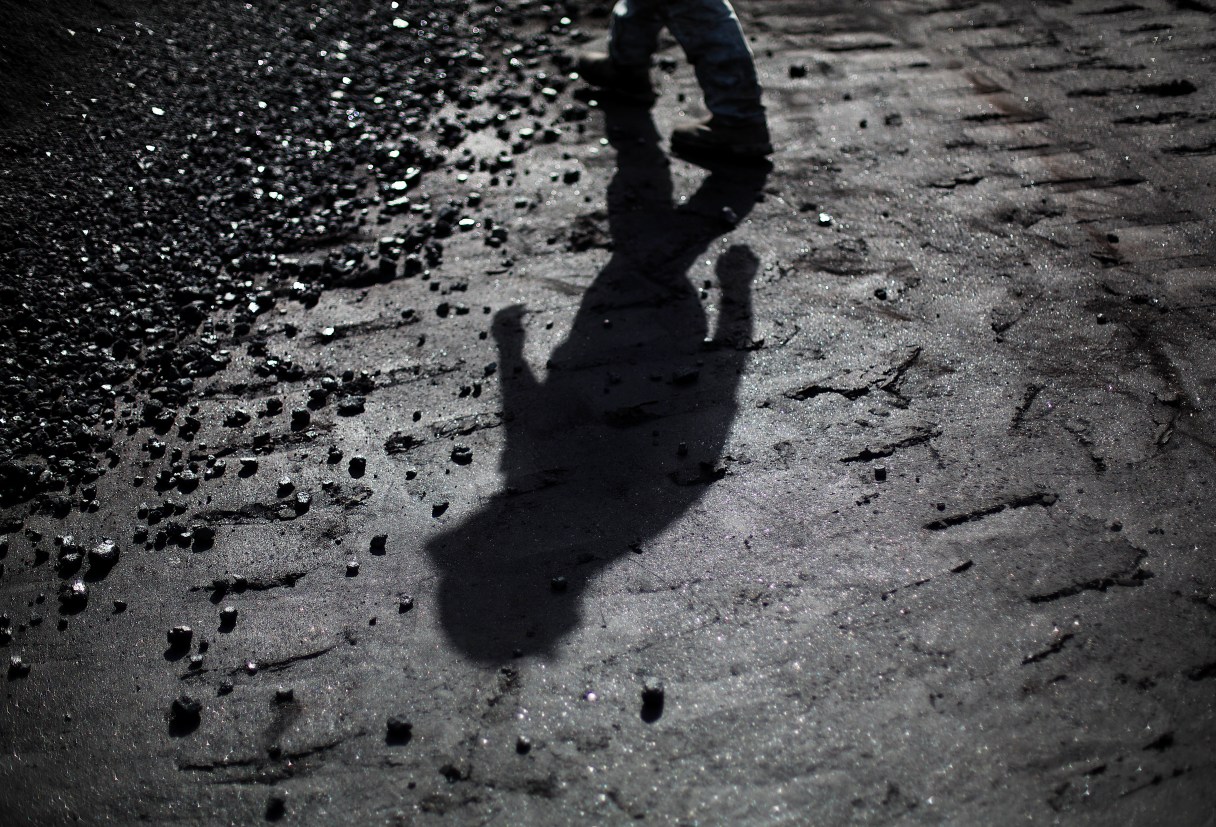
WELCH, W.Va. (AP) – The seams of coal in some of Eddie Asbury’s mines in McDowell County are so thin workers can barely squeeze down them. They enter on carts nearly flat on their backs, the roof of the mine coursing by just a few inches in front of their faces. They don’t stand up all day.
To keep his business operating with such a paltry amount of coal, Asbury has to do everything himself. He has no use for the shiny, multimillion-dollar mining machines on display this fall at the biannual coal show nearby. His equipment is secondhand stuff that he repairs and refurbishes. The coal he and his workers scrape out of the mountain is washed and prepared for sale in a plant Asbury and a colleague built themselves.
“It’s how we survive,” says Asbury, 66, a miner since 1971.
Even coal is barely surviving in coal country – and coal is about the only thing that Central Appalachia has.
West Virginia is the only state in the country where more than half of adults are not working, according to the Census Bureau. It is tied with Kentucky for the highest percentage of residents collecting disability payments from Social Security, according to the Kaiser Family Foundation. And the death rate among working-age adults is highest in the nation, 55 percent higher the national average, according to the Centers for Disease Control and Prevention.