
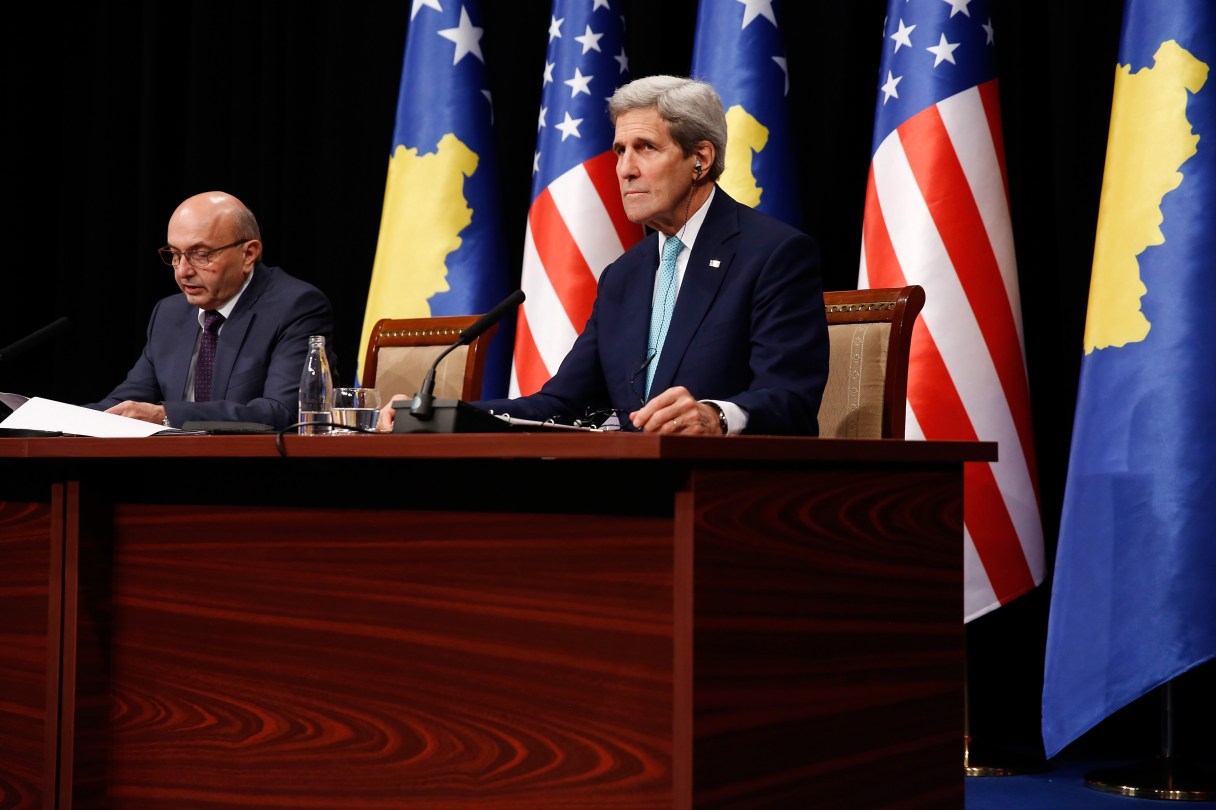
PRISTINA, Kosovo (AP) – U.S. Secretary of State John Kerry delivered a message of support for Kosovo’s government Wednesday, urging it to stick to agreements that would provide ethnic Serbs greater autonomy and demarcate the young nation’s border with neighboring Montenegro. He decried efforts by opposition lawmakers to scuttle both deals through intimidation.
Kerry also sought tougher action by the government to prevent Kosovars from joining the flood of foreign fighters joining the Islamic State group in Iraq and Syria. The Muslim-majority country, born out of Yugoslavia’s violent breakup in the 1990s, has seen a greater percentage of its citizens fight for IS than any country in Europe.
Stopping in Pristina for less than two hours after leaving a meeting of NATO foreign ministers in Brussels, Kerry backed Kosovo’s efforts toward closer cooperation with its neighbors and said the twin agreements wouldn’t threaten the country’s security or independence. “We have invested far too much, ourselves, together, in Kosovo’s future to put it at risk,” he said after meeting Prime Minister Isa Mustafa and other senior officials.
The U.S. and its NATO allies carried out a bombing campaign between March and June 1999, designed to force Serbian forces out of Kosovo and get Belgrade to accept the Rambouillet peace accord that called for the deployment of a NATO peacekeeping force.
The accords have plunged Kosovo into political crisis. Earlier this week, opposition lawmakers broke up a parliamentary session with tear gas, saying they would block proceedings until the government renounced its intention to give Serb communities greater powers and to define its 50-mile long eastern boundary with Montenegro. The opposition has regularly disrupted parliament with pepper spray, whistles and water bottles as well, and is now vowing street protests. Mustafa’s government accuses the opposition of trying to seize power by force.