
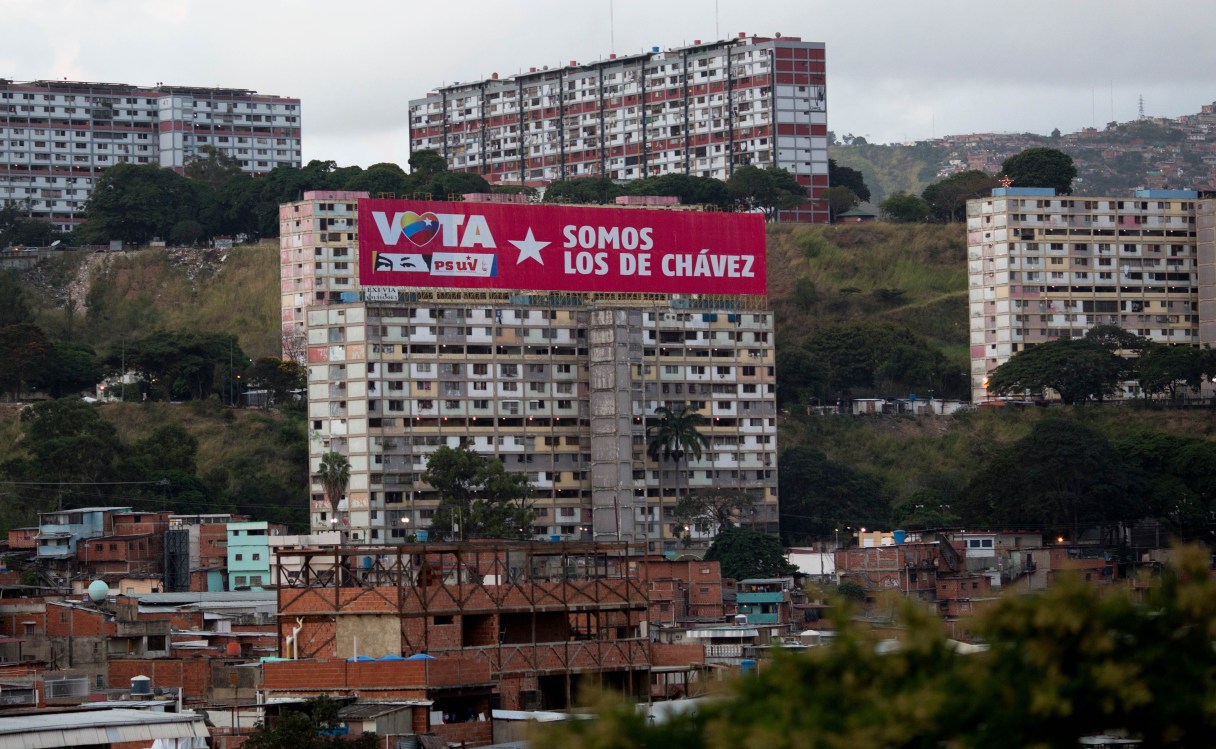
CARACAS, Venezuela (AP) – Residents of the slum where Hugo Chavez’s final remains rest are expecting deeper economic pain after they helped a majority of the nation’s voters deliver a landslide for the opposition against the socialist party founded by the late president.
Even if the new legislature elected Sunday devotes itself to righting the economy, things in this neighborhood could soon get worse before they get better. The same price and currency controls that have turned daily life into a scavenger hunt for food and medicine also shield the poor from the country’s triple-digit inflation.
“It’s very difficult to remove economic controls. Even if you do everything right, you might end up hurting a lot of poor people in the short term,” said political science professor Javier Corrales of Amherst College in Massachusetts.
Around the 23 of January neighborhood, murals of Chavez in various iterations peer down from the neighborhood’s walls: Chavez the stone-faced general. Chavez the child destined for greatness. Older Chavez relaxing in a hammock. Younger Chavez plotting a 1992 coup attempt in this very slum.
Jhon Ramirez worries less about betraying the man whose face greets him at every turn than whether there will be food to buy in January, always a time of intense shortages here as factories furlough workers for long holiday vacations.