
Thursday, November 12, 2026Nov 12

How delegates think, eat and dream green in Paris

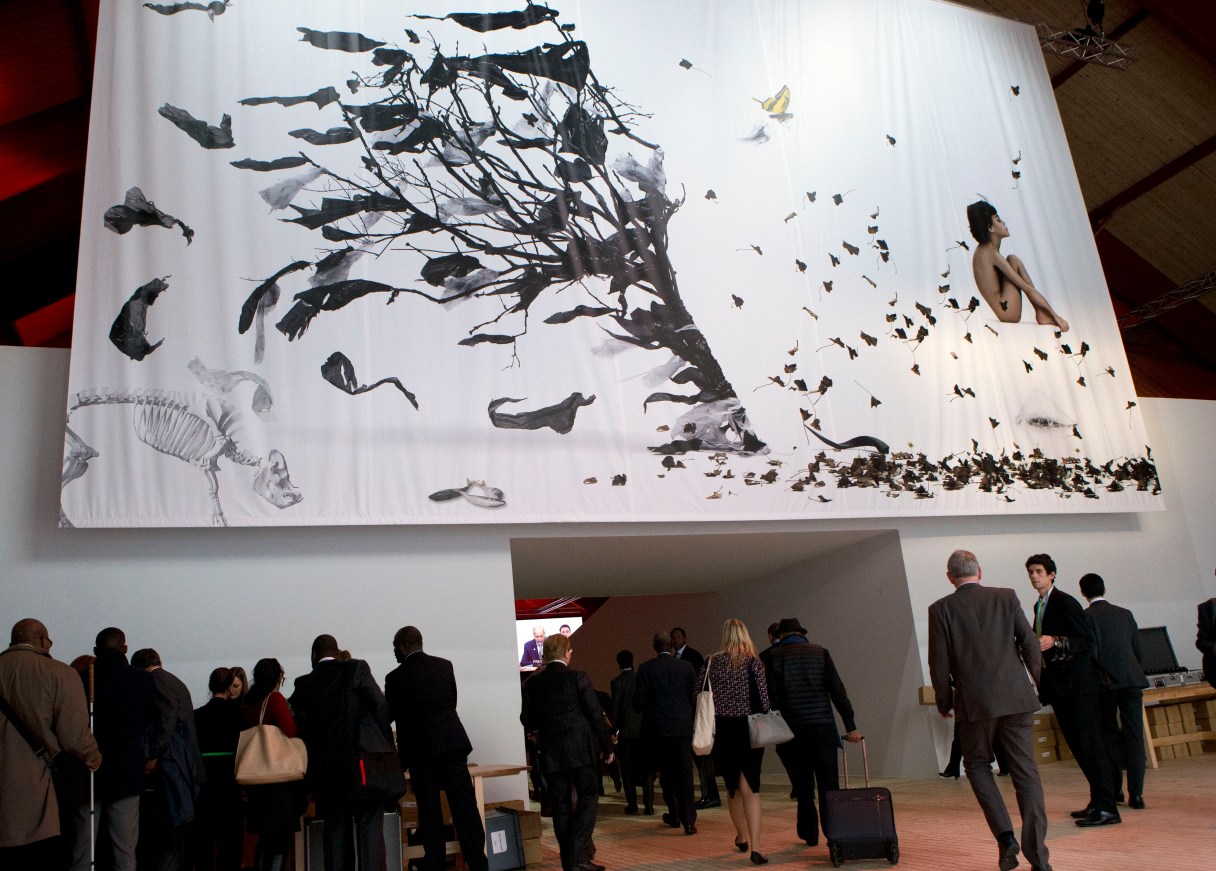
Participants enter to listen to French Foreign affairs minister and acting president of the COP21, Laurent Fabius during the 'Committee of Paris' plenary work session at the COP21, United Nations Climate Change Conference in Le Bourget, north of Paris, France,  Wednesday, Dec. 9, 2015. (AP Photo/Francois Mori)
Participants enter to listen to French Foreign affairs minister and acting president of the COP21, Laurent Fabius during the 'Committee of Paris' plenary work session at the COP21, United Nations Climate Change Conference in Le Bourget, north of Paris, France, Wednesday, Dec. 9, 2015. (AP Photo/Francois Mori) Participants enter to listen to French Foreign affairs minister and acting president of the COP21, Laurent Fabius during the 'Committee of Paris' plenary work session at the COP21, United Nations Climate Change Conference in Le Bourget, north of Paris, France, Wednesday, Dec. 9, 2015. (AP Photo/Francois Mori)

PARIS (AP) – It’s a challenge few people could take on: making it possible for some 40,000 world leaders, indignant environmental activists and others to coexist for two weeks in a logistical and negotiating ballet aimed at reaching an unprecedented global climate accord. Here’s a glimpse behind the scenes at the Paris climate talks:

SMALL, GREEN(ISH) CITY

The conference site of Le Bourget near Paris looks like a small city, with its medical center, prayer rooms, bakeries, restaurants, post office, selective waste sorting and electric vehicles, and even a mini-Eiffel tower made of reused chairs on the so-called “Champs-Elysees” alley.

In welcome bags made from recycled sweaters, the participants were provided with 36,000 re-usable plastic bottles to fill at water fountains, so that they avoid using disposable plastic cups.

All restaurants have been asked to propose food based on seasonal products only.