
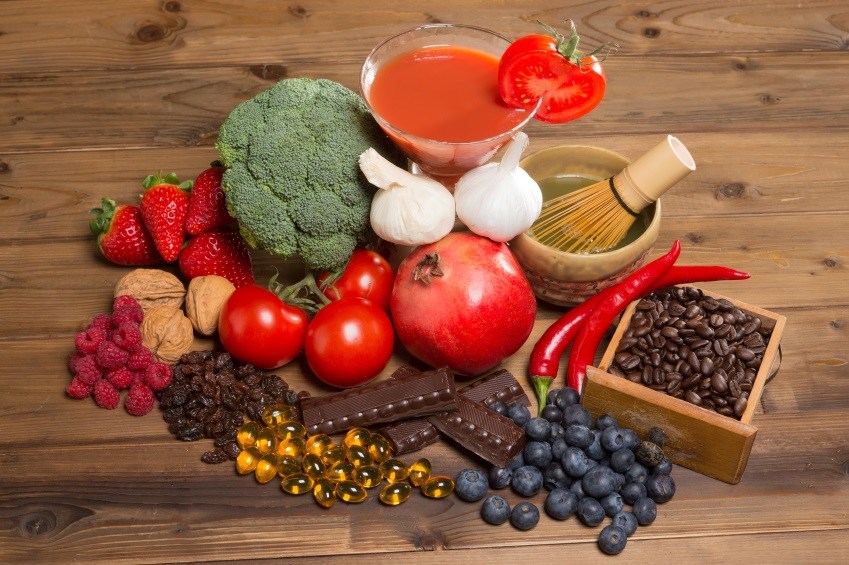
 Contributed photos
Trying to maintain a healthy diet but finding it difficult with the parties you’re attending this holiday season?
The good news is, with a little education, you can make sound nutritional choices that not only will improve your overall health but also your brain.
Jonny Bowden, a board certified nutritionist with a master’s degree in psychology, has authored more than a dozen books on health, healing, food and longevity. His newest book, “Smart Fat: Eat More Fat. Lose More Weight. Get Healthy Now,” is set to be released on Jan. 19 both in bookstores and online.
Bowden offers the following advice on making healthy food choices while attending holiday parties.
Q. Whenever there’s a party, there’s crackers and cheese balls. They’re easy; they taste good, and they’re an ideal hors d’oeuvre. But are they a healthy choice?
A. Hard as it might be to follow, my advice is to stay away. Cheese balls are almost always made of inferior, processed cheese foods, and the crackers – whole grain or not – are nothing more than processed carbs waiting to turn into sugar in your body in a New York minute. I don’t mind real, aged, raw-milk cheeses and delicious gourmet ones in small amounts (they’re wildly high in calories) but the crackers are pretty much a waste of time, nutritionally speaking.
Q. Do you advise that one should grab a healthy snack before going to a party where you really have no idea what the food choices will be?
A. I think anything you can do to take control of a situation in which you’re likely to find temptation overwhelming is a good thing. Tempting bad foods are more tempting when you’re starving. Drink a high-fiber shake or eat some high-fiber fruit or scoop out an avocado and eat it as a snack before attending a party where you think you’re likely to be tempted by all kinds of really bad-for-you goodies that are going to look even better when you’re blood sugar is in the basement. You may still eat the “bad” stuff but perhaps not as much of it.
Q. Low-carb versus low-fat, how do we know what’s best?
A. Low-fat has been a colossal failure as an eating plan. It hasn’t generally led to much weight loss; it certainly hasn’t led to any health benefits and, from the point of view of history, low-fat is a short and silly experiment that never really made any sense.
However, more important than low-fat or low-carb is food quality. If you’re eating whole foods, real foods, foods that would spoil if left outside, you have little to worry about from the fat that comes with them.
High-carb diets on the other hand – which is what low-fat diets almost always are – are very high in sugar, which is now being seen to be the real culprit in the American diet. It’s much better to eat moderate protein and healthy fat and lower processed carbs than to eat a high-processed carb diet with low fat.
Q. Americans tend to eat bigger portions than we should but, if the food is healthy and low-fat, is it OK to eat more?
A. We all need to eat the amount of calories that our particular body can deal with, and foods that are low-fat tend to be high-sugar and therefore very hard to resist. We think they’re healthy but they’re full of sugar, and we wind up eating more of them because we mistakenly believe they’re healthy.
Q. Chips and dips also are party fare. If we’re watching our waistlines, should definitely avoid them?
A. Not necessarily. Guacamole is one of the healthiest dips in the world, as is hummus. The problem is the potato chips and other junk we use to dip into it. And real, honest peanut butter can make a great dip base for apple slices. Yogurt-based dips are great as well, but for goodness sake don’t use the no-fat or low-fat kind; get real full-fat yogurt, which is better for you and lower in sugar.
Q. What are a few healthy dishes you highly recommend to serve at parties where finger foods dominate?
A. Try nature’s candy: Dates. Medjool dates are incredibly sweet and, while they have a bunch of sugar, they’re not nearly as bad as most processed junk carbs that are served as finger foods. I also like real cheese, all nuts, figs, berries, yogurt based dips, and real dark chocolate. Try making a bowl of finger food with nuts, chocolate, coconut flakes, or roll all of them together with some nut butter and put in the frig for an hour or two. Yum.
Q. If you’re going to serve food at a party, why shouldn’t it also be food that’s good for your brain?
A. The brain is a hot topic in nutrition these days, and one of the many reasons is that we’re finding out the connection between sugar and Alzheimer’s. In fact, Alzheimer’s is beginning to be called “type 3 diabetes” because of the sugar connection.
The brain is 60 percent fat by weight; the brain needs fat and cholesterol. For too long we’ve overlooked the brain-friendly – and health-friendly – effects of fats like coconut oil and Malaysian certified sustainable palm oil, two terrific fats that can be used to make all kinds of friendly foods, like non-GMO popcorn made with the palm oil.
Berries are a great food for the brain. Experiments by Jim Joseph, M.D., have shown that feeding extracts of berries to lab animals makes them act younger and behave younger, solving mazes more easily and generally having better and younger-seeming brain processes like cognition and memory.
The omega-3’s in coldwater fish are excellent brain food. They lower inflammation, as well as blood pressure, making them heart healthy and brain healthy.
There is a saying in integrative medicine that, if something is good for the heart, it’s good for the brain. High-fiber intake is good for both.
Contact Karen Nazor Hill at khill@timesfreepress.com or 423-757-6396.