
Friday, November 13, 2026Nov 13

Lawsuits seek to abolish county’s bail bond system

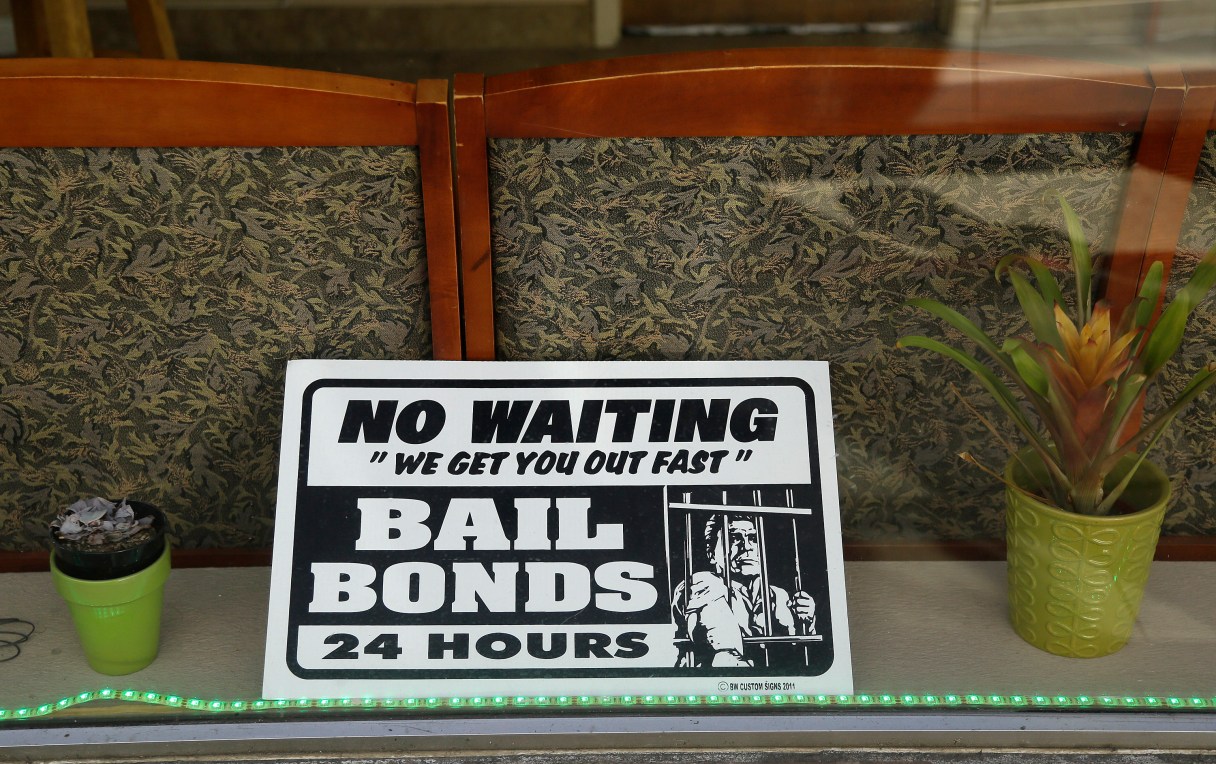
In this photo taken Wednesday, Dec. 23, 2015, a sign is seen in the window of a bail bonds office across from the Hall of Justice in San Francisco. Two Harvard law school graduates are waging war against the time-honored cash bail bond system, saying it discriminates against poor people who don’t have homes to put up as security for getting out of jail.(AP Photo/Eric Risberg)
In this photo taken Wednesday, Dec. 23, 2015, a sign is seen in the window of a bail bonds office across from the Hall of Justice in San Francisco. Two Harvard law school graduates are waging war against the time-honored cash bail bond system, saying it discriminates against poor people who don’t have homes to put up as security for getting out of jail.(AP Photo/Eric Risberg) In this photo taken Wednesday, Dec. 23, 2015, a sign is seen in the window of a bail bonds office across from the Hall of Justice in San Francisco. Two Harvard law school graduates are waging war against the time-honored cash bail bond system, saying it discriminates against poor people who don’t have homes to put up as security for getting out of jail.(AP Photo/Eric Risberg)

SAN FRANCISCO (AP) – Crystal Patterson didn’t have the cash or assets to post $150,000 bail and get out of jail after her arrest for assault in October.

So Patterson, 39, promised to pay a bail bonds company $15,000 plus interest to put up the $150,000 bail for her, allowing to go home and care for her invalid grandmother.

The day after her release, the district attorney decided not to pursue charges. But Patterson still owes the bail bonds company. Criminal justice reformers and lawyers at a nonprofit Washington D.C. legal clinic say that is unconstitutionally unfair.

The lawyers have filed a class action lawsuit on behalf of Patterson, Rianna Buffin and other jail inmates who argue that San Francisco and California’s bail system unconstitutionally treats poor and wealthy suspects differently.

Wealthy suspects can put up their houses or other valuable assets – or simply write a check – to post bail and stay out of jail until their cases are resolved. Poorer suspects aren’t so lucky. Many remain behind bars or pay nonrefundable fees to bail bonds companies.