
Photo Gallery
Building a better ‘Army’Changing with the times to attract younger volunteers, Salvation Army alters its marching orders
New Year’s Eve donor phenomenon
Christian faith-based charities depend heavily on donations before Christmas, a time when donors normally feel generous.The Salvation Army experienced a flood of donors in the final hours of 2014. “Thirty percent of all Salvation Army gifts nationwide were donated in the last 36 hours of 2014,” said Chattanooga’s Salvation Army Director Kimberly Field.Of the total online donations made through salvationarmyusa.org, $4.1 million was given on the very last day of the 2014. That’s almost 6 percent of the total $24.91 million raised online for all of 2014. As a result of that New Year’s Eve rush, online donations were up 16 percent from 2013.In Chattanooga, there is a similar yea-end rush that the Salvation Army is counting on since red kettle donations might not hit the 2015 goal.“We set the 2015 red kettle goal at $480,000 but I’m not sure we’ll make it because donations are down from last year,” SA Communications Director Kimberly George said one week before Christmas.She said red kettle donations reaped $450,000 in 2014.
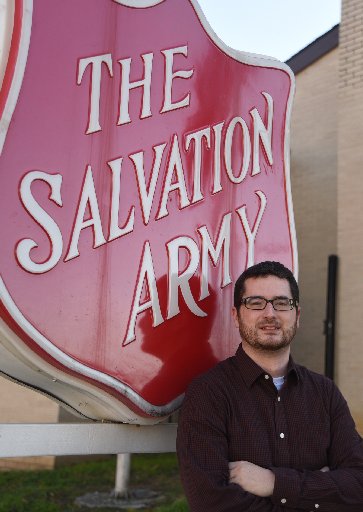
Matthew Dodgins, the Salvation Army’s social media director in Chattanooga, is openly gay. And since announcing his new hire back in February, he has found himself frequently explaining to friends that he’s not working for a charity larded with homophobes.
Dodgins knew that a Salvation Army officer’s anti-gay remarks in 2012 sparked boycotts and lingering anger against the organization. But the remarks also fueled soul-searching that prompted the 150-year-old global nonprofit to be bolder in championing issues such as recruitment of gay employees, feeding and providing blankets to Syrian and Iraqi refugees, fighting human trafficking, battling sub-prime foreclosures on behalf of poor homeowners and alleviating climate change.
It also denounced anti-LGBT bigotry and repudiated the idea that homosexuality is a sin or a disease.
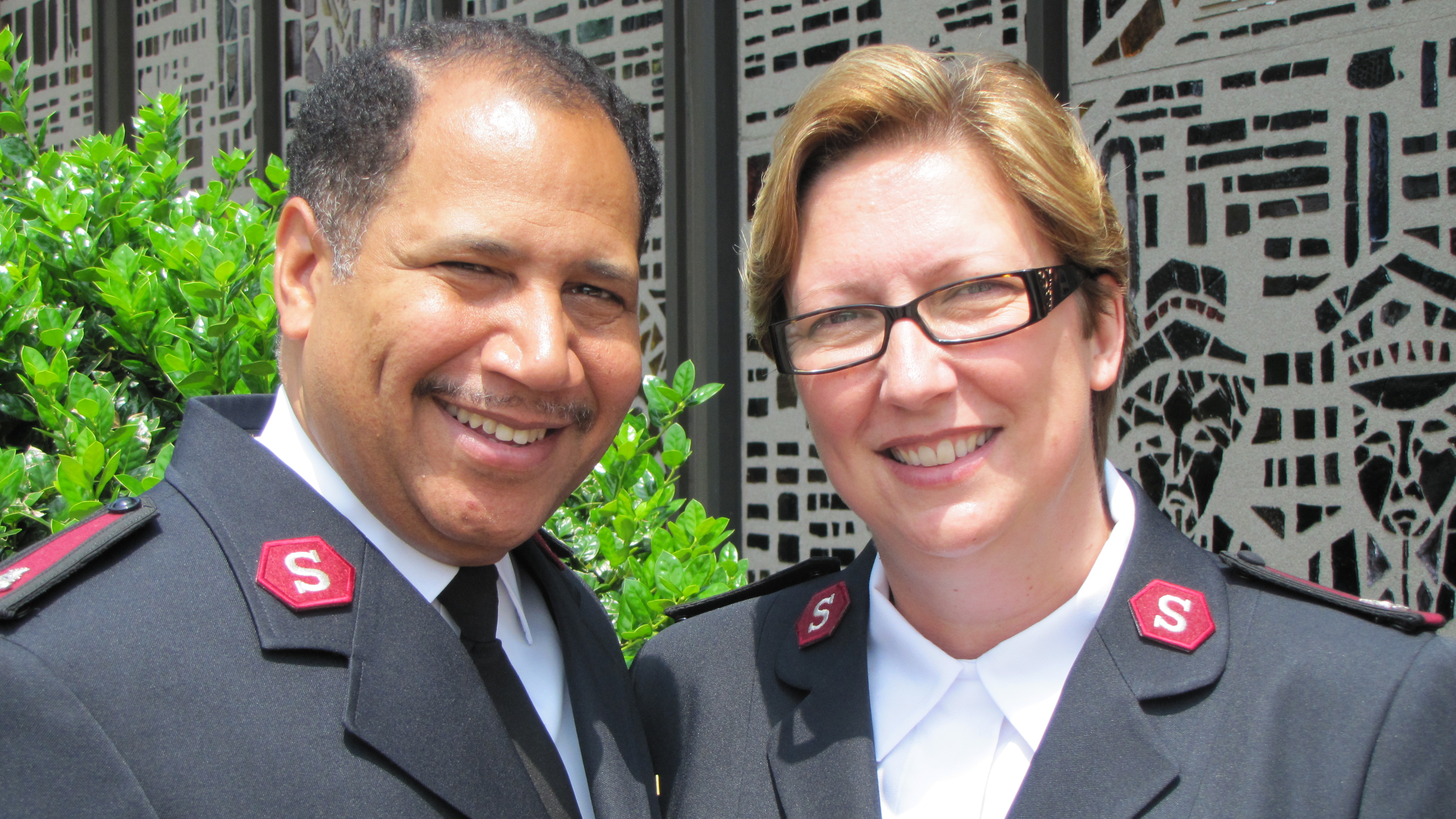
Maj. Algerome Newsome, Chattanooga’s area commander, describes it as a revival of the Army’s social-justice roots. Even traditional services like homeless shelters have a more innovative approach these days, he says.
“Our homeless shelters in older rehabbed buildings use barracks-style sleeping areas; new shelters being built will try to include places where transgender homeless folks, who might feel threatened in dorm-like housing, will feel safe,” Newsome says.
Such innovations, plus the wide new array of services the Salvation Army offers to the impoverished, attracted Indiana University academics who have partnered with Army officers in a new a study called Pathways of Hope. The study aims to document causes of inter-generational poverty and find ways those caught in it to escape its grip. Pathways launched in the Midwest last year and debuts in the South in 2016, supervised by the Army’s Atlanta command.
Dodgins, 34, was impressed enough with the new Army to leave a prestigious Atlanta public relations firm to take a job and a pay cut at the Salvation Army in Chattanooga.
“In the Atlanta PR office, my work was mostly about racking up billable hours; I wanted something more meaningful, that made the world better, and the one client I really enjoyed helping was the Salvation Army,” says Dodgins, recruited for the newly created job by Chattanooga Communications Director Kimberly George.
“We were Facebook friends so, sure, I knew he was gay,” she says. “And I thought he was perfect for this job.”
Dodgins’ first contact with the Army took place through the group’s Angel Tree when Dodgins was just seven. He and his sister saw their names written on paper cherubs hanging from the Salvation Army Christmas tree after his construction worker father was badly injured on the job. On Christmas Eve, they went to a Salvation Army party, where officers gave Dodgins a box decked out in crisp, glittery gift paper and sparkly ribbons. A remote controlled toy car was inside.
“I was so happy I never figured out how Santa made the hand-off to the Salvation Army,” Dodgins says.
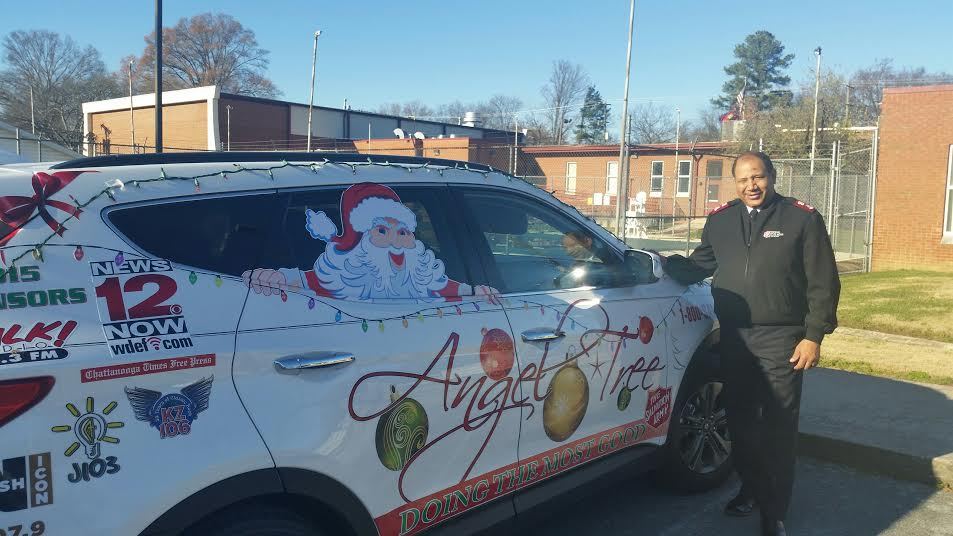
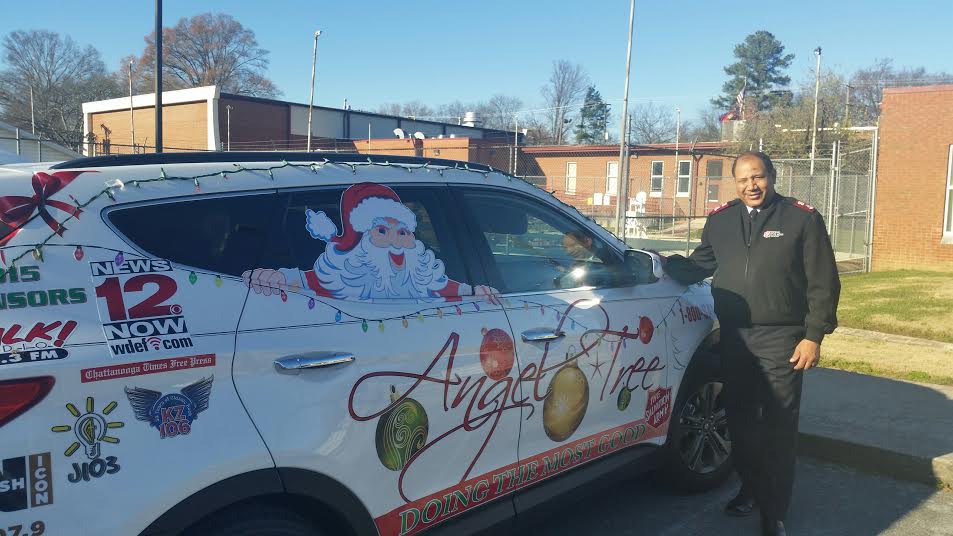
Today, Dodgins’ often drives the Angel Tree van in Chattanooga to pick up everything from donated toys from Walmart and flowers from Bi-Lo (now Food City) that are given to hospital patients and elderly shut-ins. His job’s primary focus, however, is using Twitter, Facebook, Pinterest and Instagram to explain the new Salvation Army to Chattanoogans, especially millennials.
“It’s a new way to reach a new generation whose support we need to survive in the future,” he says.
New ‘Roots’
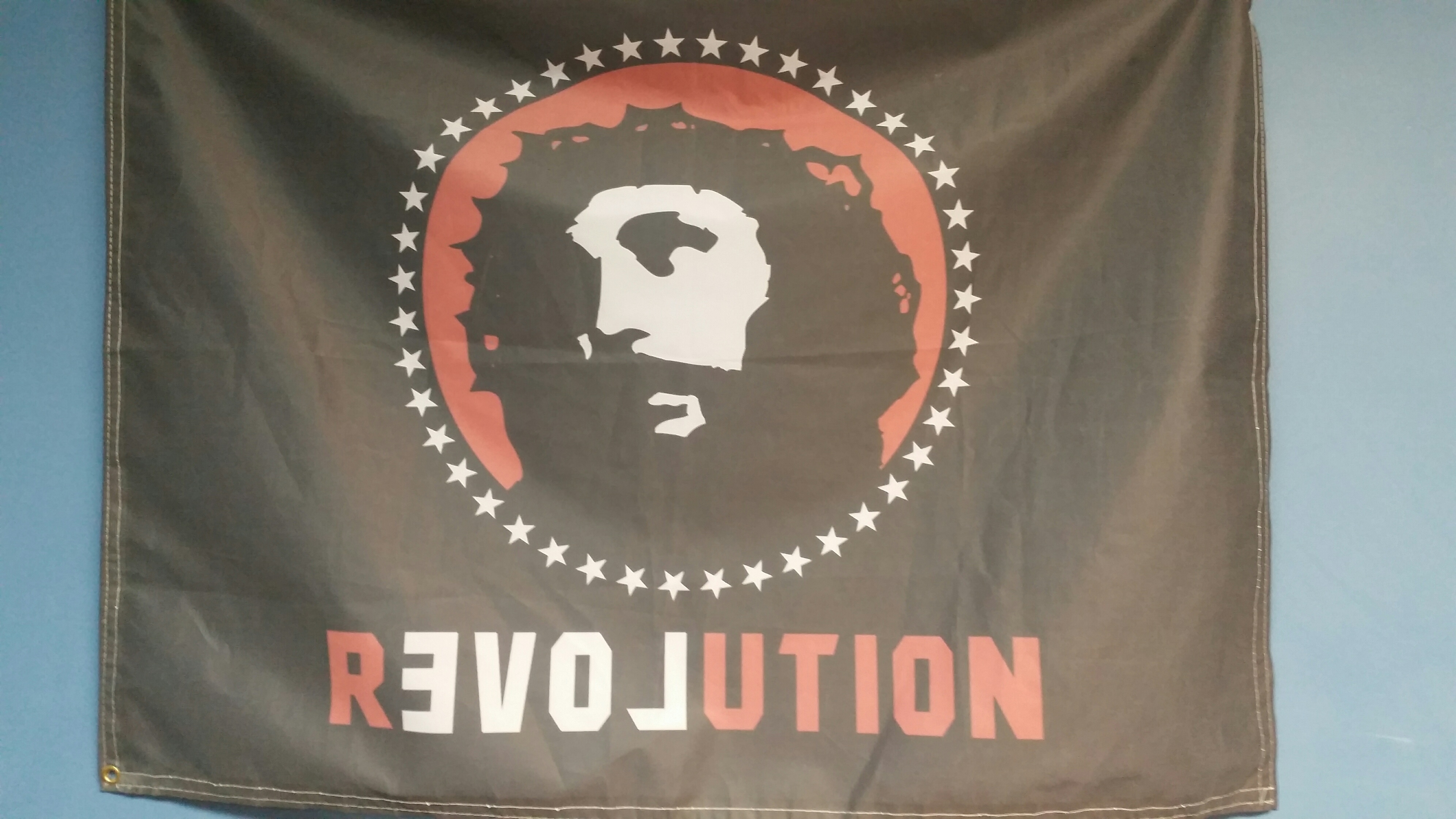
A big black flag hangs in the Salvation Army’s East Ridge conference room. The word “Revolution” is spelled out at the bottom beneath a black-and-white picture of Jesus. His portrait resembles the iconic photo of Cuba’s revolutionary freedom fighter Ché Guevara, except Jesus wears a thorny crown tilted at a jaunty angle instead of a beret. But his face has the same calm, defiant expression as that of Ché.
“Yes, many people have noticed the resemblance,” Newsome says wryly. “That’s the banner for Roots, a movement within the Salvation Army. I was a member until I got too busy for the meetings, but I still support their efforts. The goal of the movement is to embrace our social-justice roots.”
The Salvation Army International Social Justice Commission describes the movement as “rooted in faith, characterized by action on behalf of the oppressed. Christianity must address the spiritual and the physical aspects of people’s lives, but also the societal norms, traditions and policies that militate against, or prevent, wholeness for every individual.”
Roots acquired a new urgency in 2012 after two openly gay journalists interviewed Salvation Army-Australia Maj. Andrew Craibe. The Salvation Army training manual quotes Romans 1:18-32, Bible verses listing sins God deems worthy of death, including envy, murder, deceitfulness, gossiping, boastfulness, disobedience to their parents, heartlessness, ruthlessness and men and women who “gave up natural relations” with the opposite sex. Reporter Serena Ryan asked Craibe if he actually believed homosexuals should be included in this harsh list. His flustered response rambled past his vow that he would love his kids if they were gay and a promise that the Salvation Army never denies aid to LGBT homeless, hungry or ill.
Ryan repeated her question and Craibe replied, “That’s a part of our belief system.”
It was a fiasco heard round the world.
The international Salvation Army body quickly condemned Craibe’s remarks. Ironically, in 2012, U.S. Salvation Army shelters made headlines because they accepted same-sex homeless couples rejected by shelters run by conservative Catholics and fundamentalist churches. But Salvation Army officers realized that, as champions of justice, they needed to do more than make services available to everyone. Salvation Army-America spokesman Col. Ron Busroe says the organization decided its attitude toward the LGBT community must change.
“It’s been uphill, a tough process and isn’t done yet, but it’s worth the effort,” Busroe told the Times Free Press. “Gay officers – friends of mine – had left the Salvation Army because they felt uncomfortable being openly gay. Now they’re coming back.”
The SA’s 24-page “Nondiscrimination Communications” memo now states that homosexuality is not a sin nor a sickness. It scrubbed its website of links to churches that took that stance. It promised LGBT job applicants that they would not face discrimination. Gay employees were assured homosexuality would not hamper their careers or possible promotion.
Busroe says the organization now is happy to employ LGBT employees in same-sex marriages as well as those who are single and sexually active.
“I really don’t want to know what our employees’ dating lives are like,” Busroe says dryly.
He also notes that spouses of gay SA employees are eligible for benefits such as health insurance coverage.
But SA officers are in a different situation. The Salvation Army demands a lot of officers; each must sign a covenant promising chastity, poverty and obedience.
“If my wife died and left me a widower, I would be expected to remain celibate until I got married,” Busroe says. “Employees are not bound by that prohibition. (Non-officer) employees do not sign a vow of poverty and chastity.”
Officers’ salaries are so low and the work hours so difficult, they are allowed to marry only other officers because the Army believes it would be unfair to force an outsider to endure the financial hardship that an officer views as holy duty. And they must marry in traditional fashion.
“We still view marriage as the union of a man and a woman; a person could no longer be an officer if he or she was in a same-sex marriage,” Busroe says.
To become an officer, a person must take a two-year course at one of the Salvation Army’s four colleges – Chicago, Atlanta, Suffern, N.Y. and Rancho Palos Verdes, Calif. – where their courses include sociology, psychology, Bible studies, accounting and community relations, among other subjects. After the two years, candidates are commissioned as lieutenants, ordained as ministers and assigned to specific jobs, but they still are required to take five more years of classes.
Officers who unite in a same-sex marriage can choose to make the transition to a regular employee. But that marital policy predates the Supreme Court ruling on gay marriage that came this summer and said same-sex marriage is a right guaranteed by the Constitution. When the first gay SA officer decides to marry, the prospect of it ending up in court is substantial.
Chattanooga changes
The Salvation Army’s McCallie Center is right next to the University of Tennessee at Chattanooga campus. Before he can implement new programs there, Newsome says he will need to convince city government and school officials that the Salvation Army is a good neighbor.
He wants to use an empty lot adjacent to the McCallie Center – a lot already owned by the Salvation Army – to expand housing for the homeless with new classes and more counseling. Currently, six homeless men live at the center in a Life Skills program. They work on-site in custodial jobs or managing a free breakfast program with pastry donations from Panera and Starbucks. They study for their GEDs and learn computer skills. Newsome thinks 60 people could be housed if he could expand.
“We’ve owned the McCallie land for about 50 years, but recently I saw drawings by university planners of their vision for McCallie and they drew a road running right through the middle of where our center is now,” Newsome says with a rueful chuckle. “In the past, folks from the university expressed concerns whether a Salvation Army center is what a college wants parents to see on a campus tour. But there has never been a single incident by one of the men in this program committing a crime or an act of violence against a student.”
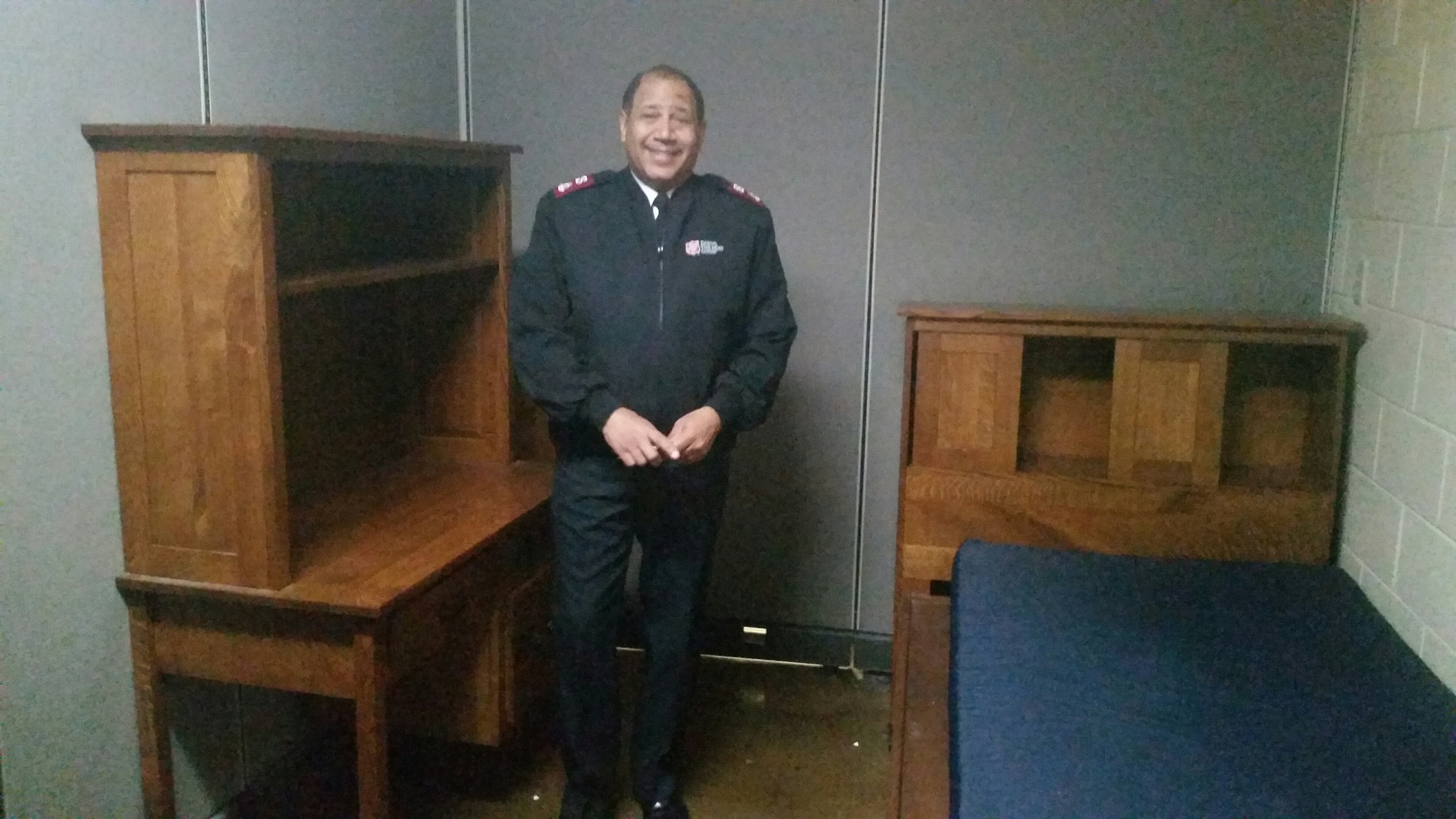
Each man has a therapist guiding him; each man has a small room and they are spotlessly clean, albeit spartan: bed, desk, wardrobe and chair. The men clean the showers, which homeless visitors can use, and man the front desk, where the homeless can get keys to free lockers and pick up mail.
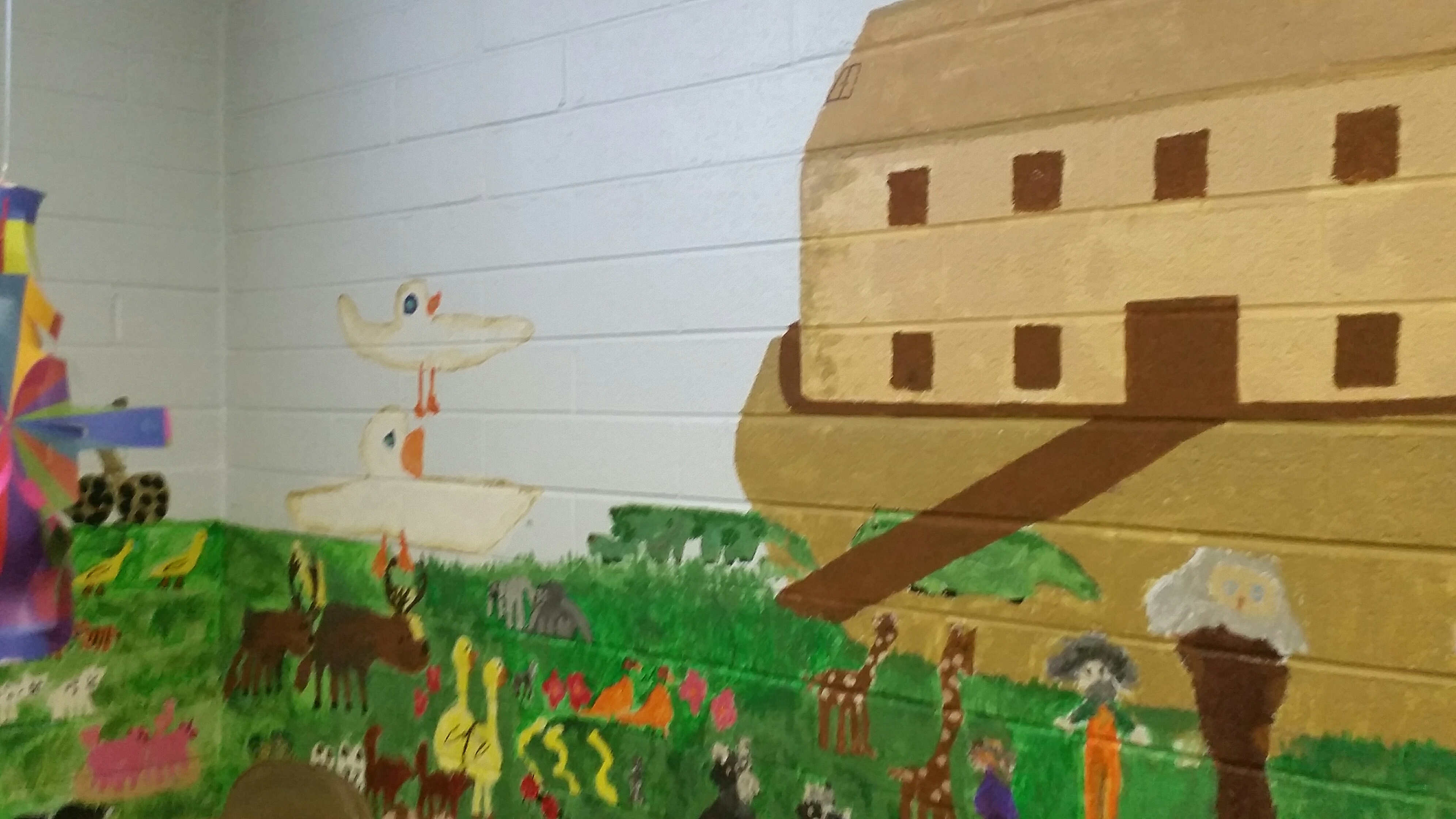
Meanwhile, the Salvation Army’s East Ridge center focuses on children, offering free art and music classes with qualified volunteer teachers. First- through third-graders created a vividly detailed mural of Noah’s Ark across one classroom wall. Some children had only seen photos, not actual animals, so in the mural a cow and a bull stroll along the path on their hind legs while the ducks are as big as bald eagles. The center also has a room full of guitars and another filled with drums for music lessons.
“We take some heat from people who ask why we aren’t teaching the kids a trade,” Newsome says. “But school budgets in poor neighborhoods have been cut so much, this is often the only place a child can be exposed to art or music lessons and we want poor children to have the same chance to nourish their imaginations that rich kids have.
“We can teach them a trade. We also want them to know there’s a bigger cultural world than TV and computer games out there.”
Younger volunteers
The Salvation Army’s new LGBT-friendly incarnation requires leaders who are deft bridge builders and peacemakers to reach not only a suspicious LGBT community but also a new generation of young potential volunteers and donors.
Newsome learned to be a peacemaker as a child growing up in New Orleans, where his grandfathers were pastors of rival Baptist churches. His wife, Teresa, learned about building bridges across the social-class divide as the daughter of Florida orange grove sharecroppers, the first in her family to graduate from high school then go to college.
As a couple, they have built a strong bridge to the The McCallie School, the private Chattanooga institution with historic cachet.
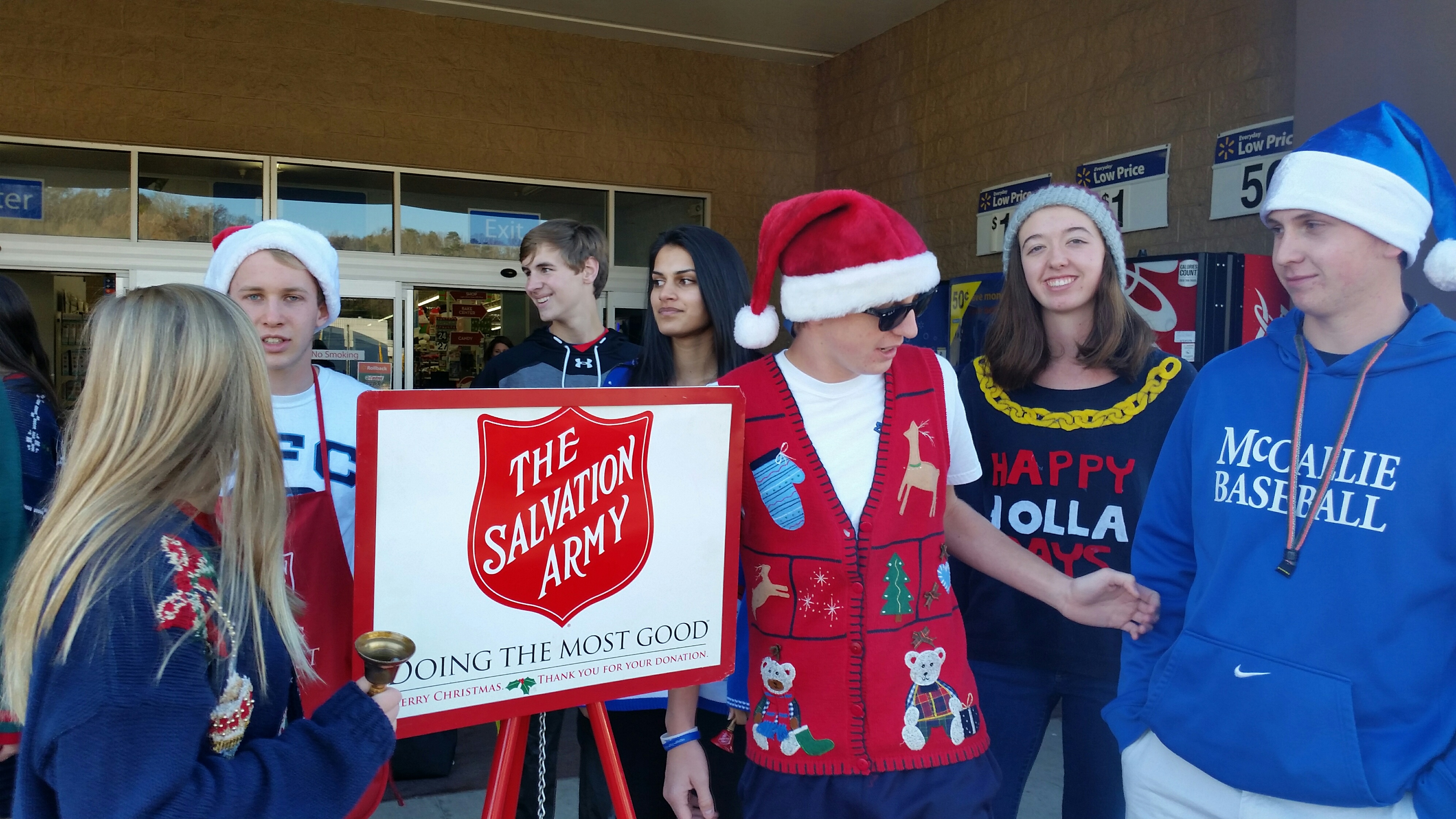
Just before Thanksgiving, Dodgins helps the McCallie School students load frozen turkeys and boxes of canned goods into Salvation Army trucks. The McCallie students are handsome young men with perfect teeth, glowing skin and thick shiny hair – all traits that make them look like America’s 1 percent. Some of these students – Nelson Eiselstein, Joey Friar and Duncan Moore – were tapped this year to join McCallie’s prestigious Keo-Kio club, which recruits students who display leadership gifts and dedication to service.
Yet all three volunteer for the most mundane Salvation Army task – ringing bells at a red kettle sitting outside the Walmart at the foot of Signal Mountain. On a sunny Saturday in December, they charm passers-by by singing requests; when they don’t know all the lyrics to “Sleigh Ride,” they pull them up on a smartphone.
Each is wearing a Santa hats, and Eiselstein wears the cheesiest holiday sweater he could find – bright red and embellished with fabric reindeer, a cuddly bear, Santa and snowflakes.
“Women appreciate the boldness and confidence it takes to wear one proudly in public,” Eiselstein says, laughing.
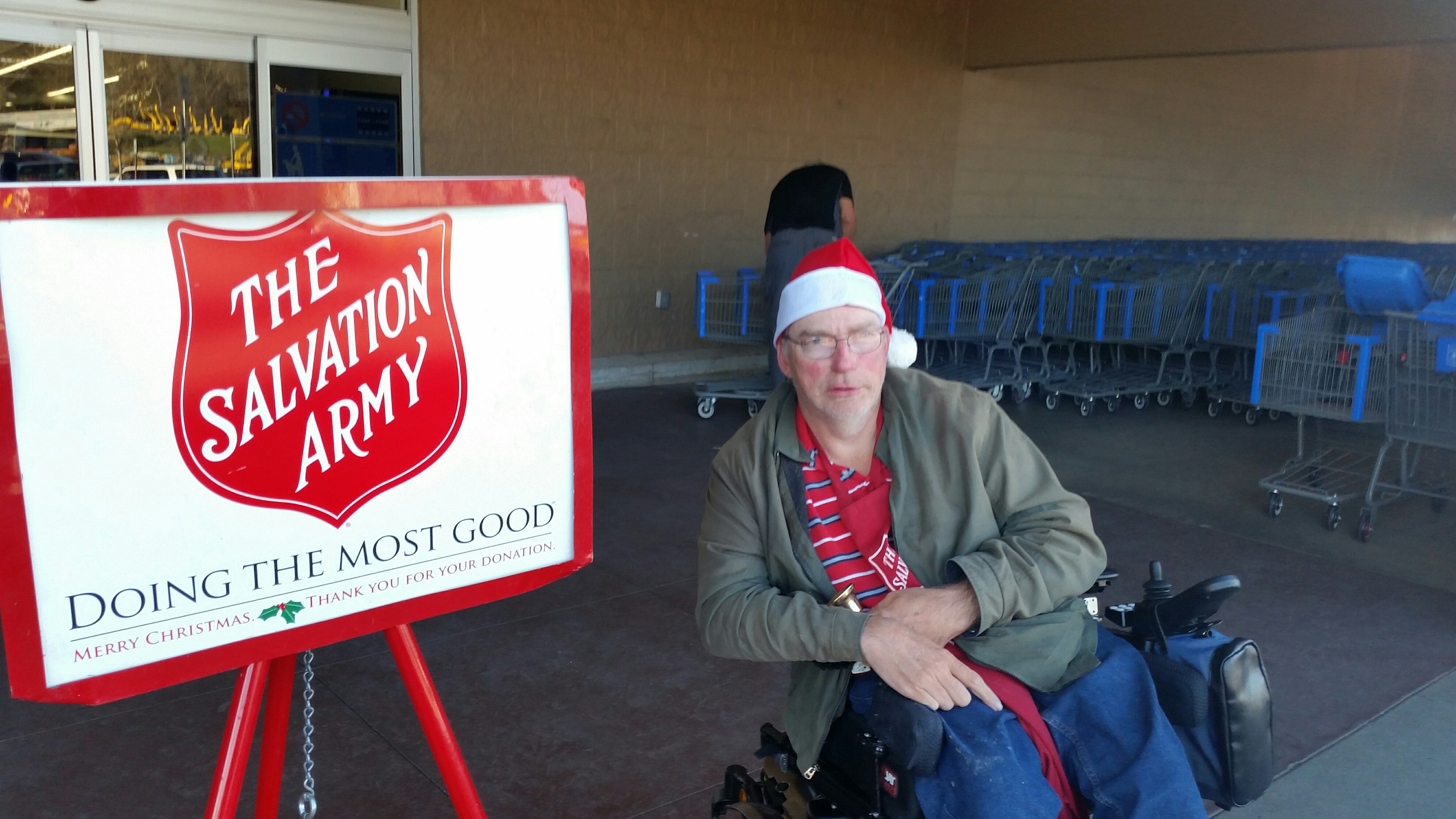
The same day at the same Walmart but at a different entrance, Doug York does not let his wheelchair or lack of a car prevent him from ringing the bell. York took CARTA to get there and chats about how he is saving to buy a computer so he can apply for a job as a store clerk. The contrast between York and the McCallie crew causes one to wonder what motivation prompts such different people to volunteer.
York says he identifies with the people the Salvation Army helps because he has known what it’s like to deal with tough times. But the McCallie students would need to make an imaginative leap to do so. Why would future leaders trained in a privileged school aid a charity that, whatever its faults, is known for its humility and compassion for the disenfranchised? It’s an intriguing question given the current political rhetoric assailing the poor as freeloaders.
Eiselstein reflects thoughtfully then replies:
“I don’t agree with that rhetoric. McCallie is proud of creating leaders and it believes giving back to the community you live in and having empathy for people who’ve had a rough time are qualities a leader needs,” he says.
“The Salvation Army helps people dealing with bad situations that sometimes aren’t even their fault. A good leader makes sure people like that know someone is standing with them.”
Contact Lynda Edwards at 423-757-6391 or ledwards@timesfreepress.com.