
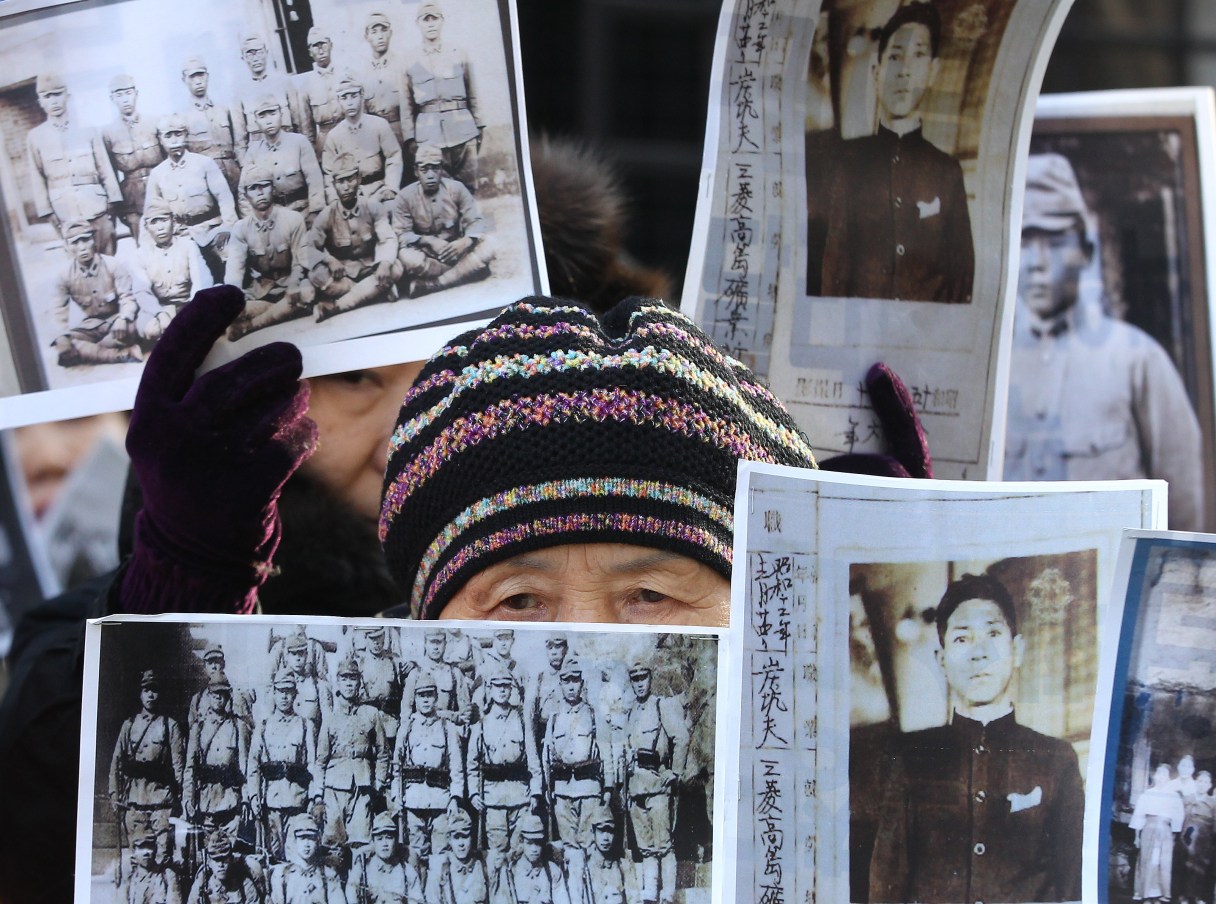
SEOUL, South Korea (AP) – The foreign ministers of South Korea and Japan met Monday to try to resolve a decades-long impasse over Korean women forced into Japanese military-run brothels during World War II.
The issue of former Korean sex slaves, euphemistically known as “comfort women,” is the biggest source of friction in ties between Seoul and Tokyo, two thriving democracies, trade partners and staunch U.S. allies who have seen animosity rise since the 2012 inauguration of hawkish Japanese Prime Minister Shinzo Abe.
Japan has high hopes of a breakthrough of some kind, and its diplomats have floated possible solutions, involving money and apologies, to local media. But there is deep skepticism in Seoul, where Japan’s many past apologies and efforts at private compensation have been seen as insufficient.
Last month, the countries’ leaders resumed formal talks after a 3 ½-year hiatus and agreed to try to make progress on the sex slave issue. Japan has been heartened by South Korean courts recently acquitting a Japanese reporter charged with defaming South Korea’s president and refusing to review a complaint by a South Korean seeking individual compensation for Japan’s forceful mobilization of workers during colonial days.
Many South Koreans feel lingering bitterness from the legacy of Japan’s brutal colonial occupation of the Korean Peninsula from 1910-1945. But South Korean officials have also faced calls to improve ties with Japan, the world’s No. 3 biggest economy and a regional powerhouse, not least from U.S. officials eager for a strong united front against a rising China and North Korea’s pursuit of nuclear-armed missiles that could target the American mainland.